China's phone market fell hard in September. Shipments were 21.856 million units, down 21.7% from a year earlier, according to the monthly report from the China Academy of Information and Communications Technology (CAICT), published October 21 and carried by IT Home.
5G phones were 19.234 million of that, down 20.2%. That is 88.0% of the month. Smartphones alone came to 19.739 million, down 22.9%.
Domestic brands fell faster than the market
Chinese brands shipped 18.203 million phones in September. Down 23.0%. Their share was 83.3%.
The rest, about 3.65 million units by subtraction, went to foreign brands. Apple is in that group. CAICT does not break out Apple, and the report gives no prices, no inventory and no brand ranking.
For the first nine months, shipments were 189 million, down 14.1%. Domestic brands shipped 161 million, down 16.1%. So September was weaker than the year so far.
Month to month it was better. DIGITIMES said on October 22 the market bounced back in September after weak July and August, as brands put out more new models. The full article is for subscribers.
45 new models, 33 of them 5G
Brands launched 45 new phone models in China in September, down 4.3%. 5G models rose 43.5% to 33.
From January to September there were 286 new models, down 28.1%. The 5G count held up better, at 174, down 3.3%.
Memory now the biggest part of the bill
Component costs keep climbing. Korean display research firm UBI Research wrote on October 13 that memory has become the most expensive part in a smartphone's bill of materials. In midrange phones it is about 40% of component cost. In flagships, DRAM has passed the application processor as the single priciest part.
Chinese industry sources told UBI that the purchase price of a 12GB plus 256GB memory combination has risen more than fourfold in a year. iPhone is no exception. UBI estimates memory in the latest Pro model went from about 10% of component cost a year ago to the 30% range.
In early 2025 a flagship's memory and display cost about the same. In the second half of 2026, UBI expects memory in the 40% range and the display in single digits. Almost six times apart.
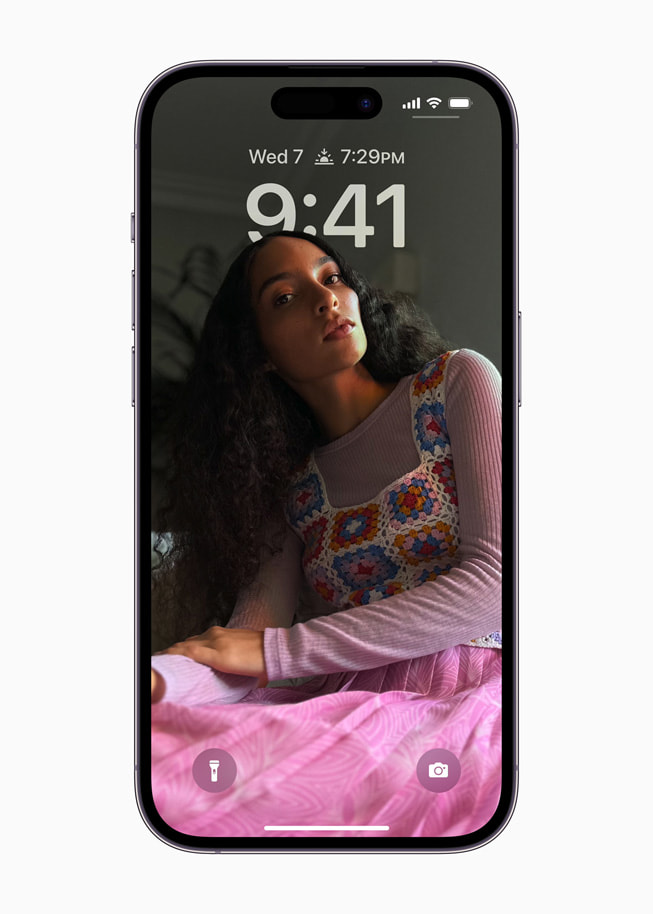
Photo: Apple. iPhone 14 Pro Lock Screen. Its display can drop to 1Hz for Always-On.
Some high-end models go back to LTPS panels
Brands cannot bargain much on memory. Supply is tight. OLED panels are different. Capacity keeps growing, and UBI says a generic 6.7-inch flexible OLED now sells for about half its early 2023 price.
So the panel gets cut. Some Chinese phone makers have moved certain high-end models from LTPO back to LTPS OLED, saving a few dollars per unit, UBI said. LTPO stays on top models. On October 22 DIGITIMES reported the same trend: soaring memory prices are pushing some smartphone makers to downgrade panel specifications.
LTPO is what lets a screen drop to very low refresh rates. Apple's iPhone 14 Pro used a 1Hz rate in 2022 to run its Always-On display. LTPS panels usually cannot go that low, so static screens use more power.
No brand or model was named. UBI also lists cheaper chips and cameras in midrange phones. Memory size is hard to cut because of AI features.
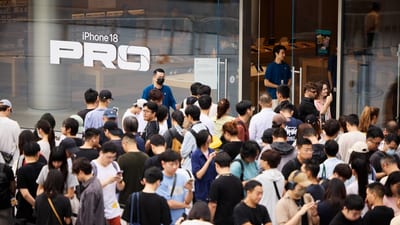
Photo: Apple. Customers try the iPhone 15 lineup at Apple Jing'an in Shanghai, March 2024.
Memory pressure on phones has been building for weeks. TrendForce put fourth-quarter DRAM contract prices up 10% to 15%. Samsung asked suppliers to cut fourth-quarter Galaxy production by 20% to 30%. Some Chinese brands now buy memory pulled from scrapped phones in Huaqiangbei.
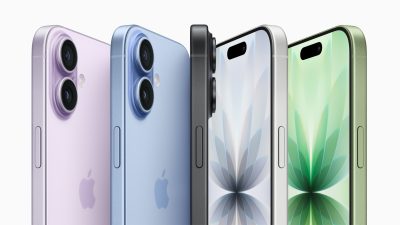
Photo: Apple
Source: CAICT via IT Home, UBI Research, DIGITIMES, Apple Newsroom