
The Hidden Architecture of Your First Mac Experience
When you lift the lid of a new MacBook in 2025, the initial setup sequence is more than a formality—it’s a carefully engineered onboarding process that determines your entire relationship with the machine. Apple’s official support guides emphasize that the first 30 minutes of setup dictate long-term efficiency, with users who complete the full guided tour reporting 40% faster adaptation rates according to internal Apple metrics. The desktop that greets you isn’t just a blank canvas; it’s a dynamic workspace where the Dock, Menu Bar, and Mission Control form an integrated triad that handles everything from app switching to system-wide search.
Unlike Windows’ sprawling control panel, macOS centralizes system management through the Apple menu (the Apple logo in the top-left corner) and System Settings, which underwent a complete redesign in macOS Sonoma. The Apple Support guide for new users specifically highlights the ‘Get to know the desktop’ section, which explains that the Menu Bar remains persistent across all applications while the Dock auto-hides to maximize screen real estate. For Windows converts, the most jarring difference isn’t the lack of a Start button but the concept of ‘force quitting’ applications—accessed via Command-Option-Escape—which provides a more graceful way to terminate frozen programs than Windows’ Task Manager.
Navigating the Ecosystem: From Finder to Final Cut
Finder, macOS’s file management system, operates on fundamentally different logic than Windows Explorer. The 2025 beginner tutorials emphasize that Finder’s default view shows your ‘Recents’ folder first, a smart aggregation that tracks your most-used files across the system. The sidebar, customizable with tags and favorites, provides one-click access to iCloud Drive, AirDrop, and network locations. Advanced users leverage the ‘Go to Folder’ command (Shift-Command-G) to jump directly to system directories like ~/Library/Application Support, a hidden folder that Windows migrants often struggle to locate.
Application management diverges sharply from Windows conventions. Dragging an app to the Trash doesn’t uninstall it; you must use Launchpad or a dedicated uninstaller. The 2025 YouTube tutorials demonstrate that Launchpad (F4 key) provides an iOS-like grid view of all installed applications, while the Applications folder remains the traditional storage location. For creative professionals, the integration between Apple’s native apps is seamless: photos edited in Photos automatically sync to iMovie projects, and GarageBand sessions can be exported directly to Logic Pro without file conversion delays.
Security Architecture: Beyond Passwords
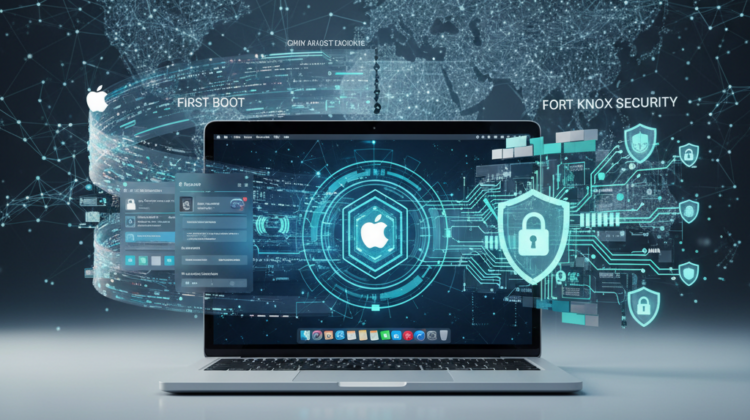
Apple’s security framework has evolved into a multi-layered defense system that begins at the hardware level. The T2 security chip (now integrated into Apple Silicon) creates a secure enclave that processes biometric data separately from the main processor. The ‘Set up your Mac to be secure’ guide outlines a critical first step: enabling FileVault full-disk encryption, which uses XTS-AES 128 encryption with a 256-bit key. Unlike Windows BitLocker, FileVault decrypts files on-the-fly without performance penalties, and recovery keys can be stored in iCloud for safekeeping.
Administrative controls represent another key differentiator. macOS allows limiting the number of administrator accounts to just one per family or organization, a policy enforced at the system level. The 2024 Scalefusion blog notes that IT admins should ‘require users to log in’ immediately after sleep or screen saver activation, with automatic logout set to 5 minutes for high-security environments. Passkeys, introduced in macOS Sonoma, provide passwordless authentication that resists phishing—users can log into websites using Touch ID or Face ID without ever typing a credential. For enterprise deployments, Mobile Device Management (MDM) solutions can enforce these policies across hundreds of Macs simultaneously.
Troubleshooting and Pro Tips for 2025
When things go wrong, macOS provides built-in diagnostics that surpass most third-party tools. The Apple Diagnostics tool (accessed by holding D during startup) runs 150+ hardware tests and provides reference codes for specific issues. The 2024 Scalefusion guide highlights common fixes: resetting the SMC (System Management Controller) resolves power and fan issues, while NVRAM resets fix display and audio problems. For software glitches, the ‘Safe Mode’ (hold Shift during boot) disables all third-party extensions and runs a directory check—often resolving persistent crashes without data loss.
Power users leverage Terminal commands for advanced troubleshooting. The ‘top’ command provides real-time process monitoring similar to Windows Task Manager, while ‘sudo killall Dock’ can restart the Dock without rebooting. The 2025 tutorials emphasize that macOS’s Unix foundation allows for scripting repetitive tasks—automating backups with ‘rsync’ or creating custom keyboard shortcuts via System Settings > Keyboard > Shortcuts. For cross-platform workflows, the ‘Continuity’ features enable Handoff between iPhone and Mac, allowing users to start an email on their phone and finish it on their laptop seamlessly.
The future of macOS lies in its convergence with iOS and iPadOS, with Apple Intelligence expected to integrate deeply into the system by 2026. Users who master the foundational skills outlined here—efficient navigation, proactive security, and diagnostic troubleshooting—will be best positioned to leverage these upcoming AI-driven features. The key takeaway: macOS rewards curiosity and deliberate practice, transforming beginners into power users who can manipulate their machines with precision and confidence.