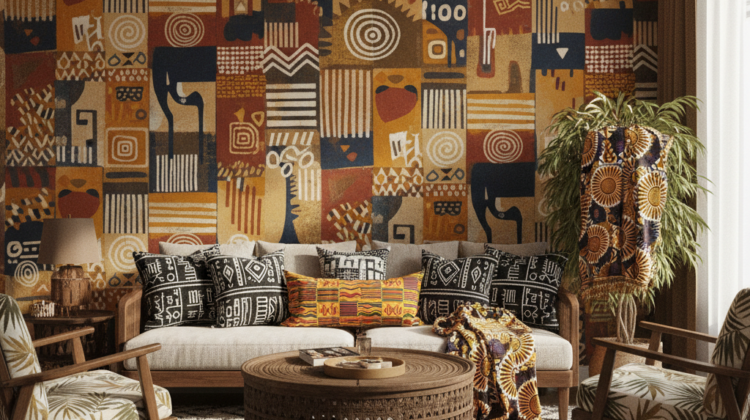
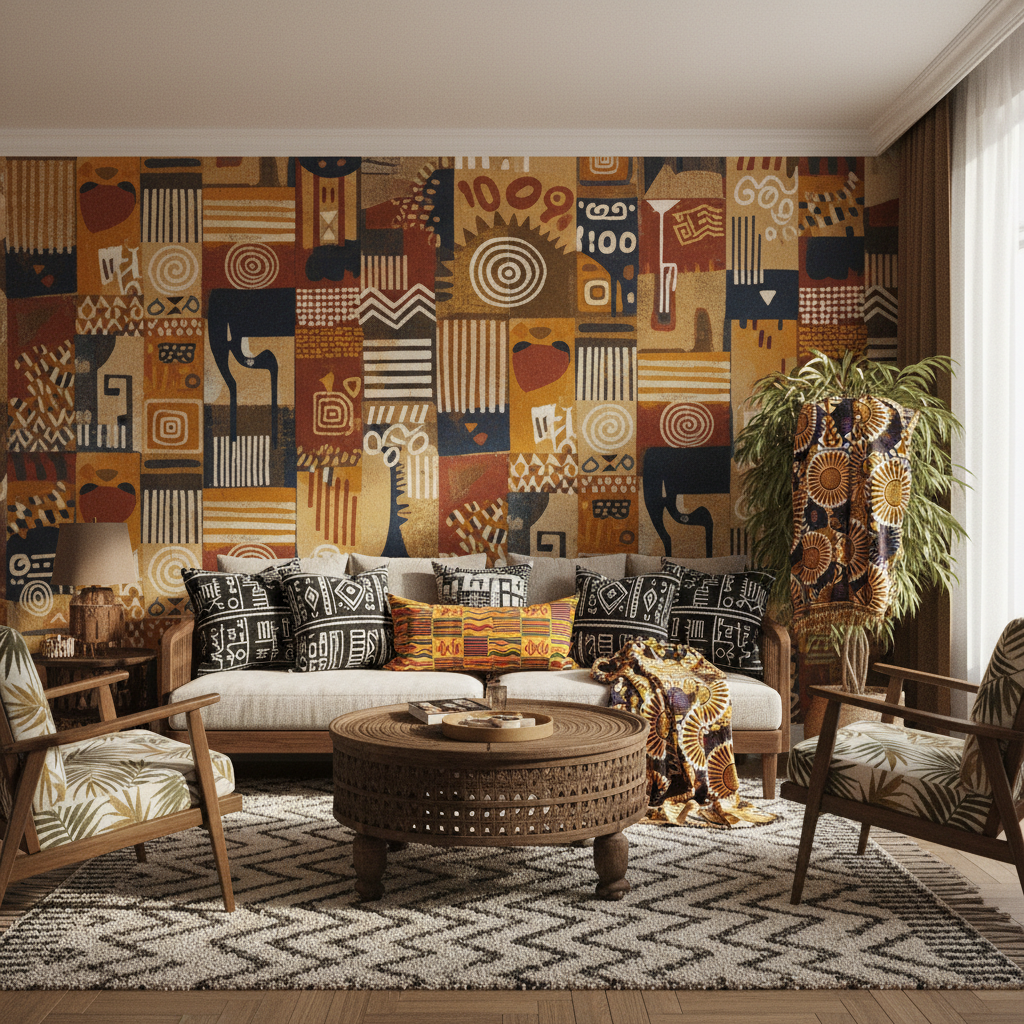
“African boho living room” and “Afro chic home decor” aren’t just aesthetic searches anymore—they’re shaping how 2026 homes are being designed: less about copying a look, more about buying (and displaying) craft. Apartment Therapy is already framing “Afrohemian” decor as a 2026 trend that blends African craft with bohemian styling, a fusion that’s catching on fast enough to show up as a named lifestyle direction rather than a passing hashtag.
Under the umbrella of “African Boho,” designers and brands are converging on a specific set of visual rules: natural materials, hand-made texture, and storytelling through objects. The twist is that “boho” here doesn’t mean chaotic. It means layered—like textiles, carvings, and reclaimed pieces arranged with intention.
From “Boho” to “Afrohemian”: what the trend actually changes
Traditional bohemian interiors often optimize for softness—rugs, throws, and warm lighting—without demanding provenance. Afrohemian decor changes the demand: it pushes interiors toward work you can trace to craft techniques. Burudani.UK describes Afrohemian as a sustainability- and craft-driven direction for 2026, positioning the style as a response to disposable design. In practice, that means the decor isn’t just “ethnic-inspired.” It’s materially different: handwoven patterns, hand-carved details, and natural finishes that hold up to closer inspection.
Apartment Therapy’s take matters because it signals mainstream uptake. When a publication highlights Afrohemian as a 2026 trend and ties it to rising curiosity around “African boho living room,” the implication is that consumers aren’t only browsing images—they’re translating the concept into shopping decisions. That shift is visible in how people now build rooms around a focal texture (like a woven wall hanging or a carved credenza) instead of treating everything as interchangeable decor.
There’s also an important cultural design distinction: “African boho” works best when the objects aren’t used as generic pattern overlays. The more the pieces feel deliberate—each one adding a different tactile rhythm—the more the room reads as layered, not cluttered. The trend’s success is less about matching colors and more about sequencing materials: textiles first, then sculptural objects, then grounding elements like wood or clay-toned surfaces.
Material signals: how warmth is engineered
In the most compelling “African Boho” rooms, warmth isn’t achieved through color alone; it’s engineered through surfaces. Burudani.UK emphasizes natural materials and handwoven/hand-carve elements, which is exactly why the style looks “alive” in photos and even better in person. A jute or woven textile creates depth because it scatters light across fibers; carved wood or sculptural objects do the same by casting irregular shadows.
The “New York cool” contrast described in The Pyramid News—applied to Suno’s African bohemian office—helps explain the interior logic. The Suno workspace is framed as African bohemian warmth paired with edited New York cool, which is essentially the design balance people struggle with: how to keep a boho interior from feeling sleepy or overly decorative. The solution is restraint. Textiles and craft references provide the emotional richness, while the rest of the room stays edited—clean lines, fewer competing patterns, and intentional negative space.
For a living room, this translates into a practical hierarchy. Start with one large textile anchor (a woven rug or a wall hanging). Then add 1–2 sculptural pieces—like a carved side table or a wooden tray—before bringing in smaller accents (ceramics, baskets, or patterned pillows). If you try to do “boho everything” at once, you lose the very thing Afrohemian leans on: texture that can be read clearly.
The Suno blueprint: craft-forward branding that feels livable
The Suno offices described by The Pyramid News are a useful case study because they show how “African bohemian” can function in a professional environment without losing personality. The article’s language—“African bohemian” warmth paired with edited “New York cool”—isn’t marketing fluff; it’s a blueprint for spatial editing. Offices require clarity: sightlines, movement, and durable finishes. When Suno’s designers incorporate textiles, craft references, reclaimed materials, and intentio—those elements can’t be purely ornamental. They have to work day-to-day, which raises their design credibility.
Reclaimed materials are especially relevant to the Afrohemian argument. When Burudani.UK positions the look as sustainability- and craft-driven, reclaimed components become more than a vibe—they become a measurable design choice. Even without publishing exact metrics, the design logic is clear: you choose materials that already have a history (and often a longer life cycle), then you pair them with artisan-made textures that justify keeping objects in rotation rather than replacing them.
Copying a commercial concept at home can be risky if you turn it into a costume. The better approach is to borrow the structural move: keep the base palette neutral and modern, then “introduce” African Boho through texture and handcrafted accent pieces. This is how you get the warmth without the maximalism, and it’s how the trend survives beyond the first wave of “aesthetic shopping.”
How to build an African Boho room in 6 intentional steps
Because the trend’s core is craft and sustainability, the fastest way to do it well is to shop with a sequence. First, pick your tactile anchor: choose either a woven rug, a woven wall piece, or a chunky natural-fiber ceiling-to-floor textile moment. Apartment Therapy’s framing of Afrohemian as a 2026 direction suggests that the anchor is what makes a room identifiable as African boho rather than just “boho with patterns.”
Second, select one carved or sculptural object with presence—something you can’t easily replace with a mass-produced decorative version. Burudani.UK specifically calls out hand-carve/handwoven elements, which is your cue to prioritize craftsmanship over quantity.
Third, bring in reclaimed or natural surfaces for grounding: a wood sideboard, a clay-toned ceramic collection, or a basket system that’s actually used (storage is the best “hidden practicality” for boho interiors). Fourth, choose a calm base—think off-whites, warm neutrals, or restrained earth tones—so your patterns can feel like accents, not noise.
Fifth, repeat one motif across materials rather than repeating multiple motifs across everything. For example: echo the same directional weaving pattern in a pillow trim and a smaller woven basket. This creates coherence—an “edited” effect that matches the Suno “New York cool” concept.
Finally, light it for texture. African Boho looks best when lighting reveals fibers and carvings, not just when it fills a room. Use warm bulbs and place lamps where shadows will form—near carved surfaces, behind hanging textiles, or beside textured rugs. If a piece can’t show its texture after dark, it won’t deliver the same feeling in real life as it does in daylight photos.
Takeaways: the future of African Boho is craft, not copy
Afrohemian decor as described by major interior narratives for 2026 points to a clear shift: people want boho energy, but they also want origin, material honesty, and sustainability cues. The trend’s momentum—visible in growing interest around “African boho living room” and “Afro chic home decor”—suggests the style will keep spreading, especially as mainstream designers treat handcrafted texture as the new neutral.
For homeowners, the winning strategy is simple: buy fewer, better, more textural pieces; edit aggressively; and design around craftsmanship you can actually see and feel. If African Boho becomes your method instead of your costume, it will look current longer than any short-lived “pattern of the month.”