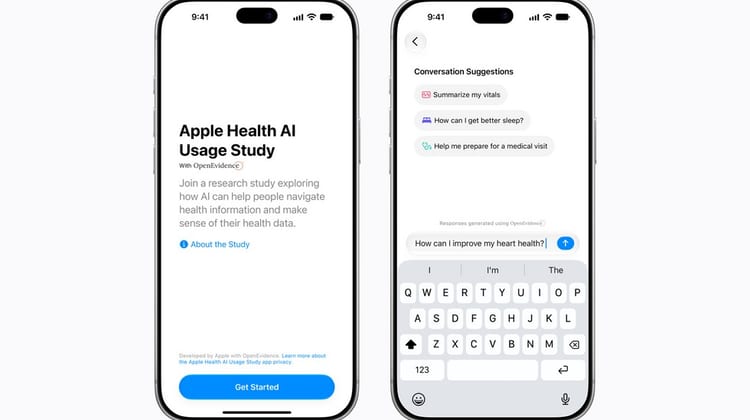
Apple on Sunday, November 15, announced the Apple Health AI Usage Study, a U.S. research study with a dedicated iPhone app that answers everyday health questions. The answers run on OpenEvidence, a clinical AI platform widely used by healthcare professionals. MacRumors and 9to5Mac followed the Newsroom post on Monday. Up to 200,000 people can take part. This is a research study and an App Store app. It is not a new Siri feature, and the Health app is not getting a general health chatbot from this.
Apple wants to study what drives user trust in conversational health AI, how good the responses are, and whether people understand them. That framing matters if you were hoping for a product launch.
OpenEvidence powers the study app's health answers
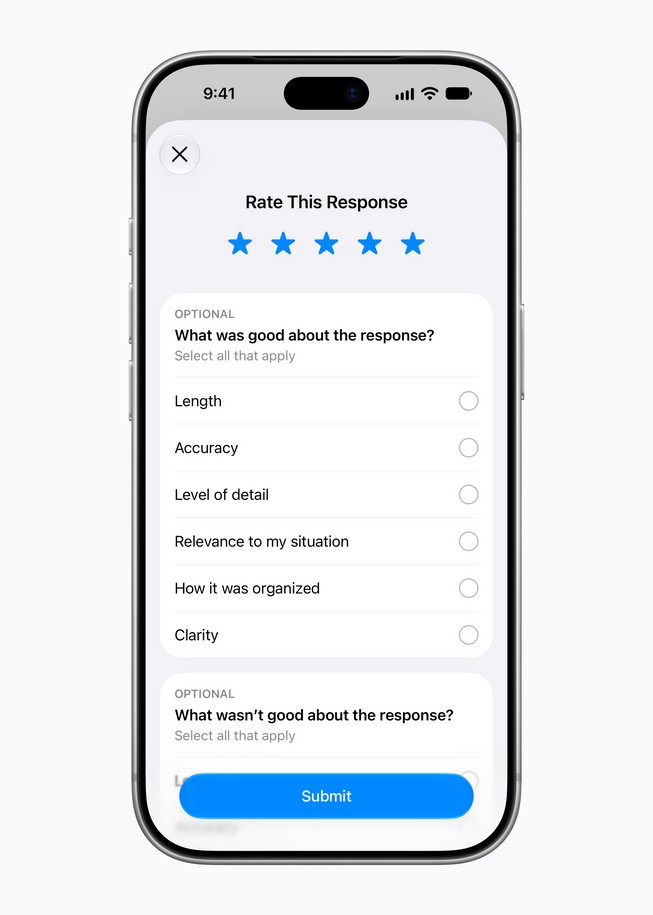
Participants ask everyday health questions in the study app. Answers come back in approachable language and carry linked, peer-reviewed clinical citations. The medical information is drawn from established sources such as The New England Journal of Medicine, the Journal of the American Medical Association, and Nature, Apple says. Participants can rate responses and complete occasional surveys. MacRumors reports the app can also put Health data in context, help with understanding symptoms or conditions, and build personalized exercise or meal plans.
Sharing is optional. Participants can choose to share HealthKit data types such as resting heart rate, activity, sleep, or lab results, and Apple wants to see how personal data integration changes relevance and understanding. The data comes from the same Health app Apple has been reshaping since the new Health layout in iOS 27.2 and detailed again for the redesigned Health app in iOS 27.3. Earlier coverage also tracked the Health app redesign in the iOS 27.2 public beta.
Who can join the Apple Health AI Usage Study
The study is open to up to 200,000 eligible participants age 21 and older across the United States. To join, you need an Apple Intelligence-enabled iPhone. That means iPhone 15 Pro or later, running iOS 26 or later. The app is listed on the U.S. App Store as the Apple Health AI Study App, MacRumors notes, and enrollment happens inside the app. Outside the U.S., or on an older iPhone, there is no way in.
Apple says study data will not be used to train AI models
Apple's privacy line is direct: study data will not be used to train AI models. Participants retain control over whether to share any HealthKit metrics or survey responses. Every question also goes through processing designed to remove identifying information before it reaches OpenEvidence, which deletes question-and-response data within 24 hours, according to MacRumors. 9to5Mac attributes those retention details to CNET reporting, so treat them as second-hand. Apple adds that it has security measures protecting the study data it maintains.
The study app has safety guardrails too. They are intended to detect certain concerning questions and suggest that a participant follow up with a provider or other resources.
The study app does not diagnose or replace a doctor
Apple's footnote is explicit. The study app is not meant to diagnose or treat any condition, or replace the advice of medical professionals. Participants should consult a doctor or clinician to address health concerns or verify medical information. Sumbul Desai, M.D., Apple's vice president of Health and Fitness, describes the study as groundwork: "responsible innovation starts with scientific rigor and clinical grounding," she said in the Newsroom post, and the goal is to understand "how people engage with, comprehend, and evaluate health AI in everyday life."
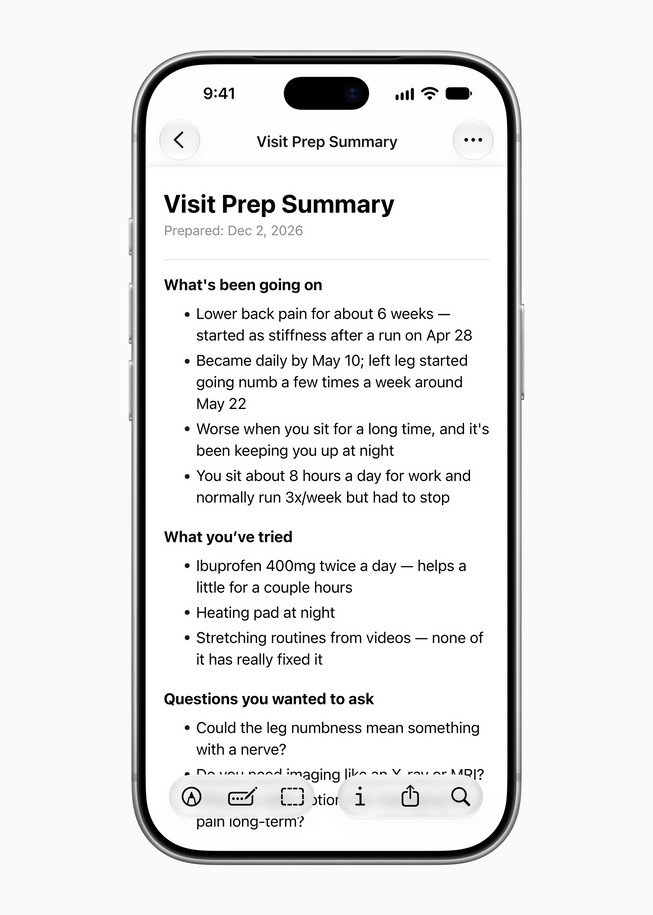
Robert M. Wachter, M.D., chair of the Department of Medicine at UCSF, puts the gap this way. "Patients and clinicians are both turning to AI, but the tools they use are being built and tested in separate worlds." Apple is also studying whether health AI helps participants prepare for visits with their own doctors. Whether any of this reaches Siri or the Health app later, Apple has not said.
Photo: Apple
Source: Apple Newsroom, MacRumors, 9to5Mac