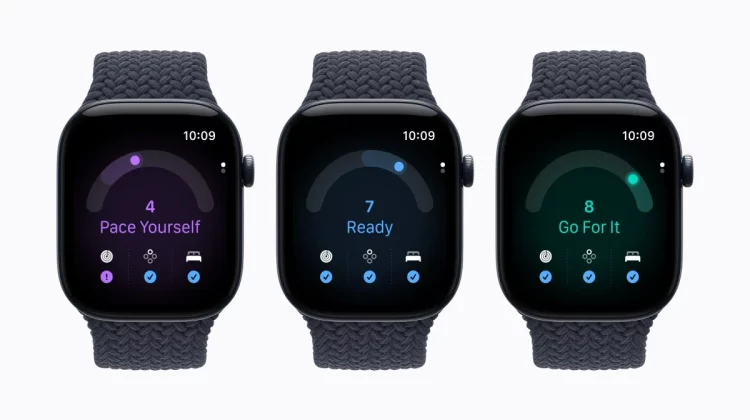
The internal description of the developer tool “Xcode 27” revealed that the newly released Apple Watch Series 12 and Ultra 4 are equipped with 4GB of RAM, which is twice as much as the previous generation (Series 11 and Ultra 3).
At first glance, this change appears to be a normal spec improvement, but in the current tech market where the global shortage of memory semiconductors continues, this update is unusual and has hidden strategic intentions.
In this article, we will explain the technical background behind this “4GB” and its impact on user experience.
Why was it necessary to double the memory “now”?
The biggest reason for the RAM increase to 4GB this time is the full-scale operation of Apple Intelligence, which works with the newly developed “S11 chip.”
AI processing in wearable devices has long been a challenge to reduce the burden on parent devices such as the iPhone and speed up response times. With the expanded RAM to 4GB, new features such as the following can be smoothly handled only on Apple Watch.
- Live Rewind: A function that transcribes and displays a conversation from a while ago during live rewind.
- Siri Recap: A feature that roughly summarizes and notes conversation highlights and important context.
- Improved responsiveness of Siri AI: Dramatically reduces the time lag from voice recognition to processing completion.
In the conventional 2GB environment, there were concerns about memory exhaustion when these background processes overlapped with regular workout measurement and music playback. Doubling the capacity to 4GB is truly essential infrastructure in the age of wearable AI.
Changes in Apple Watch memory capacity
The RAM capacity of Apple Watch is not disclosed, but it has been revealed through Xcode analysis and disassembly. If you look back at the changes since the S9 chip, you can see how big of a spec improvement this evolution has been.
| model | Chip installed | RAM capacity | Main features |
|---|---|---|---|
| Series 8 | S8 | 1GB | Skin temperature sensor, collision detection function |
| Ultra 1 | S8 | 2GB | Depth gauge, action button |
| Series 9・Ultra 2 | S9 | 2GB | Double tap gesture, on-device Siri |
| Series 10 | S10 | 2GB | Thinner, wide viewing angle OLED |
| Series 11・Ultra 3 | S10 | 2GB | Hypertension pattern notification, 5G communication compatible |
| Series 12・Ultra 4 | S11 | 4GB | Compatible with Apple Intelligence, doubles processing power |
The increase in AI processing load in watchOS is a clear trigger behind the sudden doubling of RAM, which had remained at 2GB for about three generations.
The meaning of “fixing prices” amid the semiconductor crisis
Currently, the global supply shortage of memory chips is pushing up the prices of all electronic devices, including PCs and smartphones.
The fact that Apple has completely maintained the US price baseline (Series 12: $399 and up, Ultra 4: $799 and up) shows Apple’s strong supply chain management capabilities, and also shows that it is prioritizing securing its share in the wearable market.
It can be said to be a “hit year” model with substantial improvements in cost performance.
Who should buy a new one?
This update is not just a numerical spec improvement, but a turning point in turning the smartwatch into an AI assistant in the true sense of the word.
Especially for users who are using models earlier than Series 9, or who use Siri or the notification summary function frequently, migrating to Series 12 and Ultra 4 will be an update that will make a huge difference in terms of both operational response and convenience.
With the release of Apple Watch Series 12 and Ultra 4, trade-in prices have also been revised. By taking advantage of the trade-in program when replacing an older model, you can further reduce the actual purchase cost.
Source: iPhone Mania