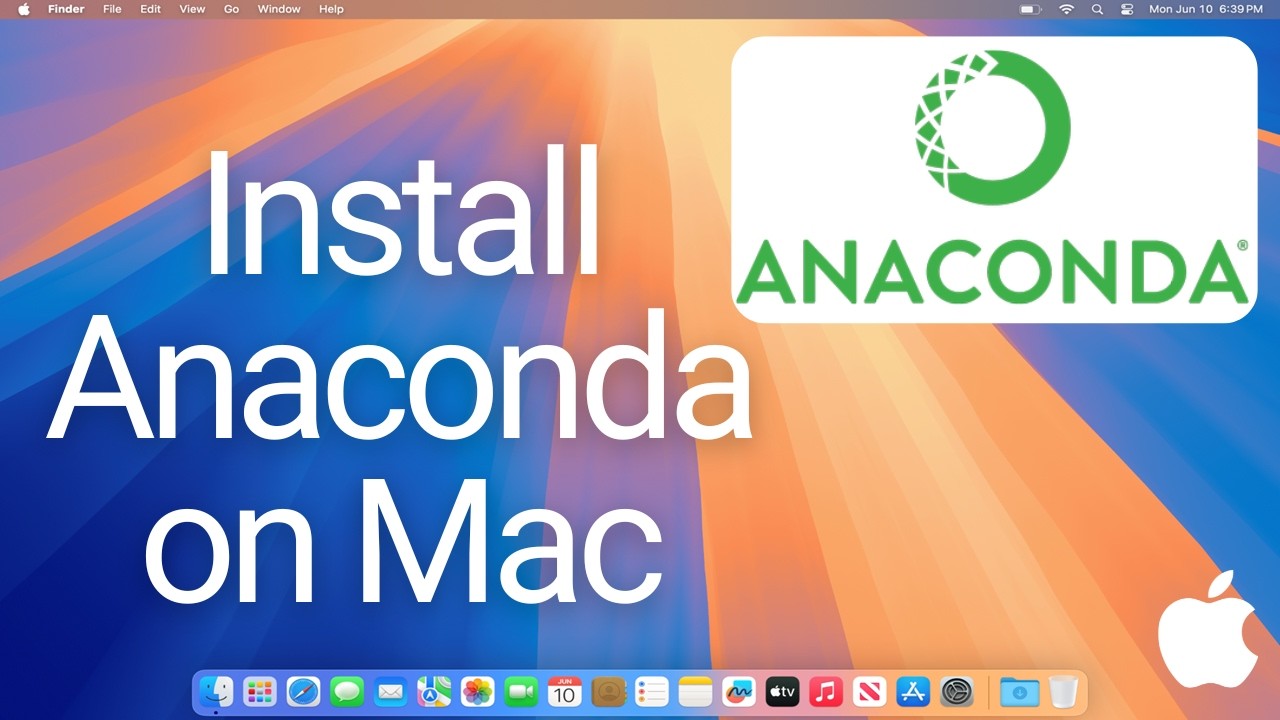
In this step-by-step tutorial, you’ll learn how to install Anaconda Python on macOS easily and correctly. This guide is perfect for beginners, students, data scientists, machine learning enthusiasts, and developers who want a powerful Python environment on their Mac. Whether you’re using a MacBook Pro, MacBook Air, iMac, or Mac Mini on Apple Silicon (M1, M2, M3, M4, M5) or an Intel-based Mac, this tutorial works for all modern macOS versions.
We begin by downloading Anaconda from the official Anaconda website to ensure you get a secure and up-to-date installer. You’ll learn how to choose the correct Anaconda installer for macOS, including understanding the difference between Apple Silicon and Intel versions. The installation process is explained step by step, from running the installer to completing the setup without errors.
After installing Anaconda, we walk through configuring it properly on macOS. You’ll learn how to verify the installation using the Terminal and check the installed Python version. We also explain how Anaconda manages Python environments and packages, which is one of its biggest advantages for data science and development workflows.
This tutorial also covers Anaconda Navigator, the graphical interface that comes with Anaconda. You’ll learn how to launch Anaconda Navigator on macOS and use it to manage environments, install packages, and launch popular tools like Jupyter Notebook, JupyterLab, Spyder, and VS Code. We explain what each tool is used for so you can choose the right one for your projects.
In addition, you’ll learn how to use Conda commands in the Terminal to create, activate, and manage virtual environments. This is especially important if you’re working on multiple Python projects that require different dependencies. We also show how to install popular Python libraries such as NumPy, Pandas, Matplotlib, and TensorFlow using Conda.
Common macOS issues are also discussed, including permission errors, PATH configuration problems, and “command not found” issues. Practical solutions are provided so you can fix these problems quickly and continue working without frustration.
By the end of this video, you’ll have Anaconda Python fully installed and configured on your Mac, ready for Python development, data analysis, machine learning, deep learning, and scientific computing. This tutorial is ideal for anyone starting Python with Anaconda on macOS and looking for a clear, beginner-friendly setup guide.
Don’t forget to like, share, and subscribe for more Python, data science, and programming tutorials.
#anaconda #python #anacondapython #macos #pythononmac #datascience #machinelearning #deeplearning #jupyternotebook #anacondanavigator #conda #applemac #macbook #m1 #m2 #m3 #m4 #m5 #learnpython #pythonsetup #programming #coding #developers
Note: ProgrammingKnowledge2 is the original author of this video, we just embed it, if you have any questions please contact him via Youtube.