TSMC says it is not moving into memory. On November 6, The Information reported that the foundry had begun drafting plans to produce 3D DRAM at the request of Nvidia, its biggest customer, as AI hardware demand strains global DRAM supply and drives up prices. Reuters carried the report that day, and The Edge Malaysia picked it up on November 7. Then a TSMC spokesperson gave Tom's Hardware a statement the site reads as a denial.
The Information report names two ways in
3D DRAM stacks memory cells vertically instead of laying them out in a single plane, so each wafer holds more capacity. The Information, citing two people familiar with the plans, said TSMC recently began drafting how it would build such chips. The options reported include building new factories, or buying an existing plant and converting it to memory production, similar to the factory purchase Micron made this year. Either route would put the pure-play foundry into competition with Samsung, SK hynix, and Micron. Nvidia did not immediately respond to requests for comment on Nov 6 or Nov 7. TSMC already has expansion money in motion elsewhere; a Bloomberg report covered on this site has it weighing a multibillion-dollar Texas campus beyond its $265B Arizona footprint.
TSMC's answer stays on logic chips
"Please note that TSMC focuses on our core business at all times, which is dedicated IC foundry," the spokesperson told Tom's Hardware. "Our mission is to be the trusted technology and capacity provider of the global logic IC industry for years to come." The statement never mentions memory chips. The Edge read it as a company focused on making logic chips, the kind that process data rather than store it. On X, the topic drew about 319 related posts in the day after the report, under the headline TSMC Denies Plans for 3D DRAM Production at Nvidia's Request.
Hsu Kuo-chin is named to lead it, with no date and no budget
Both Tom's Hardware and Reuters name Hsu Kuo-chin as the TSMC vice president overseeing the initiative. He is responsible for advanced packaging at the company and previously ran Micron's Taiwan operations. Beyond that, the reports are thin. It is not clear when production would begin. No dollar amount and no wafer capacity figure was published by The Information, Reuters, or Tom's Hardware. Anything you see with a price tag attached to this plan is invented.
3D DRAM stays years away from fixing the shortage
Tom's Hardware lays out why the plan, even if real, cannot help the current squeeze. TSMC packages memory into system-in-packages for its customers, but it has no DRAM production lines and no DRAM process expertise. 3D DRAM is still years away even for the three companies that make memory for a living; Micron's own roadmap lists at least four more planar DRAM process technologies before 3D DRAM arrives. And a 3D DRAM process is very hard to build without a competitive planar DRAM process underneath it. TSMC has none. Buying a small specialty memory maker is one way in, but small makers do not hold leading-edge commodity DRAM nodes, so billions of dollars and years of R&D would follow anyway. Tom's Hardware's estimate: such a strategy cannot solve memory shortages for at least five years.
Memory partners and Apple are already paying the squeeze
A DRAM push would also strain TSMC's ties with the memory makers it works with today. In 2024 TSMC partnered with SK hynix to manufacture logic base dies for next-generation HBM, according to Tom's Hardware. Memory shortages have already moved customers: Nvidia and Apple have sought additional sourcing, and Apple raised prices on some products earlier this year, citing rising memory costs. Cost pressure is showing up in forecasts too. TrendForce expects reballed memory to reach 7-9% of phones in 2027, and Apple guided holiday margin to 45-46% as memory costs climb. TSMC's own mix shifted in Q3, with HPC at 68% of sales and smartphones down to 21%.
For now the plans are at the drafting stage and TSMC says it stays a logic foundry. Watch the next capital-expenditure guidance for any memory line item. If hiring around Hsu Kuo-chin's packaging group turns up DRAM process engineers, the statement will need a second look.
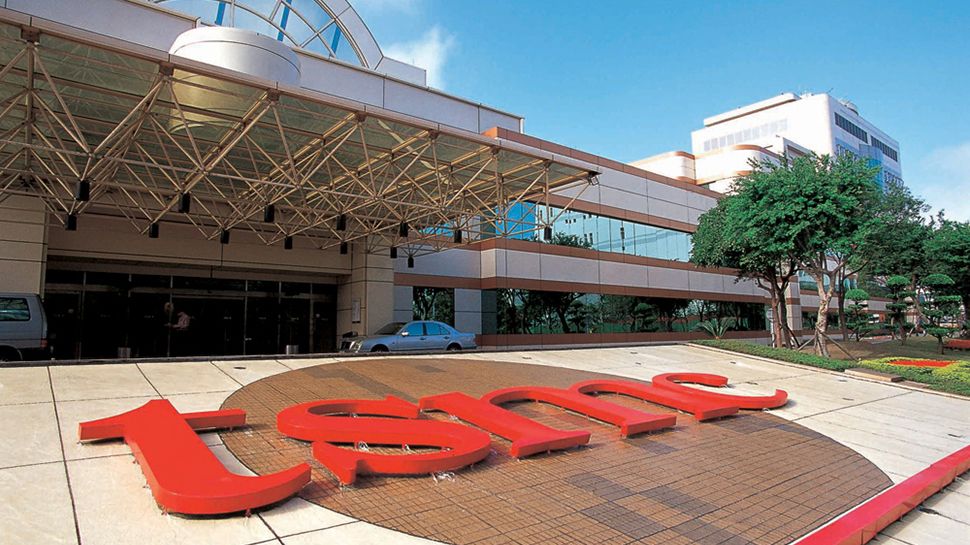
Photo: TSMC logo (Bloomberg via The Edge Malaysia) / TSMC headquarters (TSMC via Tom's Hardware)
Source: Tom's Hardware, The Edge Malaysia, The Information via Reuters