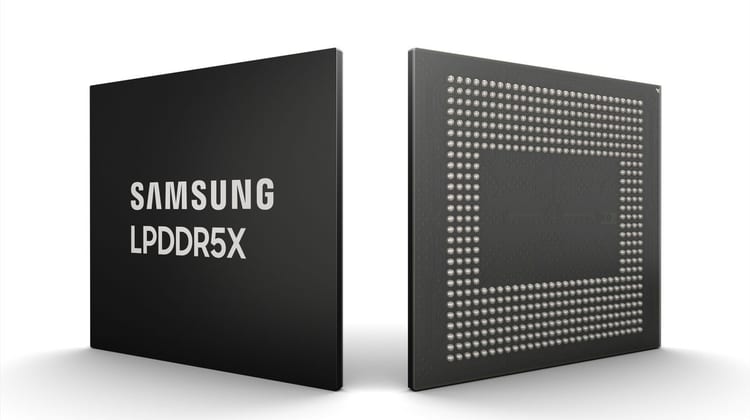
Low-power DRAM for phones is getting harder to buy. Now even Nvidia is short. Korean daily MoneyToday reported on October 6, citing industry sources, that Nvidia can secure only about 60% to 70% of the LPDDR5X it needs for next year.
LPDDR is DRAM made for low power draw. Phones and other mobile devices were always its main buyer, the paper notes. That is changing.
Nvidia LPDDR5X supply at 60% to 70% for 2027
The reason is AI servers. Server-grade LPDDR5X is in demand because memory bandwidth and power efficiency matter more as AI servers get faster, the report said.
Nvidia already cut back once. The SOCAMM2 module for its next-generation Vera CPU went from 192GB to 96GB, roughly half. MoneyToday says this was to lower the memory load per unit, so production is not disrupted while LPDDR5X supply lags. SOCAMM2 is a module built on LPDDR5X.
The report does not name its sources. Nvidia did not comment in the story. There is also no figure for how much LPDDR5X Apple, Samsung's phone unit or Chinese brands have locked in for 2027.
AMD and Intel servers join the queue
More buyers come next year. AMD is developing its 6th Gen EPYC server CPU on LPDDR5X, aiming for the second half of next year. Intel's Crescent Island inference GPU also uses LPDDR5X and is expected to start full-scale supply next year.
TrendForce, quoted in the same piece, expects AI servers to pass smartphones as the largest source of LPDDR demand at some point between 2028 and 2030.
TrendForce: contract price up 78% to 83% in Q2
Prices are still going up. According to TrendForce, LPDDR5X contract prices rose 78% to 83% in the second quarter from the first. The firm forecast another 8% to 13% in the third quarter. Memory passed 40% of smartphone manufacturing cost in the first quarter of this year, the report said.
Suppliers book the gain. Micron's mobile unit posted a record quarter on price while bit shipments fell, as we covered in Micron's record mobile revenue report. Samsung gives preliminary third-quarter numbers on Thursday, October 8. That release has only headline sales and operating profit. Segment detail comes at the end of October.
Budget phones take the hit first
Cheap phones cannot pass the cost on. IDC data cited by Rest of World show sub-$100 smartphone shipments fell almost 60% year over year in the second quarter of 2026. In 2025 that segment shipped 173 million units. Counterpoint Research, in the MoneyToday report, sees annual shipments of phones under $200 falling about 40%, from 570 million this year to 340 million in 2030.
The wider market numbers were already weak. See our earlier piece on the 2026 smartphone shipment forecast.
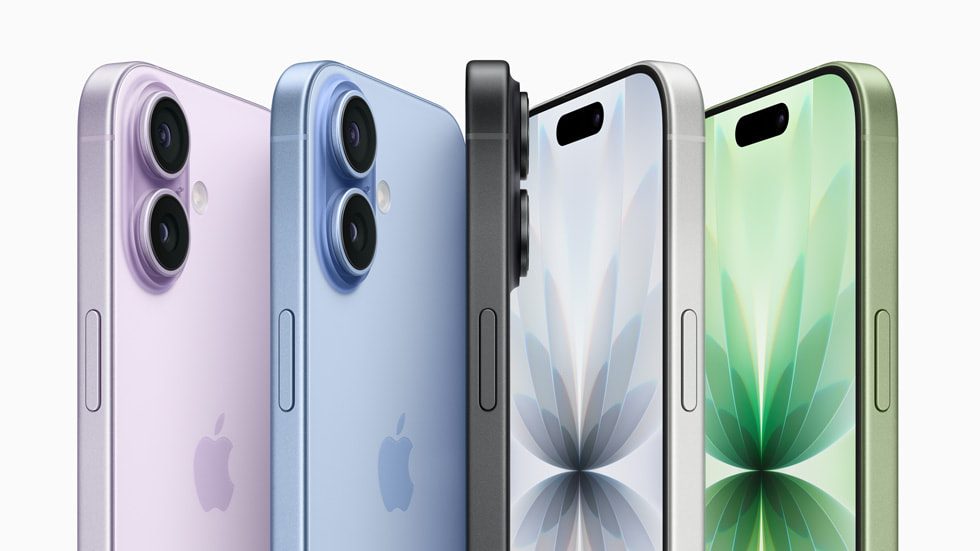
Photo: Apple (iPhone 17 lineup)
Galaxy S26 and iPhone 17 prices in Korea
Premium brands are raising prices instead. Samsung lifted Galaxy S26 series prices in Korea from October 1. The 256GB and 512GB S26 and S26 Plus went up 149,600 won each. The S26 Ultra 1TB went up 276,100 won. In the U.S. the move was a $100 mid-cycle increase on the Galaxy S26.
Apple raised iPhone 17 series prices in Korea last month by 160,000 to 500,000 won per model, MoneyToday wrote. The report did not break this down by model or storage.
On the iPhone side, a Weibo leaker said this week that iPhone 18 Pro and iPhone Duo were once planned with 16GB RAM. Apple has not confirmed RAM sizes.
"Since it is difficult to expand production capacity in the short term, there is a high likelihood that LPDDR supply shortages and price increase pressures will continue next year," an unnamed industry official told MoneyToday.
Photo: Samsung Electronics (LPDDR5X), Apple (iPhone 17)
Source: MoneyToday, TrendForce, Counterpoint Research, IDC via Rest of World