access:
Ali cloud server selection special: 1 core 1G cloud server as low as 0.9 yuan / month
access:
Apple Online Store (China)
Apple USB-C to Lightning cable appearance
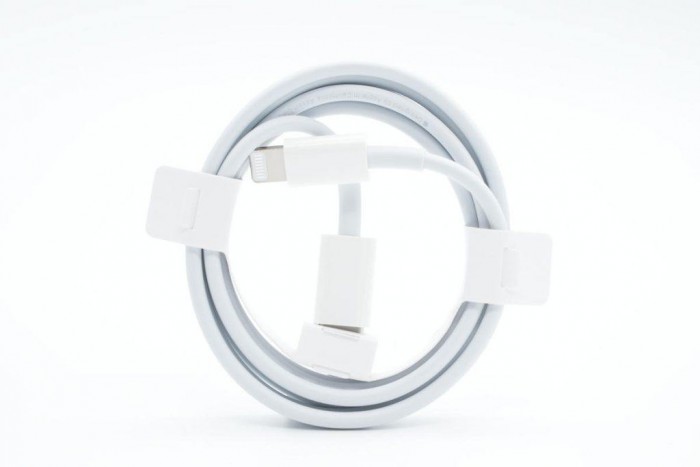
This Lightning cable is held in place by wrapping the cardboard.
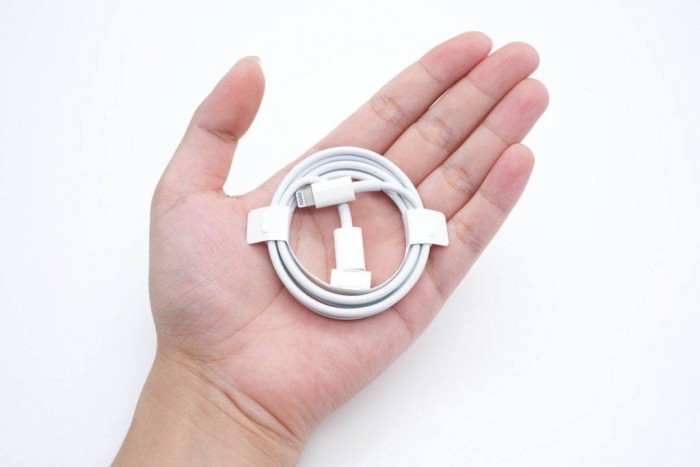
The intuitive feeling of holding the cable in the hand is quite small after winding it several times.
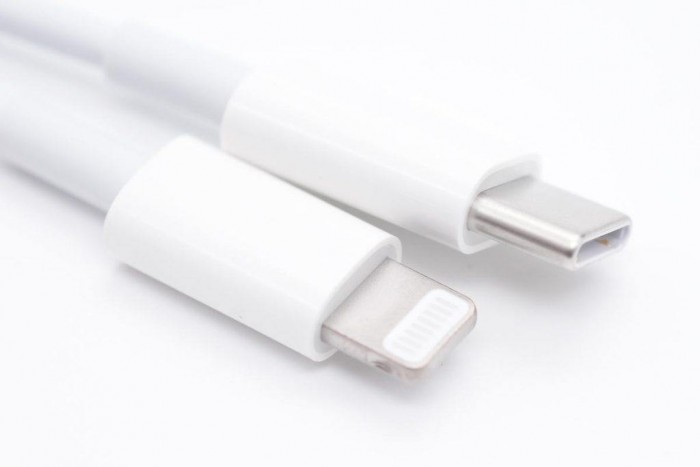
Both ends of the wire head are made of white plastic shell, with semi-circular arc surfaces on both sides, and the surface is treated with a high-gloss finish.
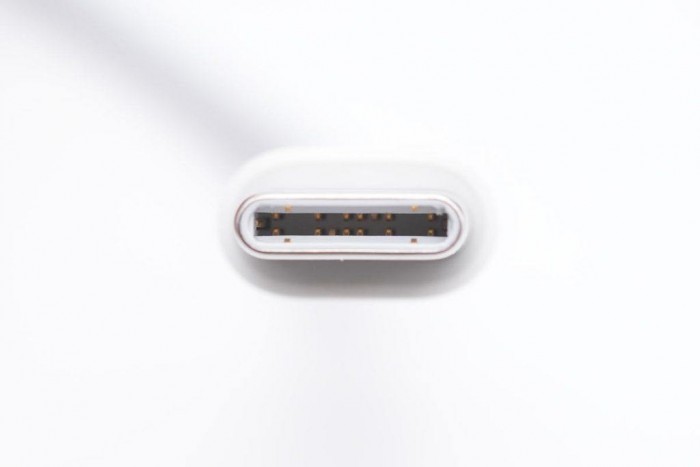
Close-up of the USB-C male head, not full PIN design.
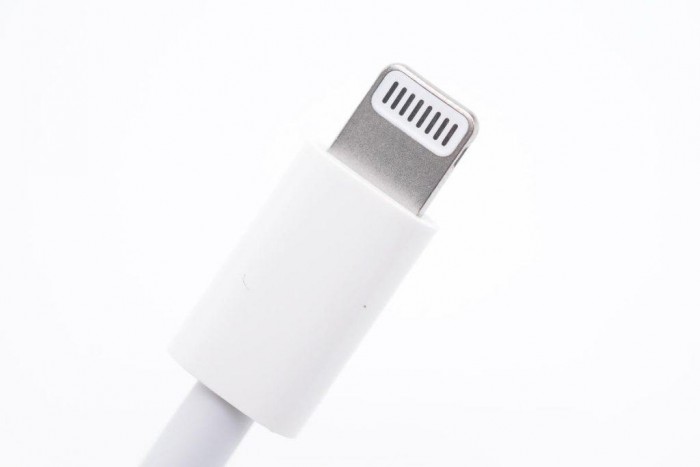
A close-up of the Lightning terminal.
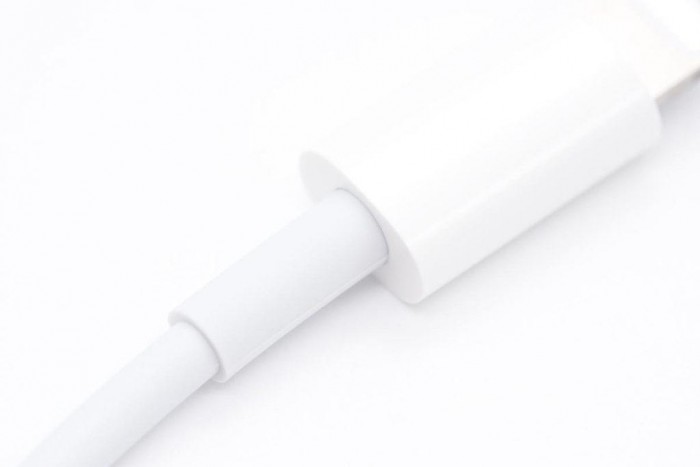
Both ends of the cable are also subjected to anti-bending treatment.
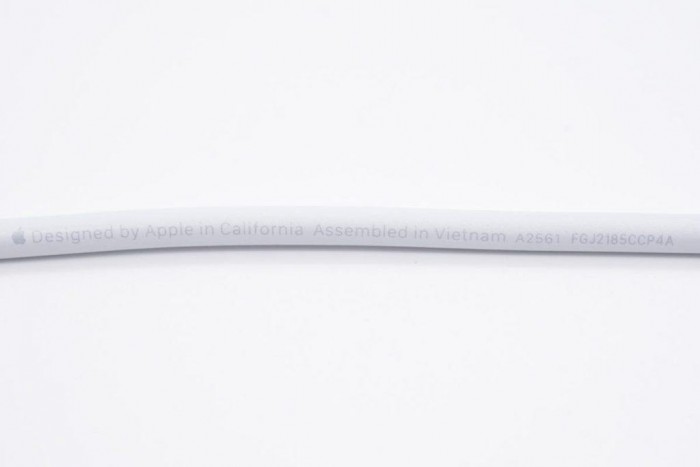
The outer skin is printed with information such as Apple’s design, A2561 model number, and more.
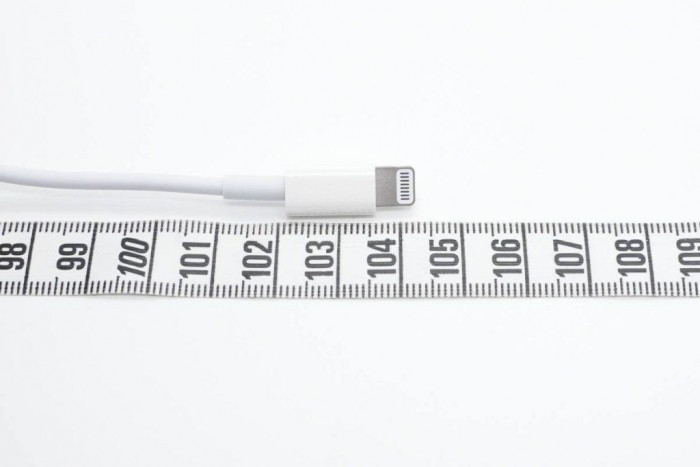
The measured cable length is about 104cm.
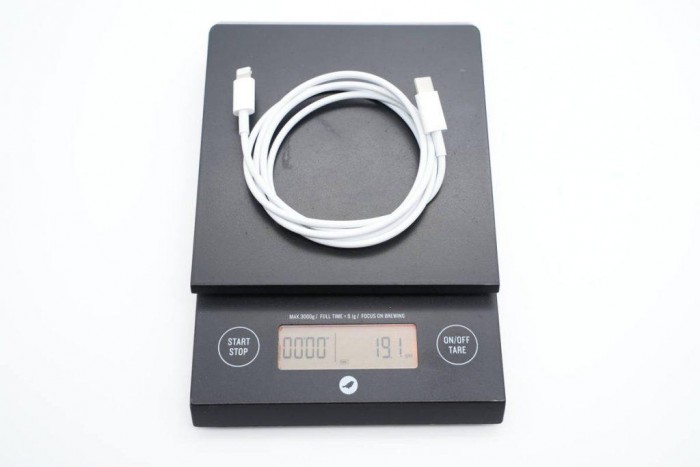
Net weight is about 19g.
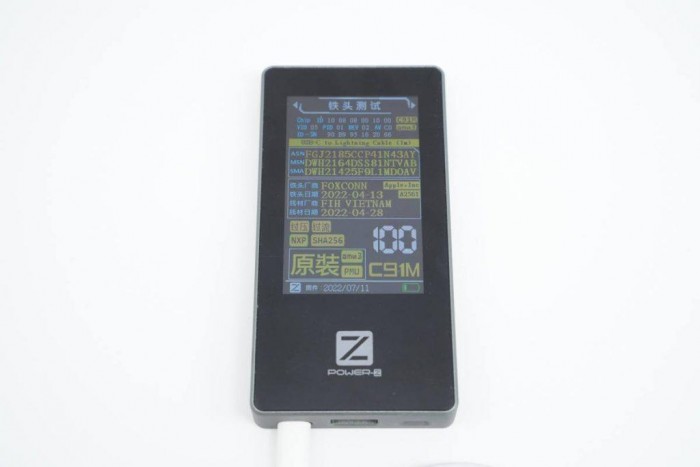
Using ChargerLAB POWER-Z MF001, the cable manufacturer is FOXCONN Foxconn, and the Lightning terminal is the original C91M terminal, and the score is 100 points.
Apple USB-C to Lightning cable disassembly
After having a basic understanding of Apple’s USB-C to Lightning cable, let’s continue to disassemble it to see how it works.
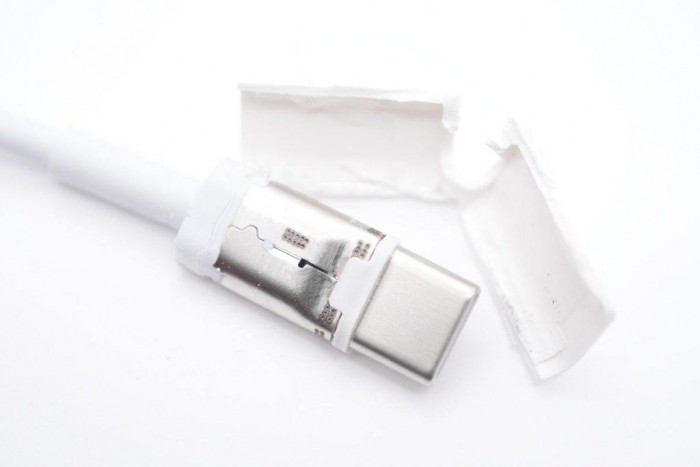
First, cut the USB-C side shell. Inside the white plastic shell is a spot-welded steel sleeve to fix the USB-C male head.
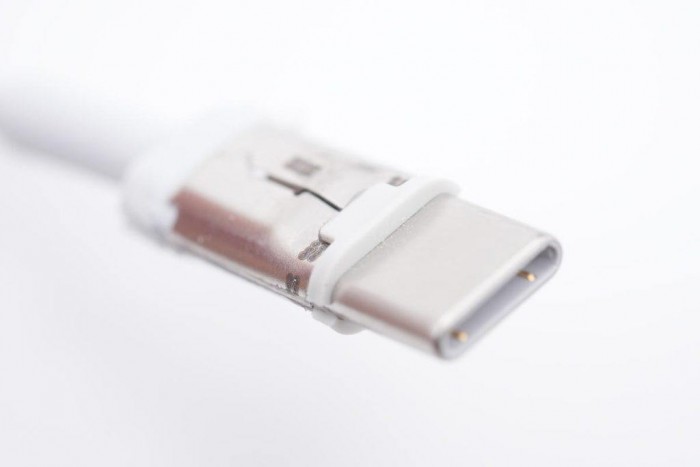
The USB-C male head is assembled with a plastic ring to fill the space and fixed with the white shell, which is more beautiful.
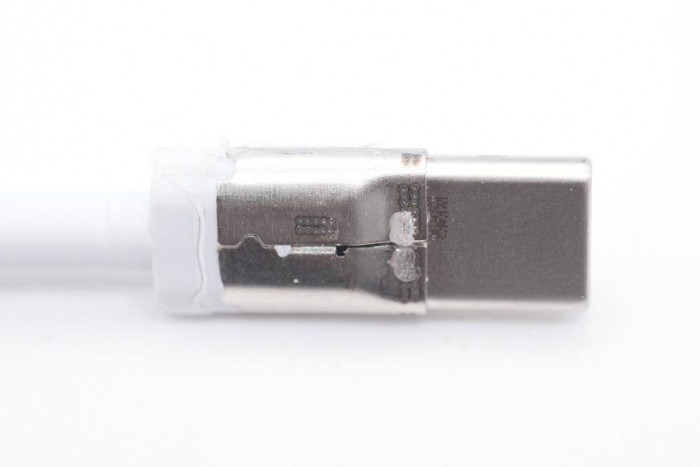
The steel sleeve is a two-piece structure, which is fixed with the USB-C male head by spot welding, and the steel sleeves are also fixed by spot welding, which is very firm.
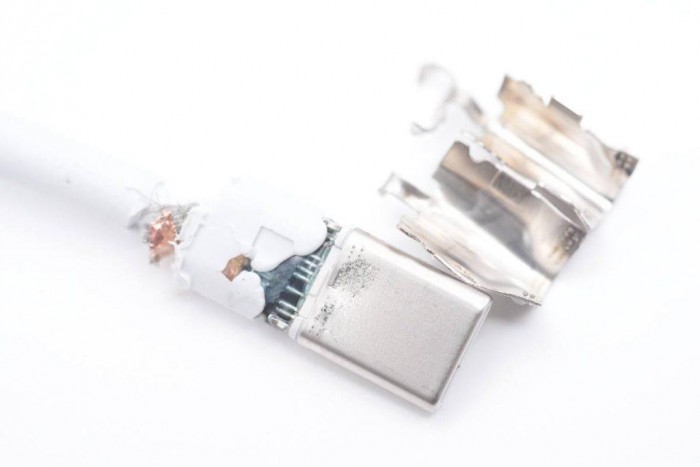
Remove the steel sleeve fixed by spot welding, and use white injection molding to fill the welding part of the internal terminal.
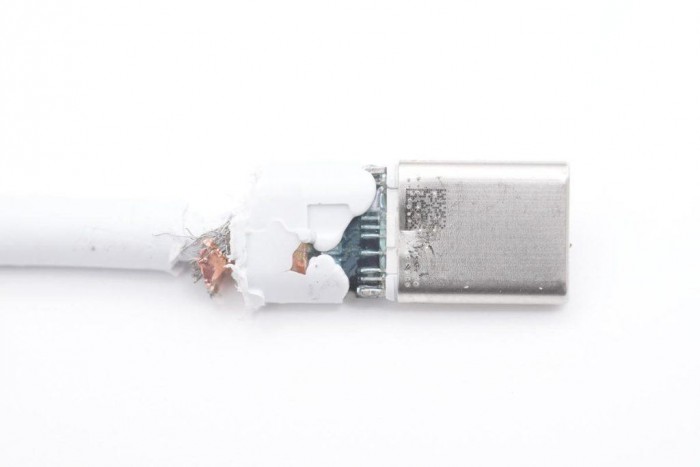
The end of the steel sleeve is used to fasten the cable for grounding and fixing.
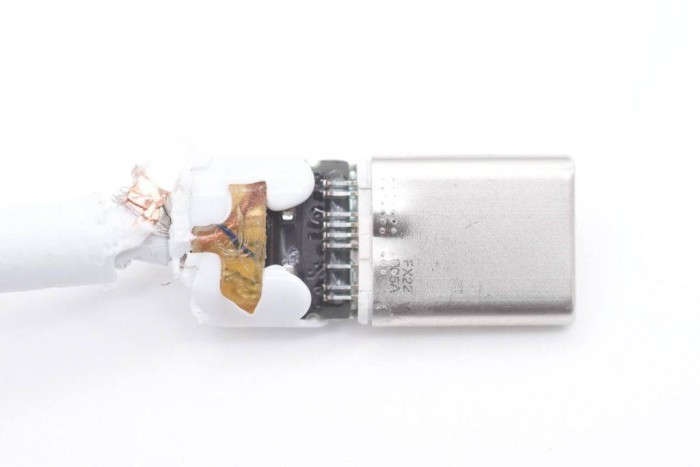
The cable tail is injection-molded and fixed as a whole, and is filled and fixed with white injection.
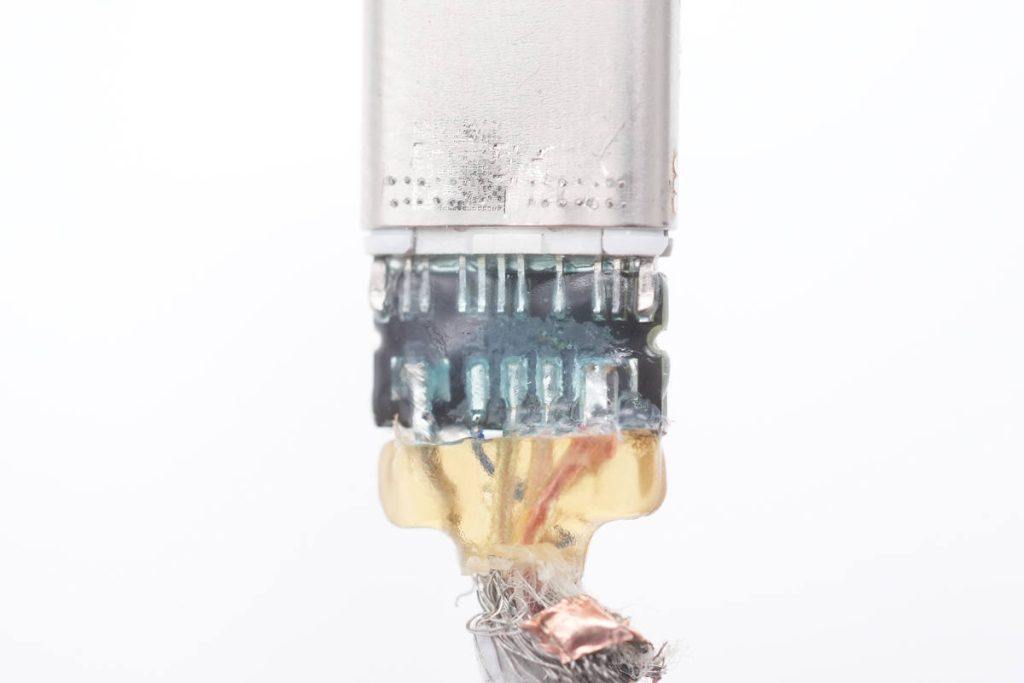
Weld the negative bare wire core, CC wire, USB2.0 data wire and positive wire in sequence on the front side.
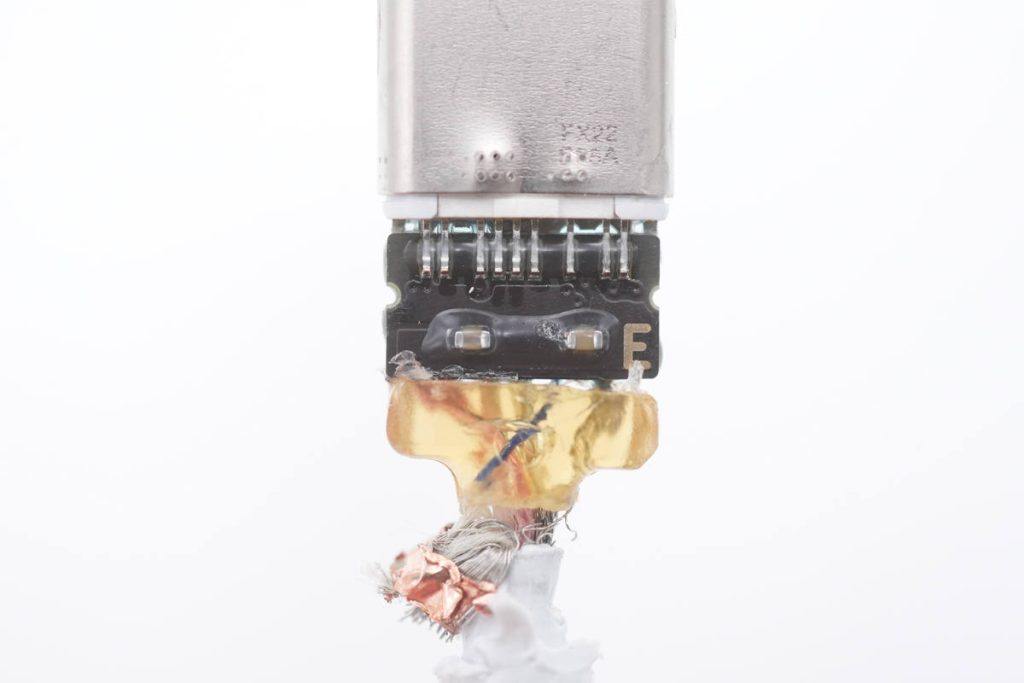
Two capacitors are welded on the back of the terminal board for filtering.
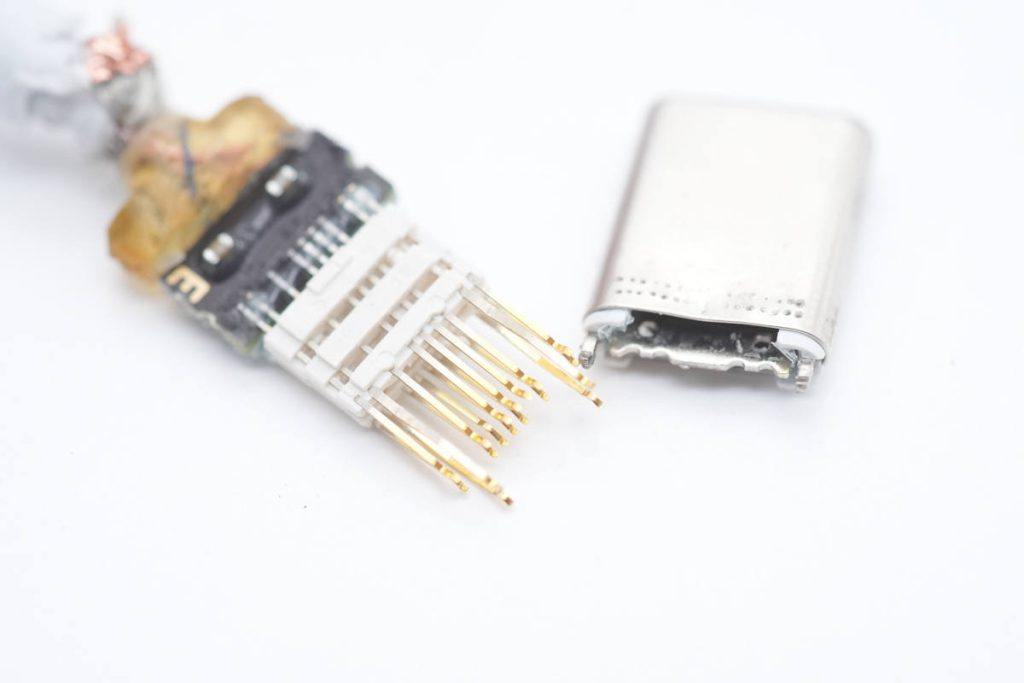
Remove the metal housing of the USB-C male header.
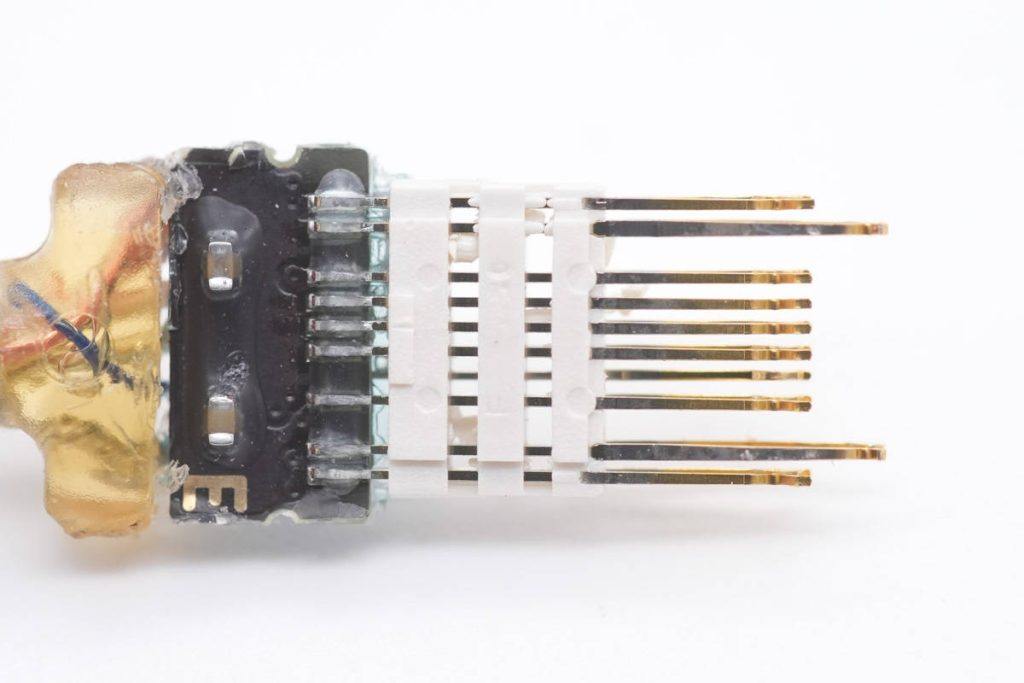
The male header is a non-full pin design, and the two pins near the outer negative pole are lengthened and connected to the charger terminal for grounding, which is a proprietary design of the Apple C to L cable.
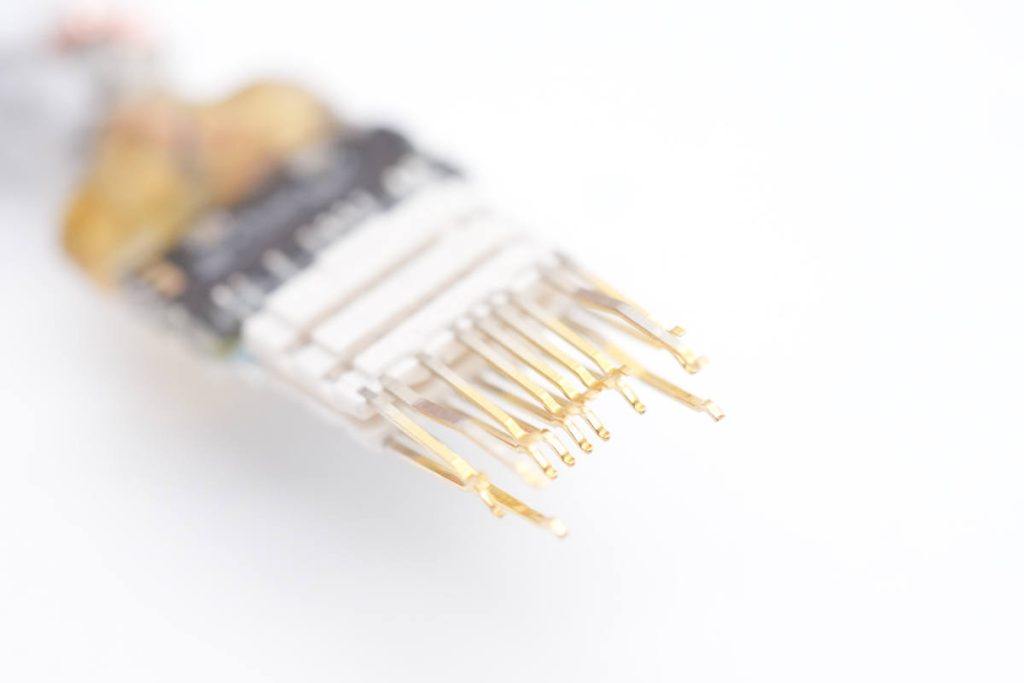
Close-up of the internal pins, the terminal connection is plated with thick gold, which is not easy to oxidize and has a longer life.
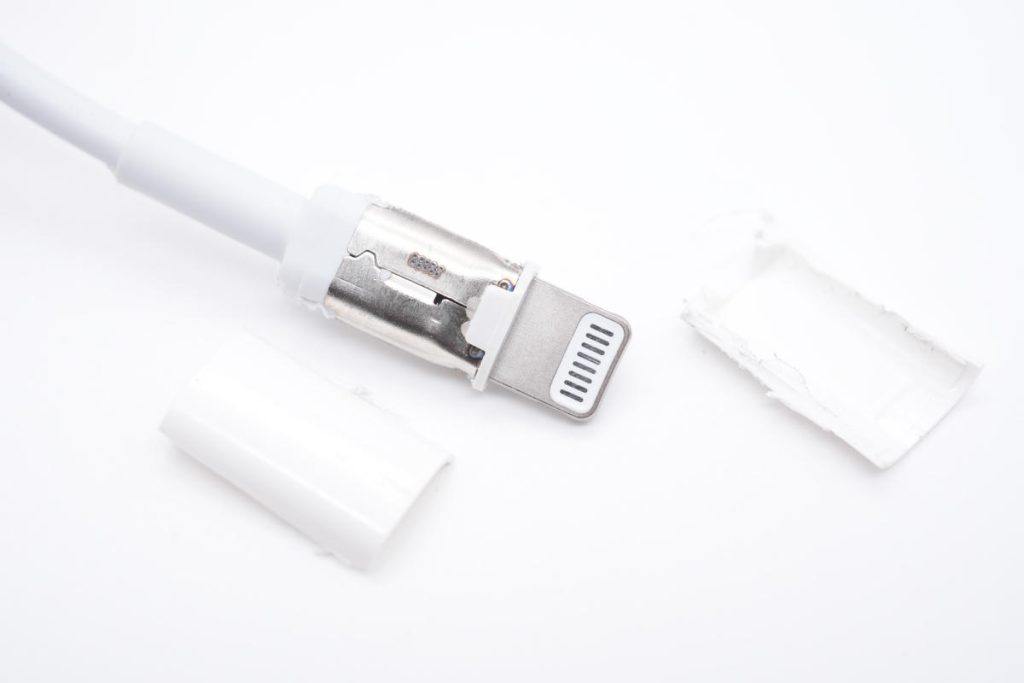
Next use a cutter to cut through the plastic casing of the Lightning plug.
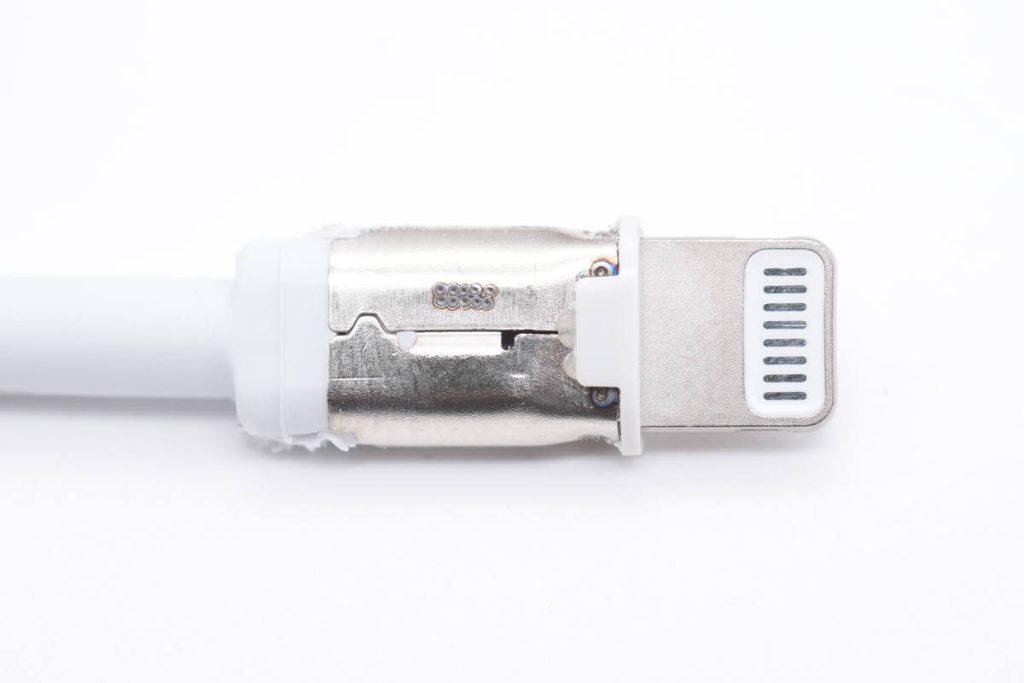
The interior is protected by a steel sleeve spot-welded package, one end is filled with hard sealant, and the other end is assembled with a plastic ring.
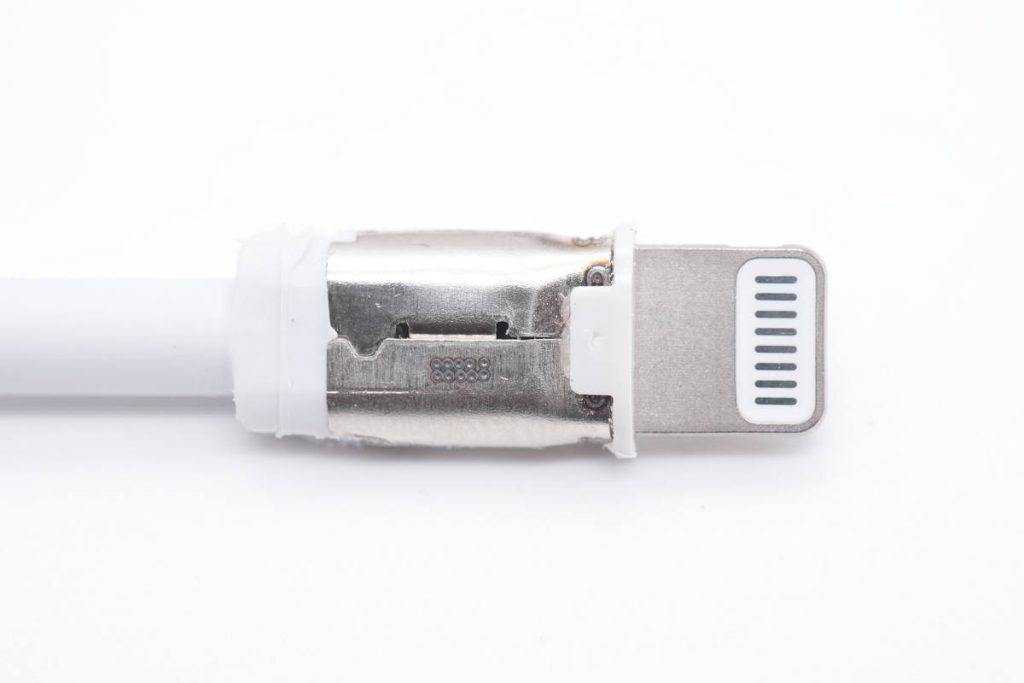
The steel sleeve also adopts a two-piece structure and is fixed by spot welding.
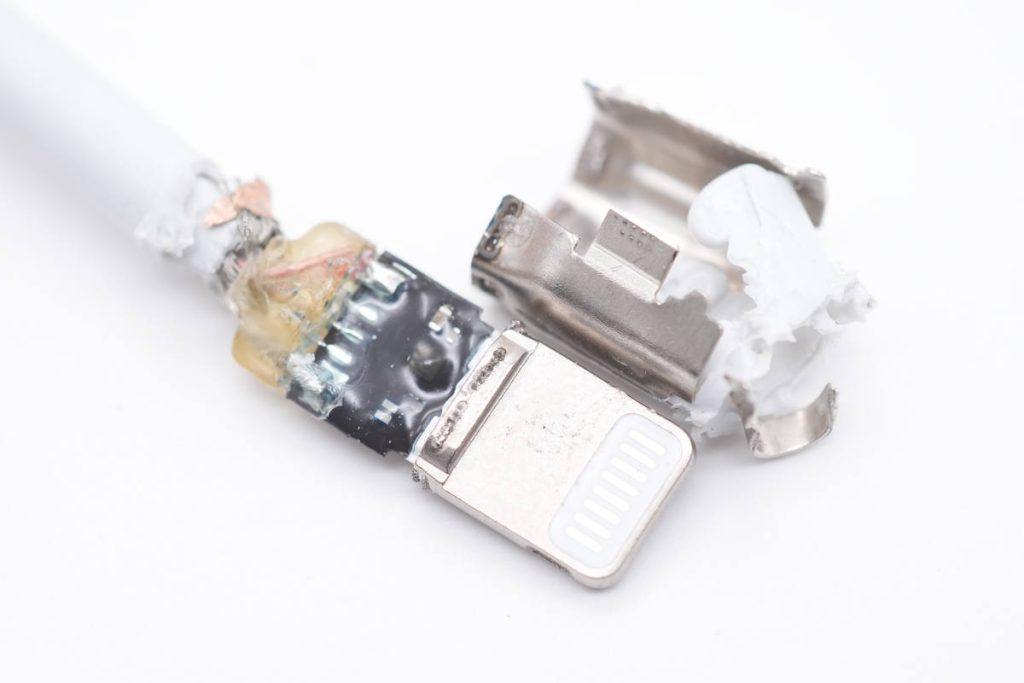
Remove the steel sleeve fixed by spot welding, and also fasten the cable at the end of the steel sleeve for grounding and fixing.
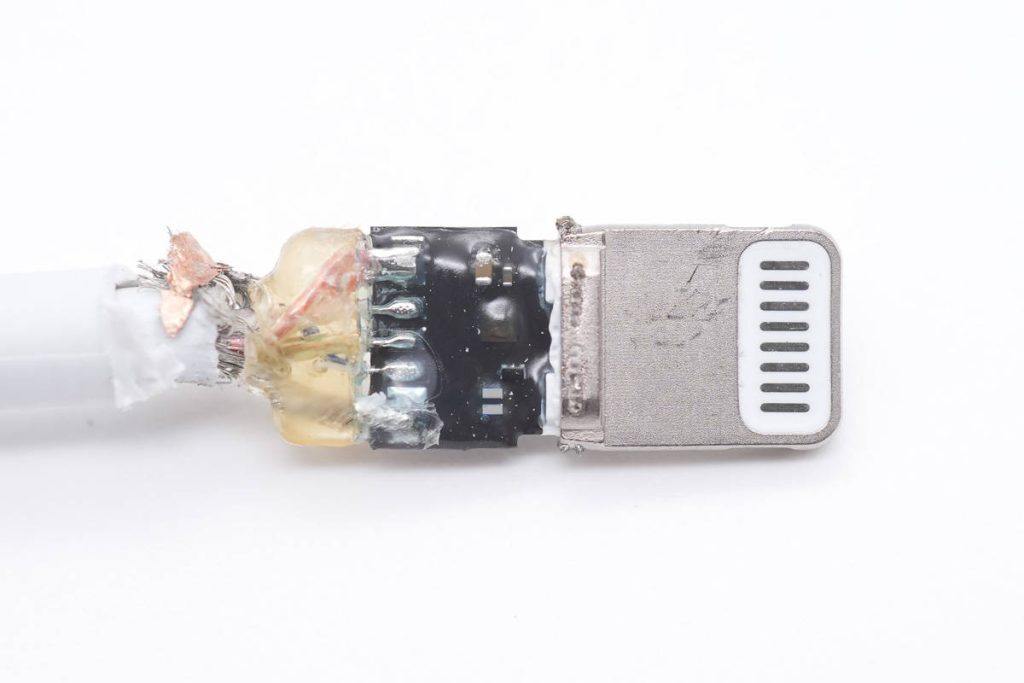
The end of the cable is injection-molded and fixed as a whole and soldered to the Lightning terminal.
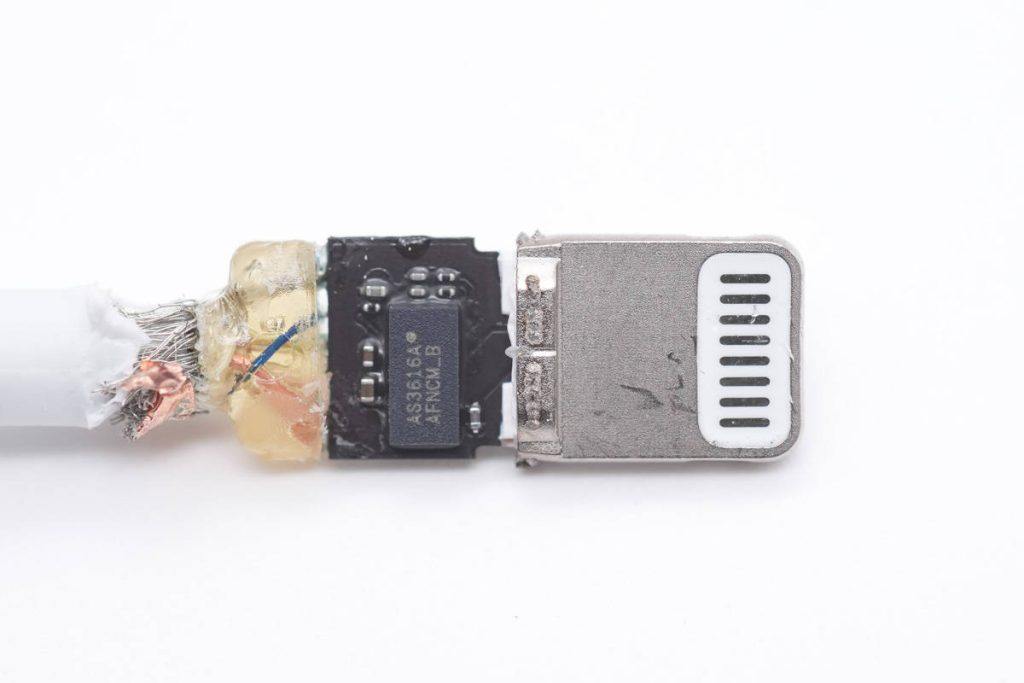
The other side of the terminal board is the AS3616A chip.
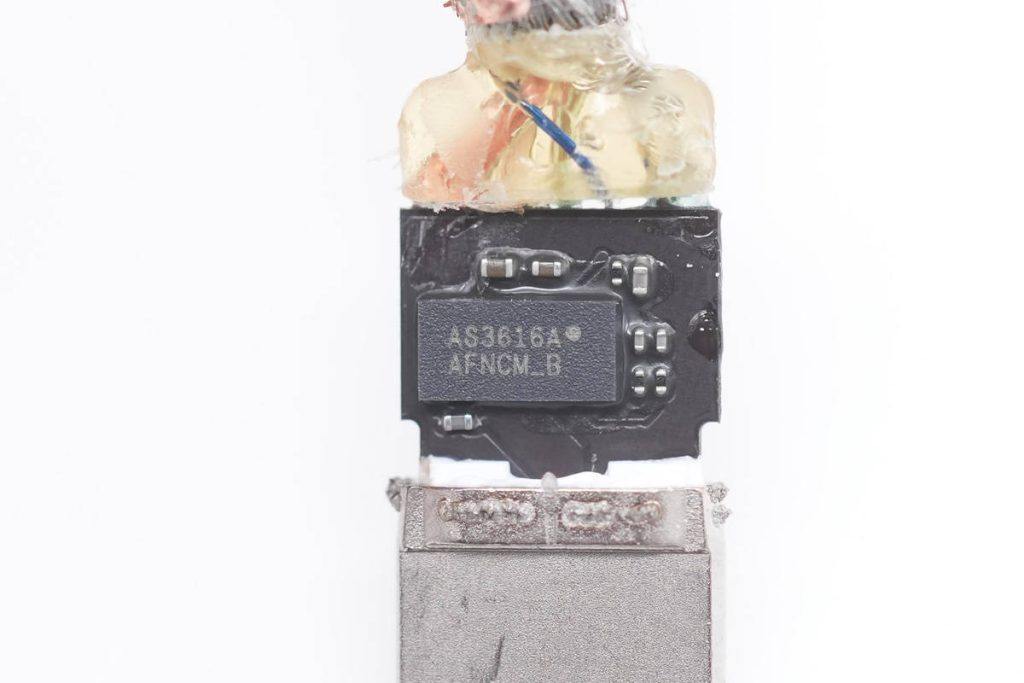
A close-up of AS3616A, which integrates PD fast charging protocol identification, encryption module, product serial number, manufacturer and other information. The terminal element layout is the same as the C94 terminal.
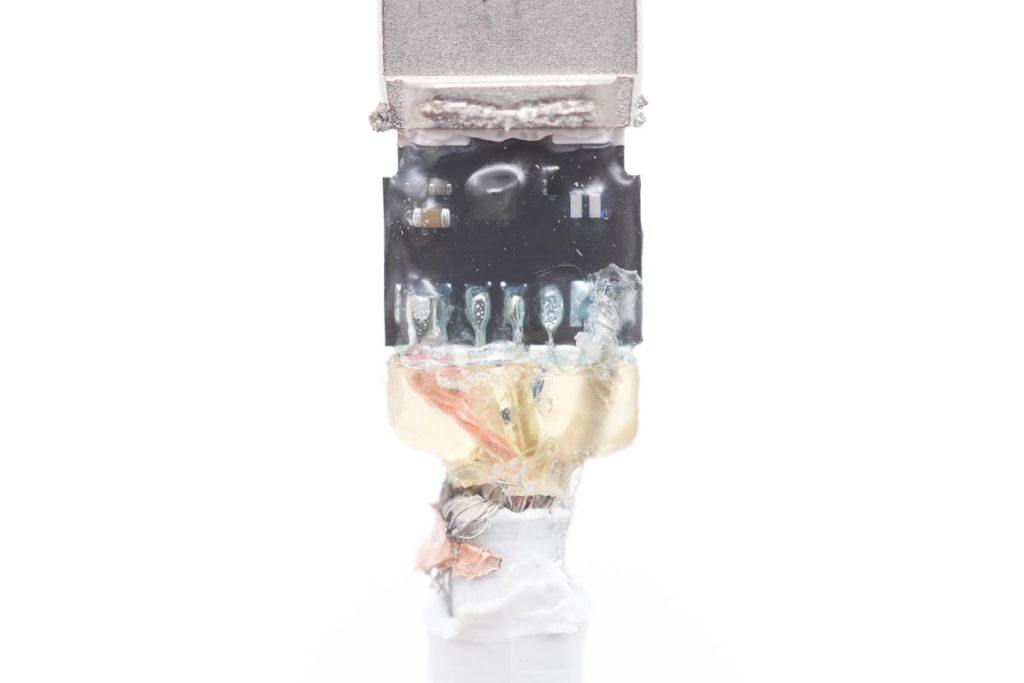
The component layout on the back of the terminal is the same as that of the C94 terminal.
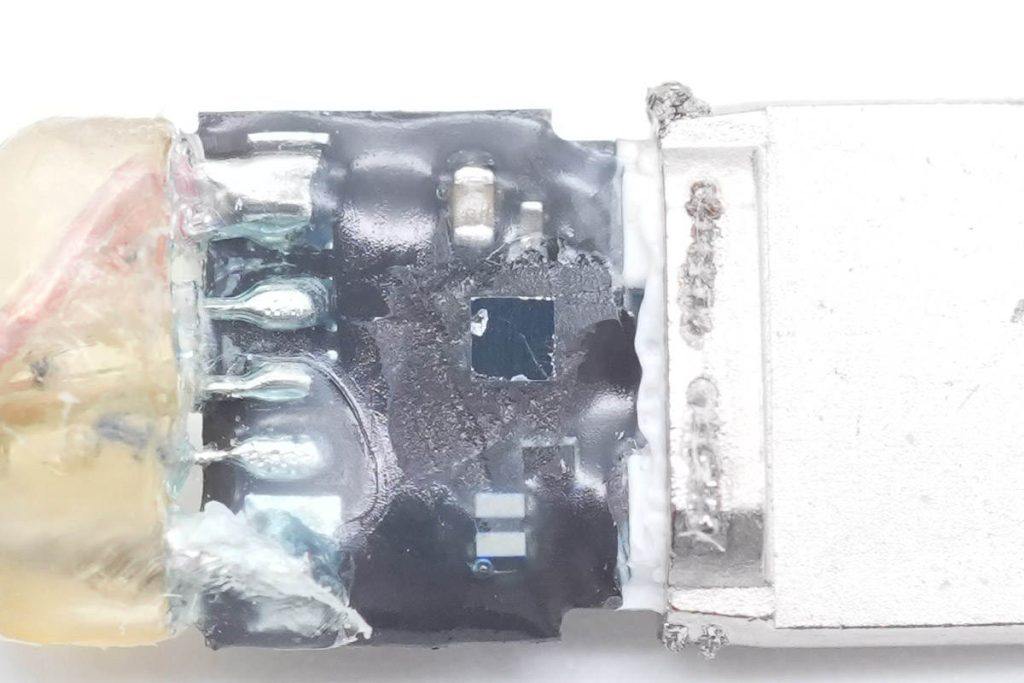
The surface of the terminal is coated with glue for insulation, and the glue is cleaned off. The CSP package chip welded on the back is square.
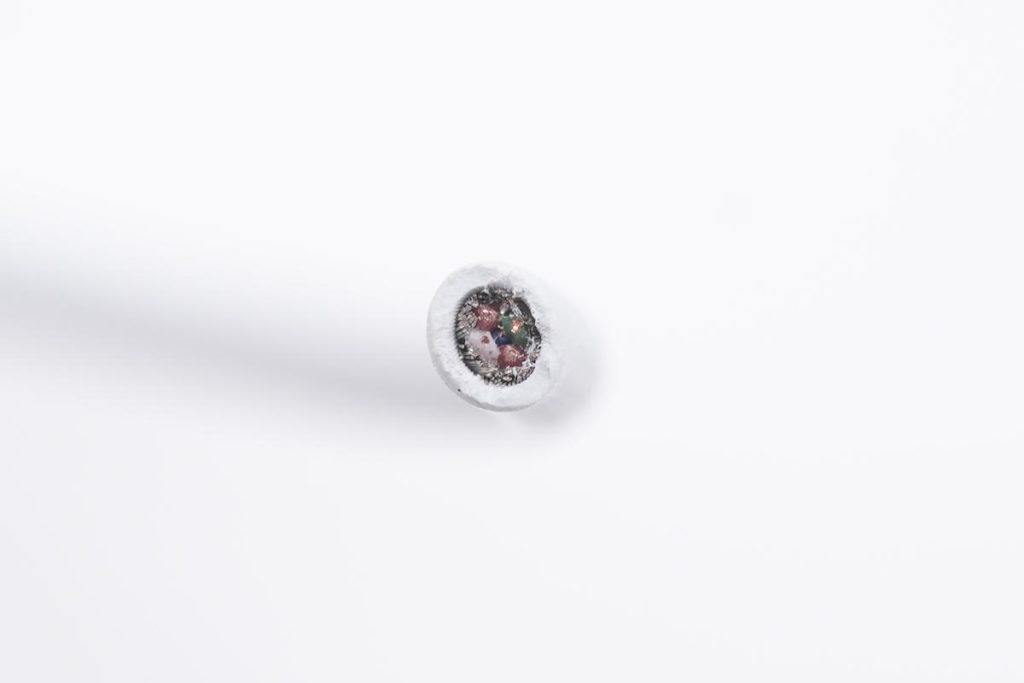
Cut the data line and observe the cross section. You can see five wires, the two red wires are the positive power wires, the blue thin wires are the CC wires, and the white and green wires are the USB2.0 wires.
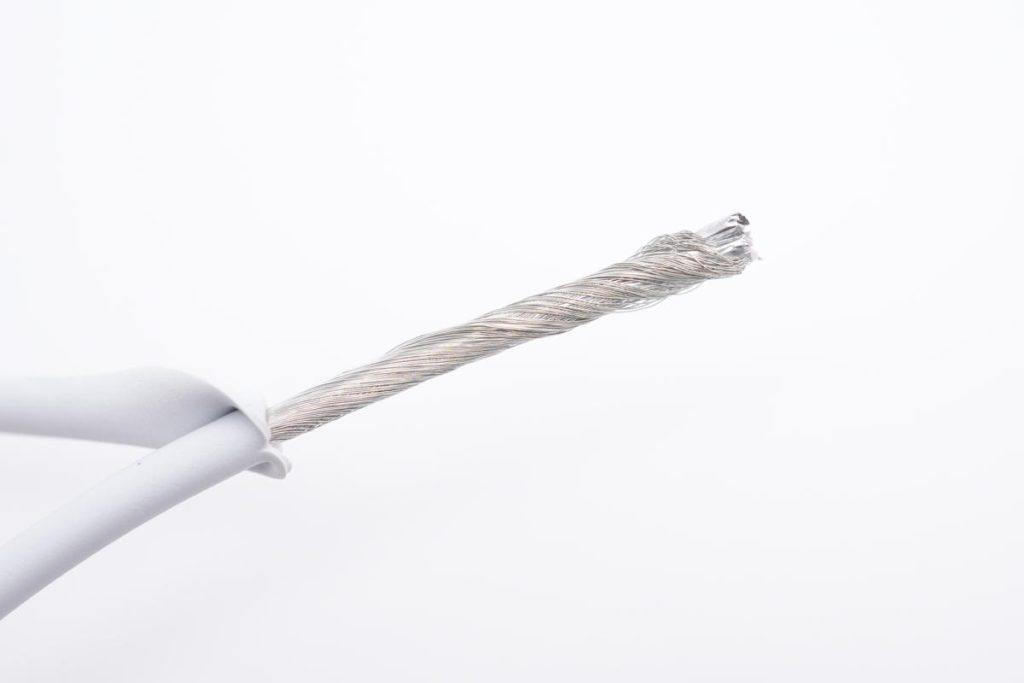
Cut the outer sheath of the cable, and the inside is a layer of twisted shielding mesh.
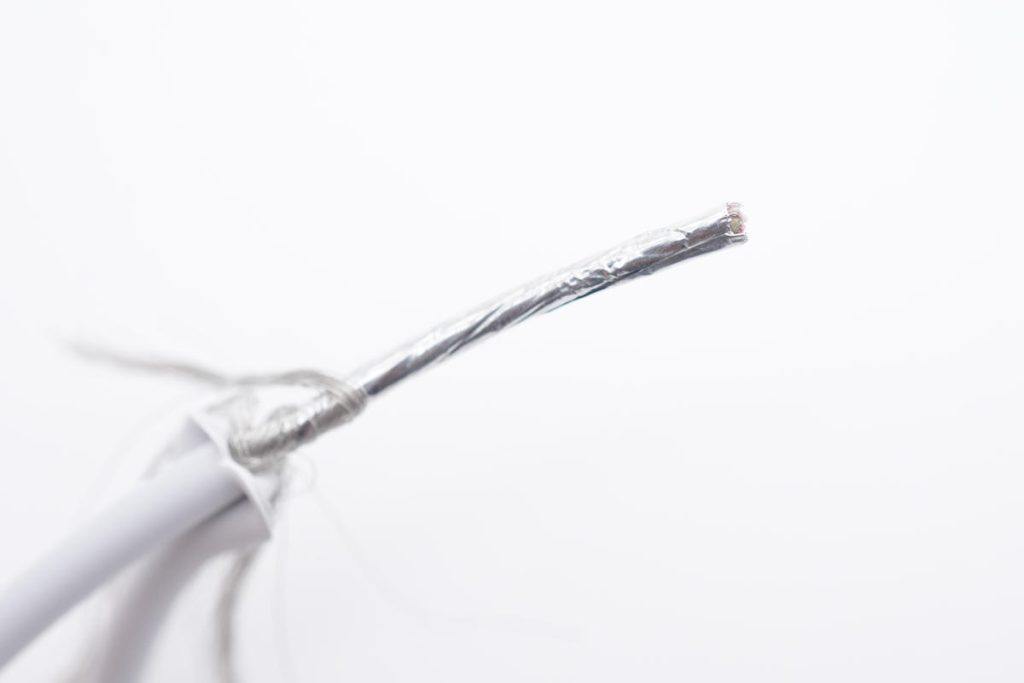
Below the shielding mesh is a layer of shielding aluminum foil.
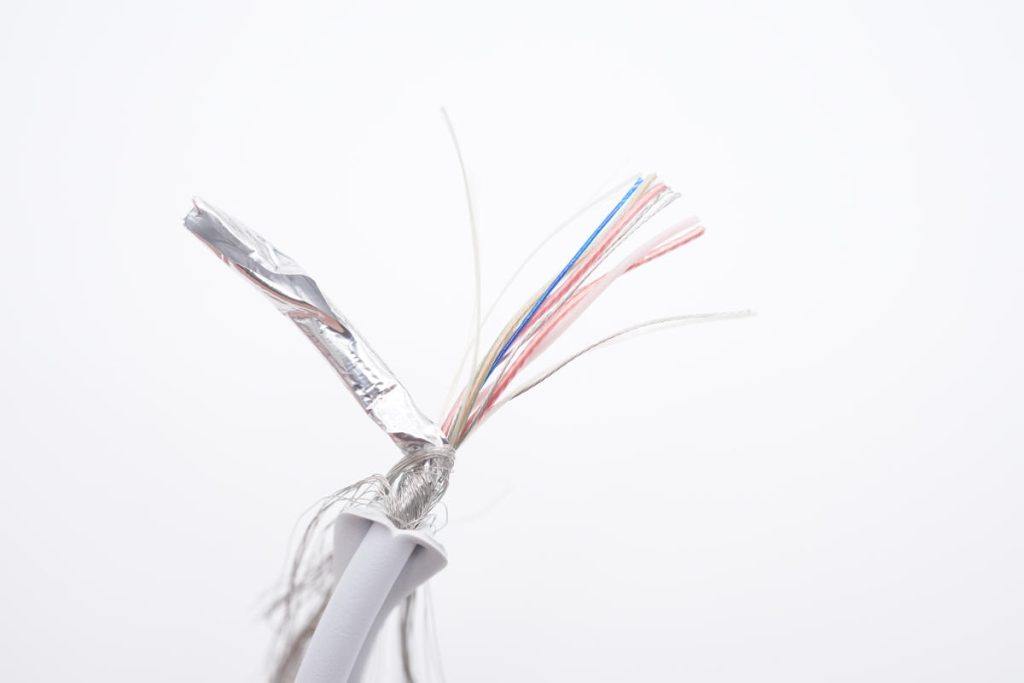
Inside the shielding aluminum foil are the power core and the data core, and the interior is also filled with tensile wires.
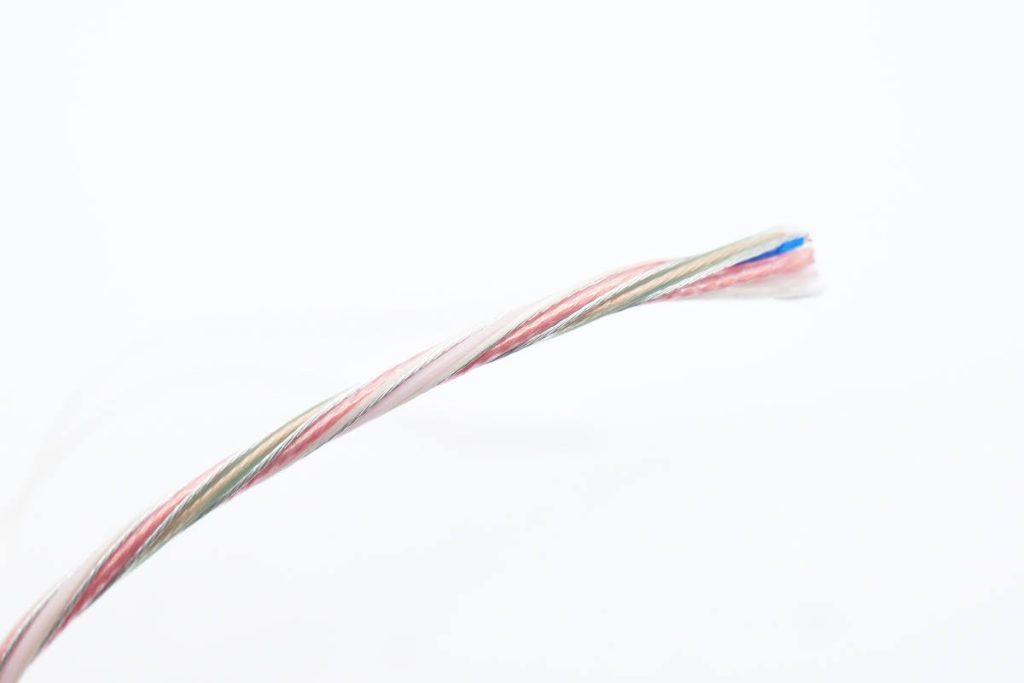
The wire core is a rotating winding structure, which can better relieve stress and make the cable more flexible.
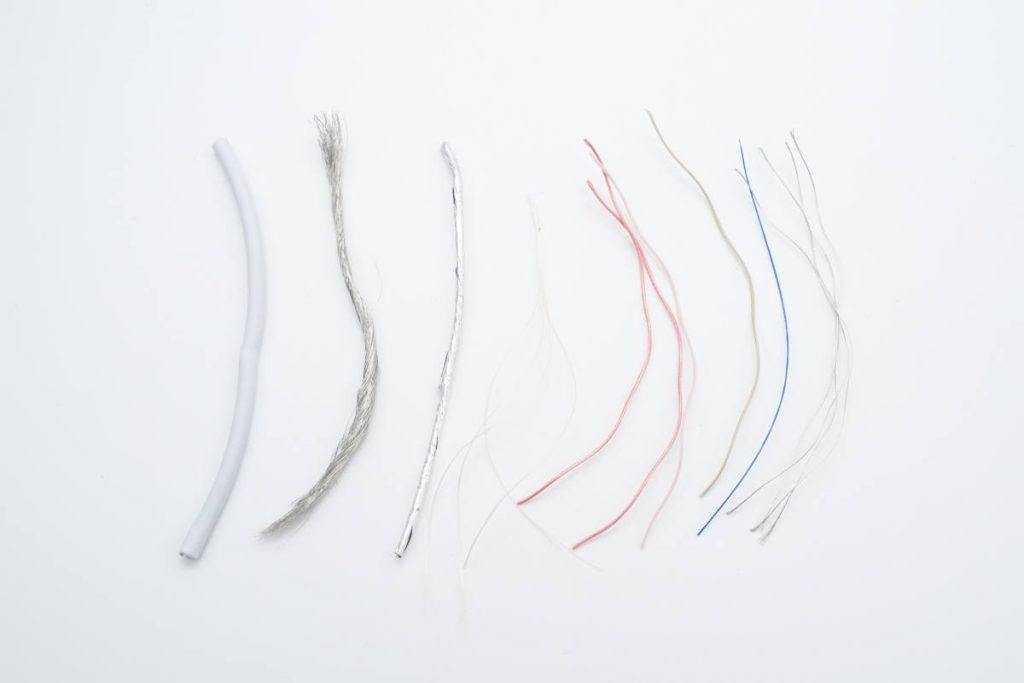
A list of the internal cores of the cable, the following will introduce the design of the internal cores of the cable in detail.
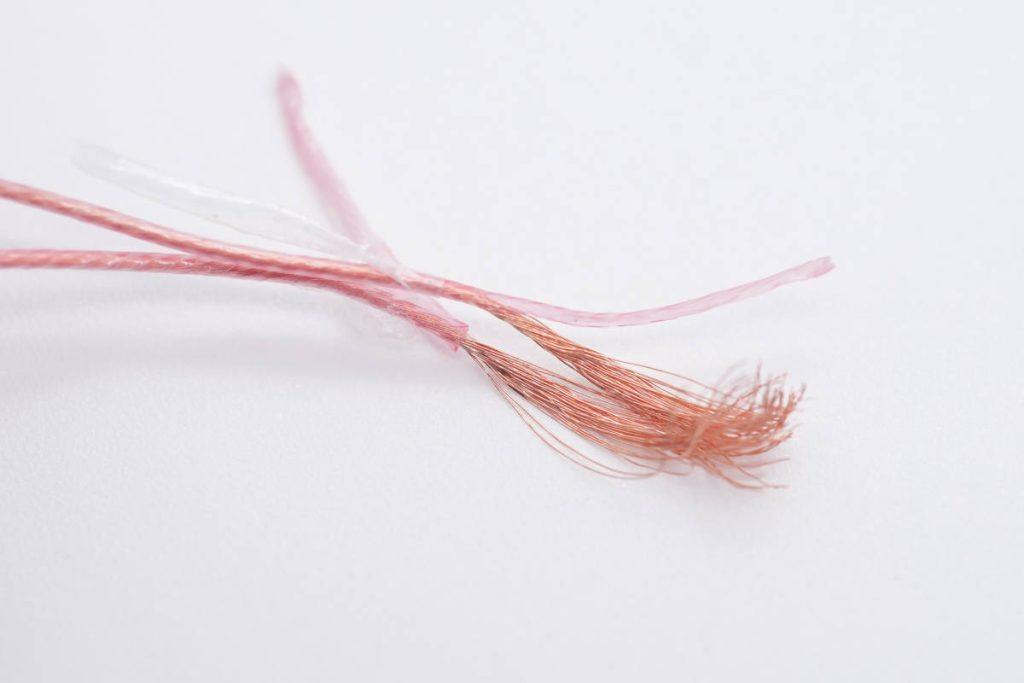
The two red positive power wire cores are made of pure copper wire, and there is no tension wire inside.
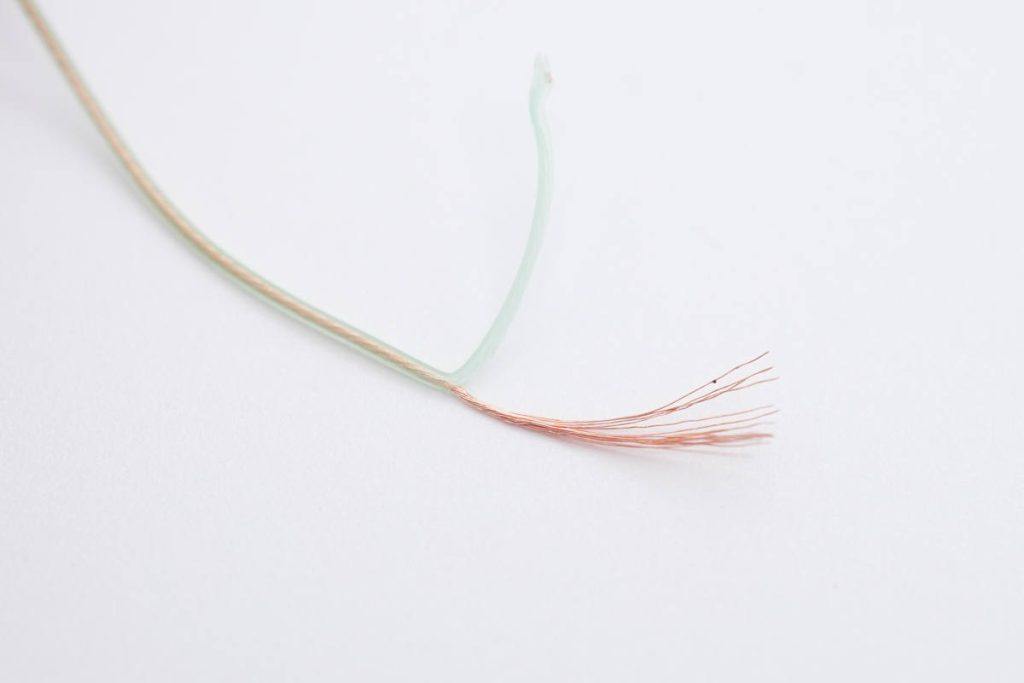
The data cable used for USB2.0 data transmission, green is D+ core, there is no tension wire inside.
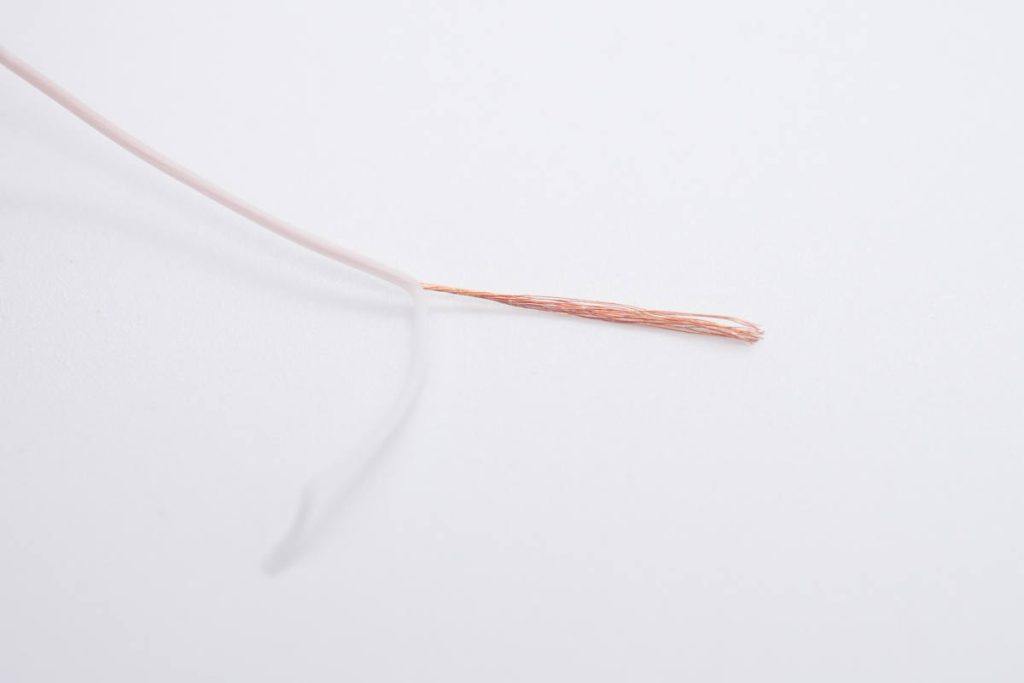
White is D-core, no tension wire inside.
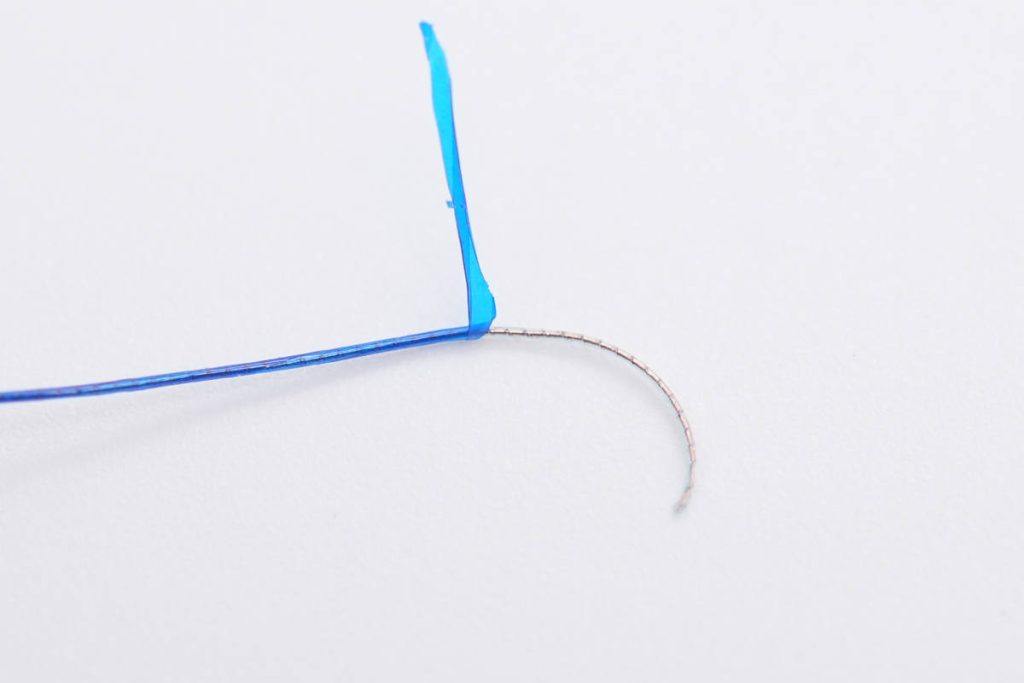
The blue CC cores are wound construction.
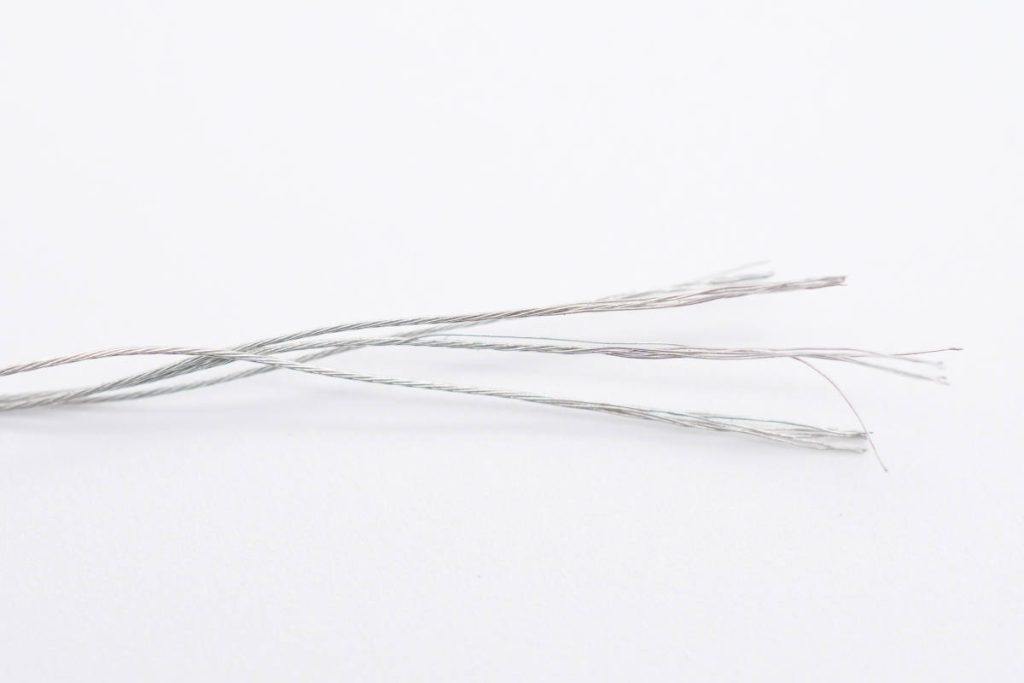
Close-up of the negative bare wire core, using four tinned copper wires in parallel.
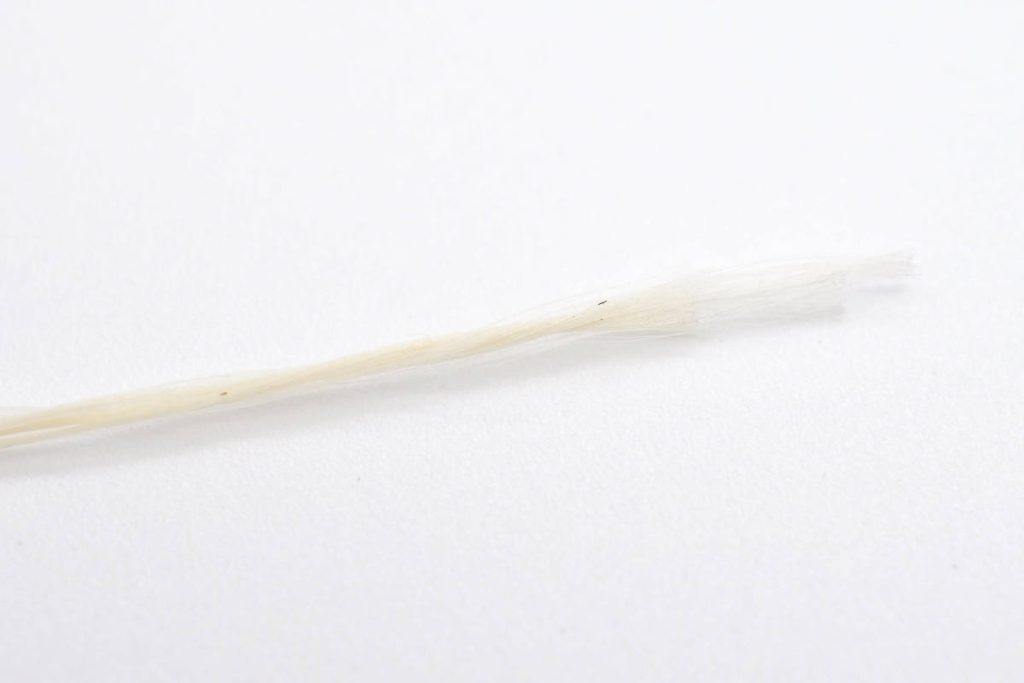
A close-up of the tension wire stuffed inside the cable.
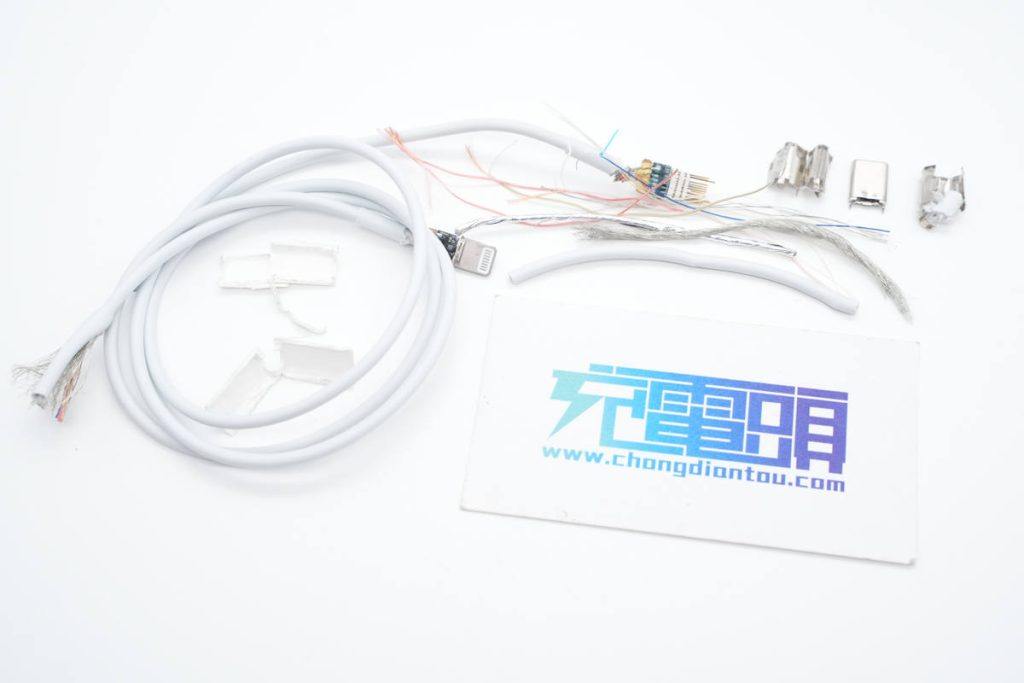
All dismantling list, come to Zhang family portrait.
Disassembly summary of charging head network
The cable dismantled this time is not much different from the previous dismantling. The dissection found that the positive and negative poles of the cable, the USB data cable and the CC cable are all of the same process, and the positive and USB data cables with an insulating sheath are made of copper wires. Core, CC wire adopts winding structure.
This cable is produced by Foxconn as an OEM. The Lightning terminal is a C91M terminal. The USB-C male head is not full PIN design. The inner small plates and wire cores of both ends of the wire head are injection-molded. At the same time, the outer steel sleeve is spot welded and wrapped, which is very protective. good. The outer skin of the wire body is still made of degradable material, the wire core is wrapped with shielding tin foil and shielding net, and the tensile wire is added to increase the strength.
Using POWER-Z MF001 to detect that the cable terminal is C91M, the difference from the C94 terminal is that the small chip changes from a rectangle to a square. Other than that, the circuit component layout is the same as the C94 terminal.