IT House reported on September 10 that TrendForce released a research report today (10th) stating that iPhone Duo shipments are expected to be approximately 5 million units in 2026, which will help Apple gain approximately 24.8% market share in the foldable mobile phone market.
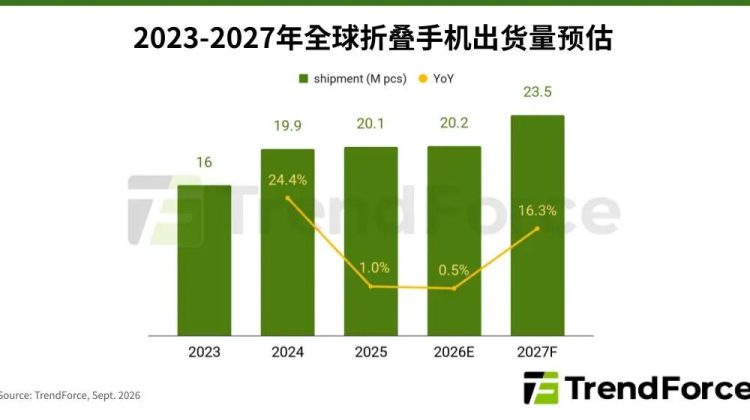
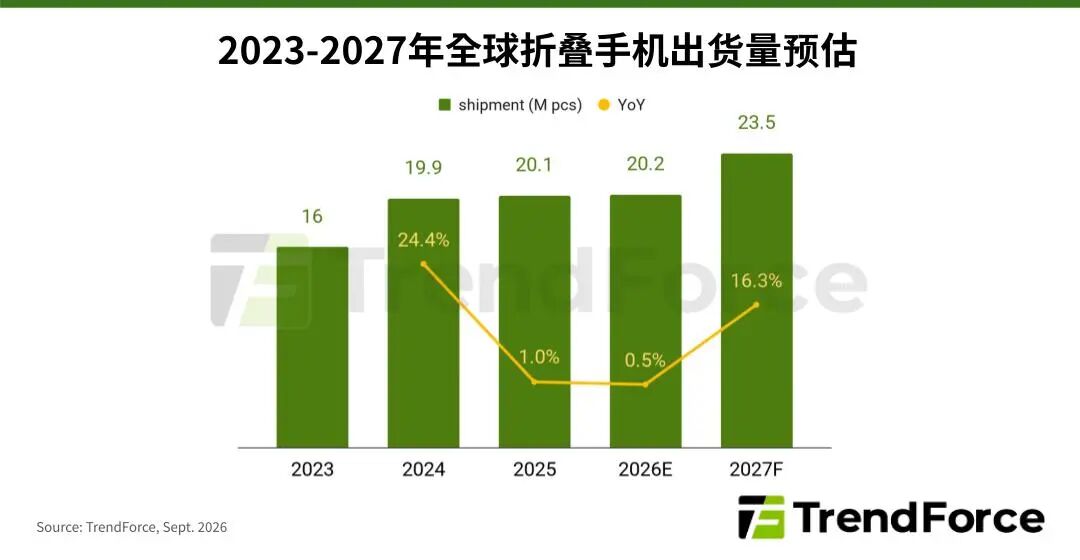
TrendForce estimates that global foldable mobile phone shipments will reach approximately 20.2 million units in 2026, a slight increase of 0.5% from 2025. Excluding Apple’s contribution, the total shipment volume of Android brands in 2026 will be only about 15.2 million units, a year-on-year decrease of more than 20%. The main reason is that the cost of components has increased significantly, and the shipments of various brands have mostly remained the same as the previous year or declined.
IT House learned from the report that under this circumstance, Samsung is expected to ship about 7.1 million units, with a market share of 35.1%; Huawei is expected to ship about 5 million units, with a market share of 24.8%.
As folding devices mature, technology competition has shifted toward thinness and lightweight, low creases and long-term reliability. Crease improvement no longer relies on hinges or a single material, but is moving towards the collaborative design of ultra-thin flexible glass (UTG), optically clear adhesive (OCA), OLED modules and support structures. The stress distribution in the bending area is controlled by matching the material modulus, thickness distribution and stacking position.
TrendForce believes that 2026 can be said to be a “structural restructuring year” for the foldable mobile phone market. The new demand brought by iPhone Duo at this stage can mainly fill the market gap caused by the adjustment of shipments of existing brands. From a mid- to long-term perspective, Apple’s requirements for display, UTG, hinges and overall machine structure are expected to help mature supply chain technology and expand mass production scale. On the other hand, there are also opportunities to prompt other brands to readjust their folding product strategies and accelerate the improvement of technical specifications and cost reduction.
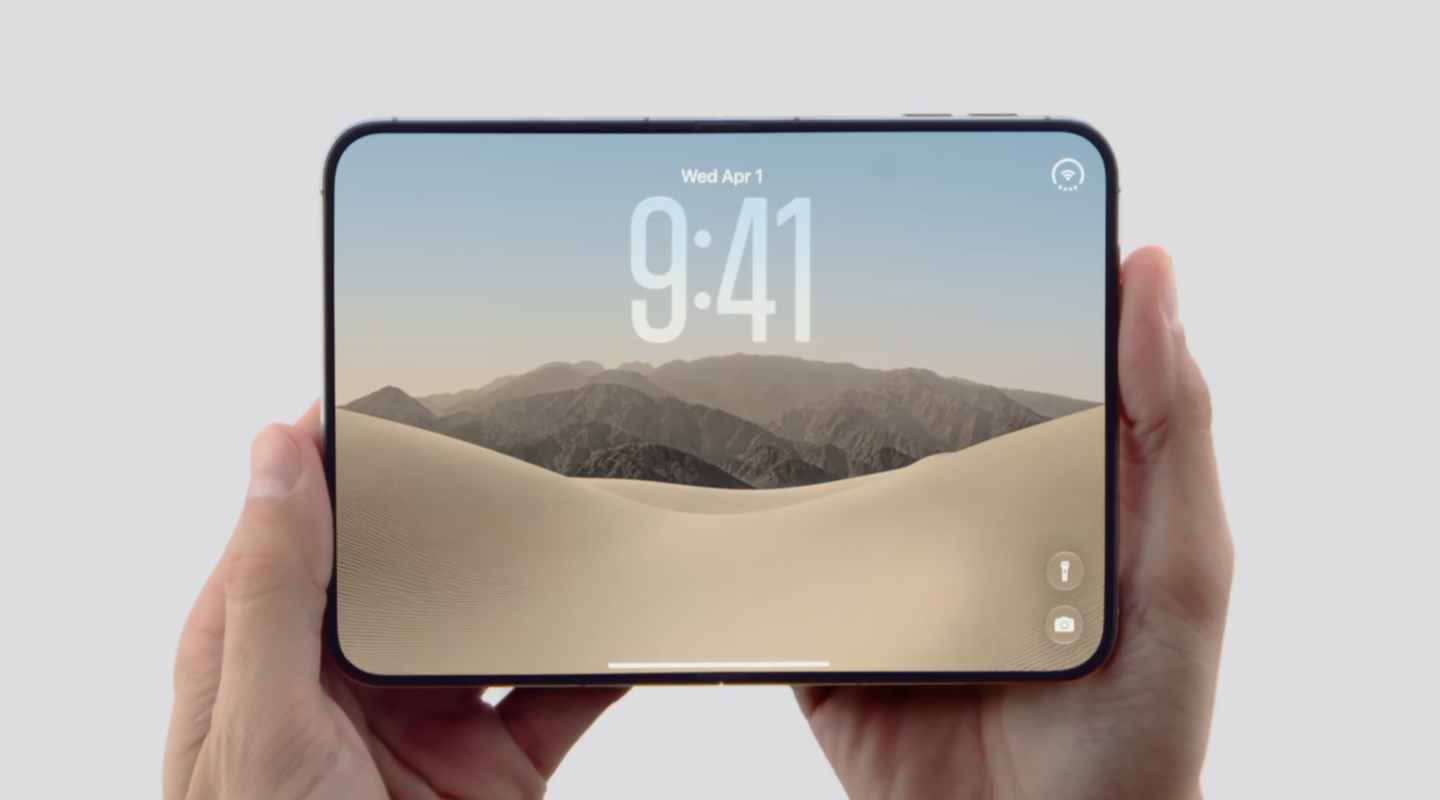
In addition to the continued maturation of hardware technology, AI applications may also become an important factor in driving the growth of demand for foldable devices in the next stage. As generative and multi-modal AI is gradually introduced into smartphones, usage scenarios will extend from single App operations to real-time translation, content generation, image processing, document summarization and cross-App collaboration. When unfolded, the foldable phone has a larger display space and can present AI-generated content, original data and other applications at the same time, further amplifying the value of multi-tasking operations and human-computer interaction.
For Apple, iPhone Duo integrates Apple Intelligence and Siri AI to support natural language dialogue, personal situation understanding and in-app operations. If the foldable large screen can be deeply integrated with AI and multi-tasking interfaces, it will have the opportunity to transform from pure hardware differentiation into a new interface hosting AI applications. This also means that in the next stage of competition for foldable phones, in addition to being thinner, lighter, and with lower creases, how to create an AI experience that is different from traditional candy bar phones will also be the key to further expansion of the market.
2026 Apple Autumn New Product Launch Feature