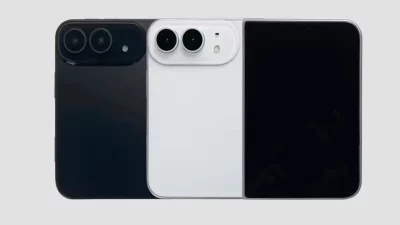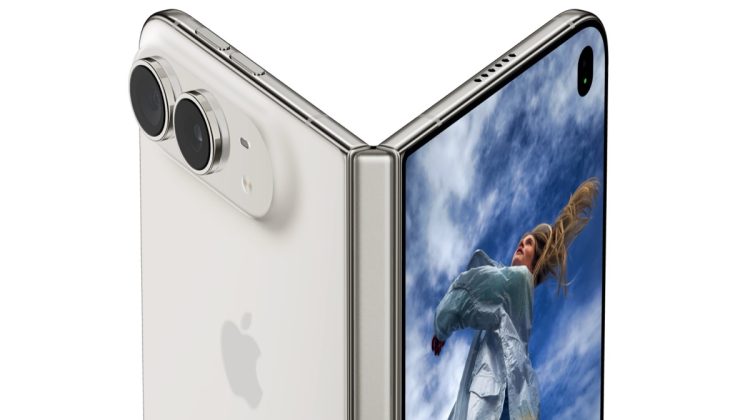
In my opinion, the iPhone Duo is one of the most interesting products Apple has released in recent years. This isn’t because it invents anything new (we’ve discussed that before), but because its foldable design, integrated with iOS, demonstrates Apple’s ability to differentiate through software. The problem is that Apple, which can meticulously carve out every interface detail, has made an incomprehensible decision: iPhone Duo costs more than 2,000 euros, but lacks some professional features. These features are not available on the iPhone Pro. We don’t have ProRes, ProRAW, Apple Log or Apple Reference Image, and some advanced camera tools are missing. The more I look at this list, the less I understand where Apple is trying to position this device.
The lack of ProRes and ProRAW formats is particularly noticeable. Not everyone will use these features. Okay, but we’re not talking about an iPhone for the average user. The ProRes format allows you to record video in a format designed to retain more information and facilitate professional editing later. The ProRAW format is similar in photography. It combines the advantages of iPhone computational photography and provides a more flexible image editing space. Apple Log follows the same principle. It allows you to record a flatter-looking image and then adjust colors more freely during editing. They are professional tools, but that is why they are called “professional”. If I was buying the most expensive iPhone in the range, it would seem reasonable to expect them to all work.
The list also includes advanced camera features related to tracking and focus lock, as well as Apple Reference Image for professional workflows, which provides a consistent visual presentation. We can discuss how many iPhone Duo users will actually use all these features. Probably very few. I myself don’t need to use ProRes every time I take my iPhone out of my pocket to record video. But that’s not the point. Not all iPhone Pro Max users use Apple Log, but that doesn’t mean Apple should remove it. When we buy a top-of-the-line model, part of the price is for features that we may not use every day, but will come in handy when the need arises.
So why does this happen? The most reasonable explanation seems to lie in market segmentation. Apple doesn’t want more expensive products to necessarily mean more professional. Duo launches its own line of products that focus on the look of the device, its screen, and the possibilities that iOS offers when you open the device. At the same time, iPhone Pro remains the tool of choice for photographers, content creators, and those seeking the ultimate photography experience. From a business perspective, I can understand that. Apple has carefully differentiated its products over the years, striving to give each product its own unique reason to buy. The problem is when that differentiation is achieved through software means that removes certain features from pricier devices that would otherwise be available.
Furthermore, some of these absences are more acceptable if there are obvious technical limitations. Folding books come at a cost. Every inch of space inside is at a premium, and Apple must allocate it between the battery, hinge, camera, processor, and all the other necessary components to ensure the phone is no thicker than two iPhones glued together. I’m okay with some cameras being a little less capable because the larger sensors simply won’t fit. But what’s even harder to accept is opening the camera app only to find that some professional features aren’t available at all. It feels very different when the limitation seems to stem from product design choices rather than physical impossibility.
This is the biggest problem with the iPhone Duo. At a price of 2.339 euros in Spain, I do not expect it to be the best iPhone in all aspects. Because its shape inevitably forces us to make a choice. But I do expect Apple to get the most out of the hardware. The Duo can differentiate itself from the Pro model without becoming a feature-limited iPhone. In fact, a device with such a screen would be great for viewing photos, controlling recordings, or working on professional content. Apple built perhaps the most ambitious iPhone in years and then drew an artificial line in the sand, reminding us that if we want certain features, we still need a Pro model. If it were a phone priced at 700 euros, I would still understand this division. But frankly, for a phone that costs 2.339 euros, this approach seems a bit stingy.