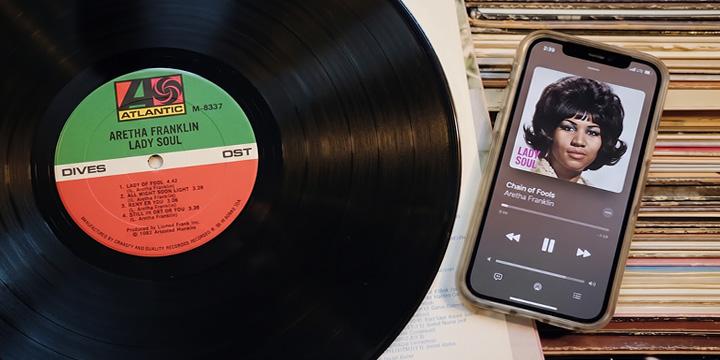
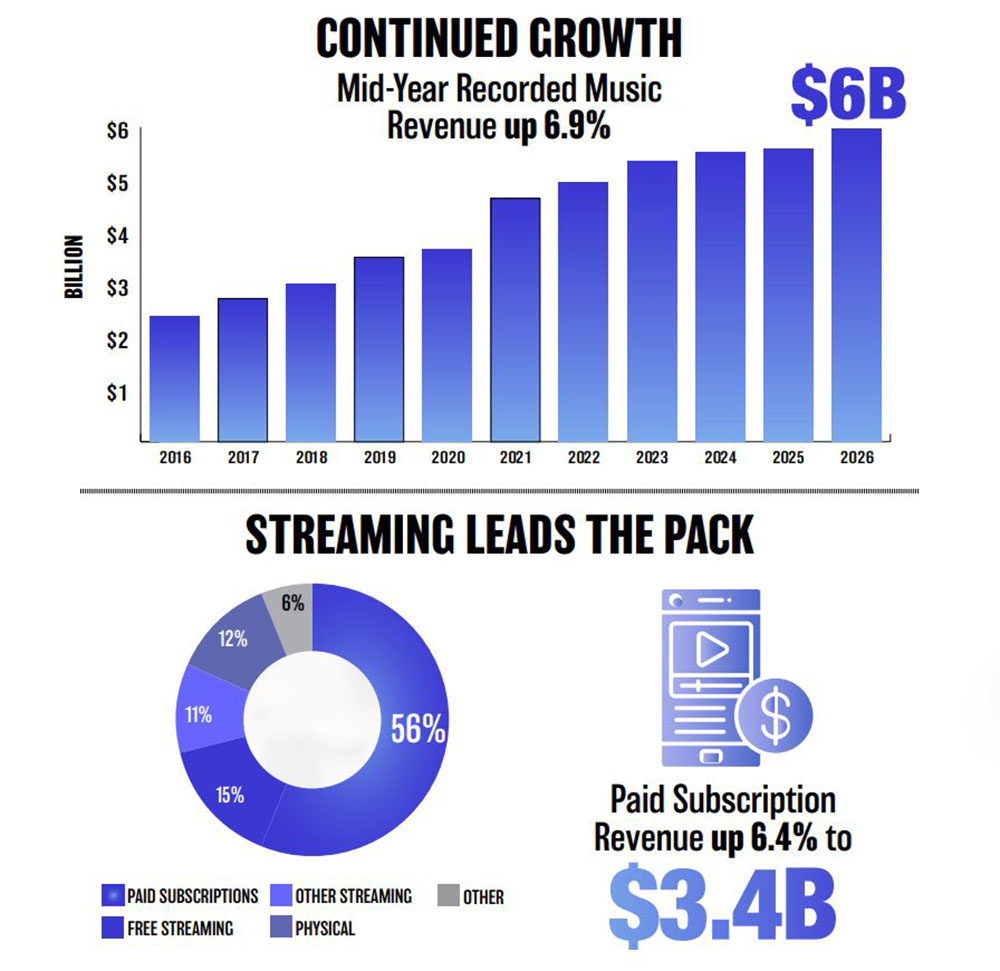
Recently, the Recording Industry Association of America (RIAA) released market survey data, showing that the total revenue of the U.S. music industry in the first half of 2026 will reach US$6 billion, an increase of 6.9% compared with the same period last year. One of the highlights is that consumers’ enthusiasm for physical discs has recovered significantly, and related expenditures have jumped by 25.9%; CDs and vinyl records have both achieved double-digit sales, with increases of 58.6% and 17.7% respectively.
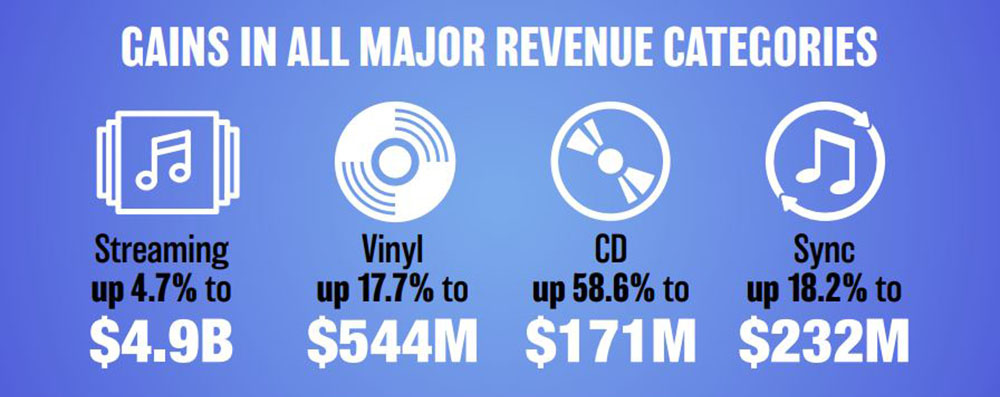
The strong recovery of physical records has not squeezed out the market space of digital platforms such as Spotify, Apple Music or YouTube Music. All major music categories have shown positive development, reflecting the health and diversity of the overall market.
In fact, streaming music is still the absolute main force in the US music industry, with revenue of US$4.9 billion in the first half of the year (an annual increase of 4.7%), accounting for 82% of the total revenue. Among them, paid subscription revenue reached US$3.4 billion (a year-on-year increase of 6.4%), continuing to play a key role in driving the streaming market upward.
The RIAA pointed out that the public’s pursuit of diversified music experiences has prompted the emergence of more special reissues and remastered CDs and vinyl records in the market. This trend not only invigorates business momentum, but also builds a closer and more diverse interactive bridge between musicians, music fans and creative platforms.
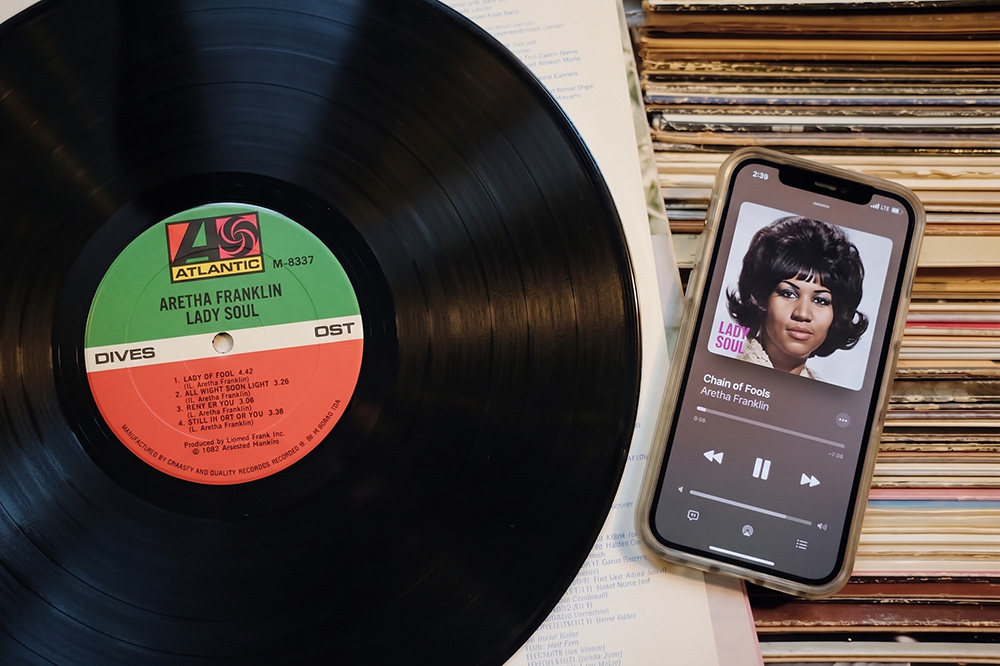
Looking into the rebound momentum of physical records, in addition to the desire of some listeners to break away from the purely digital listening framework, the irreplaceable sound quality characteristics of CDs and vinyl records, as well as the exclusive sense of ritual of truly touching the “physical collection”, are the key to promoting this wave of music renaissance.