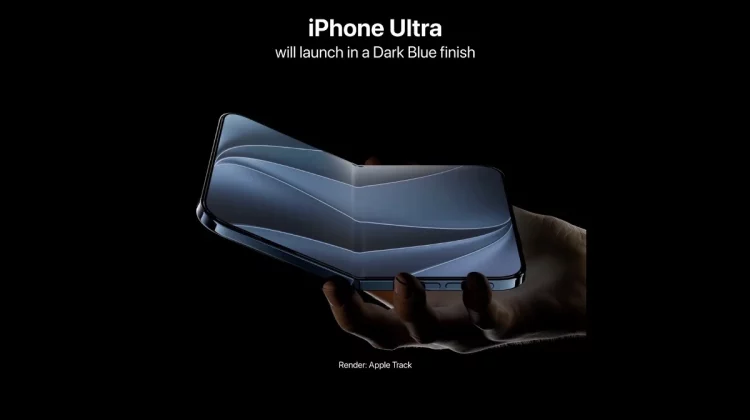
One of the features of the foldable iPhone (tentative name: iPhone Ultra) is that the crease in the center of the main display is expected to be much less noticeable.
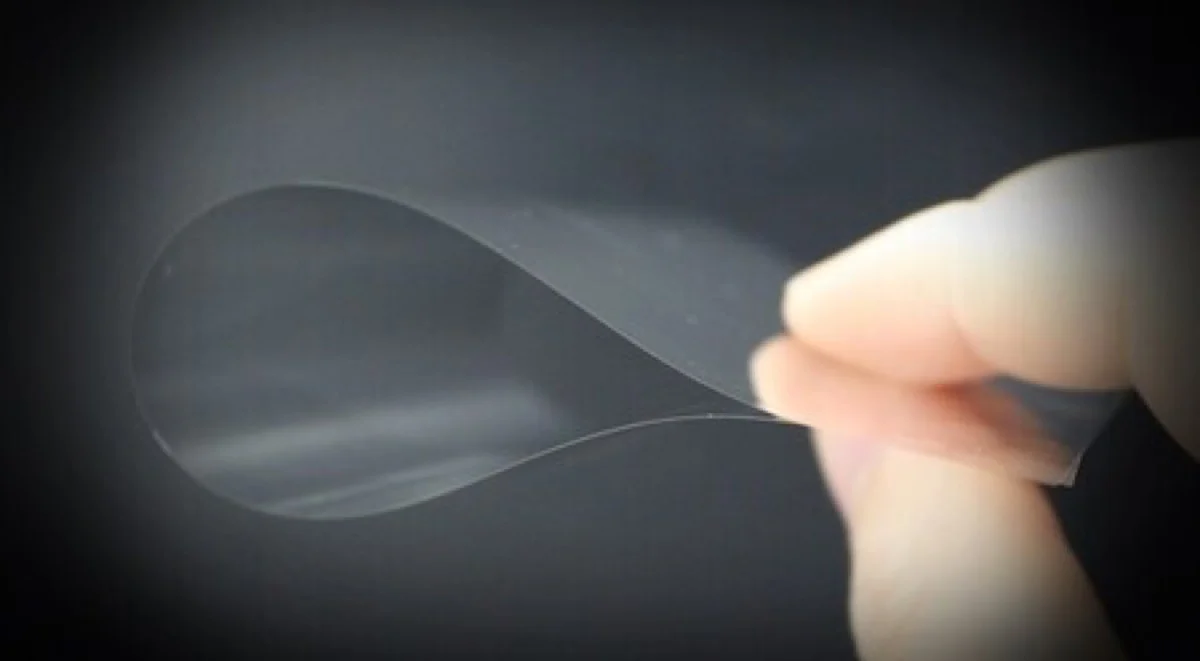
What is rumored to help make this possible is two-layer UTG, which places ultra-thin glass (UTG), which was conventionally used on the front side of the display, on the back side as well.
Korean media The Elec reports that Google, Oppo, and Vivo may also use this two-layer UTG in their next foldable smartphones.
What are the characteristics of 2-layer UTG technology?
The Elec explains that the two-layer UTG, which is rumored to be adopted by the iPhone Ultra, has the following advantages:
- UTG on the surface side improves scratch resistance
- UTG on the back side disperses stress concentrated around the hinge
- Suppresses deformation in the center due to repeated folding operations
- It can be expected to have the effect of making the crease in the center of the display less noticeable.
When folding displays are repeatedly opened and closed, mechanical stress is concentrated in the center. By placing UTG on the back side, it seems that the aim is to disperse this stress over a wider area and suppress the display’s deformation and creases.
Different roles on the front and back sides
The UTG on the front side protects the display from external scratches and pressure. On the other hand, the UTG on the back side is not a part that the user will touch, but is expected to function as a reinforcing layer to disperse stress during bending.
By combining two pieces of UTG for different purposes, the structure is thought to aim for both durability and crease reduction.
Galaxy Z Fold8 is reinforced with titanium
The Galaxy Z Fold8 also has a reinforcement layer added to the back side of the main display. However, Samsung is not using UTG, but a titanium shock absorption layer called “Flex Titanium”.
Samsung explains that the Galaxy Z Fold8 uses a titanium panel for the shock absorption layer at the bottom of the display, increasing the strength of the display.
So while the iPhone Ultra’s dual-layer UTG and the Galaxy Z Fold8’s Flex Titanium are similar in their purpose of reinforcing the back of the display, they use different materials and structures.
Common approach to crease reduction
The Flex Titanium in Galaxy Z Fold8 is primarily intended to improve strength, but it has the same idea as the two-layer UTG in that it suppresses deformation when folded by reinforcing the back of the display.
The iPhone Ultra also uses glass on the back side, which may be aimed at finely controlling stress distribution and making creases less noticeable.
However, it is not expected that the creases will completely disappear in the production version of iPhone Ultra, and it is likely that they will be less noticeable than existing foldable smartphones.
Will Google and others adopt it in their 2027 models?
According to The Elec, Google, Oppo, and Vivo are also considering adopting a dual-layer UTG structure for their 2027 foldable smartphones. If it’s Google, the next-generation foldable model, the Google Pixel 12 Pro Fold (tentative name), is likely to be a candidate.
If the new folding display structure rumored to be adopted by Apple spreads to other companies, crease reduction technology could become an important competitive axis in the foldable smartphone market in 2027.
Will the passport-type design follow suit?
What will be interesting to see is whether other companies will only adopt two-layer UTG, or whether they will also follow the display size and aspect ratio rumored for iPhone Ultra.
The iPhone Ultra is expected to be short in height and wide, so-called passport style. Samsung’s Galaxy Z Fold8 also measures approximately 5.5 inches when closed and approximately 7.6 inches when unfolded, with a main display aspect ratio of 4:3.
If Google, Oppo, and Vivo adopt similar sizes and aspect ratios in addition to dual-layer UTG, it is possible that the folding smartphone market in 2027 will see an increase in models with design concepts similar to the iPhone Ultra.
Source: The Elec
Photo: Apple Cycle (@theapplecycle)/X
Source: iPhone Mania