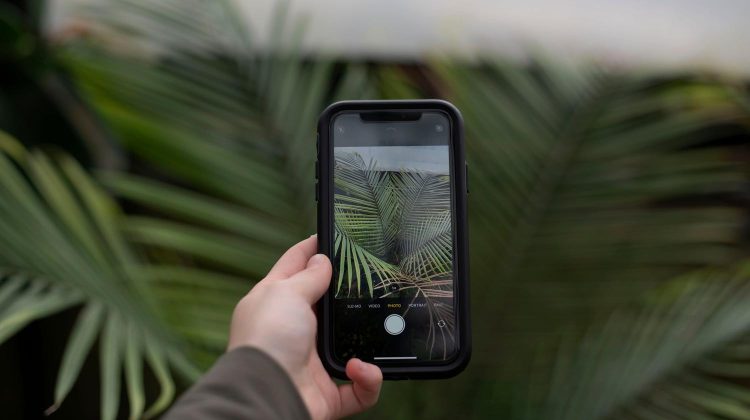
Have you ever been walking in the countryside or visiting a garden center and fell in love with a plant at first sight, but didn’t know its name? Isn’t it frustrating to wonder if a particular flower is poisonous to your dog, or just want to show off your botany knowledge but can’t tell the difference between a banyan tree and a pothos? Luckily, these days you don’t have to have a degree in botany or carry around a heavy encyclopedia because your… iPhone can tell you the name of any leaf. Just press the shutter button.
Technology is advancing so rapidly that we now carry a plant laboratory in our pocket. Whether you take advantage of the features that come pre-installed with your operating system or use one of those really great external apps, identifying plants is easier than ever. In this article, we’ll take a comprehensive look at all the options available, from… Free and scientific tools From apps that can help you rescue sick and weak plants, to plant identification apps that can help you easily identify an unusual plant next time you encounter it, let’s take a look at the best apps for identifying plants with your iPhone camera.
The secret is: native recognition without installing any software

Many people don’t know that if your iPhone has been updated to iOS 15 or higher, you don’t need to download any apps from the App Store to use it normally. It has a built-in feature called “iOS”. Visual Find uses a neural network engine to analyze photos. In simple terms, the phone reads the image, searches a database for matches, and then connects the information directly to Wikipedia.
It’s very simple to use: you take a photo of the plant, open the image in the gallery and see if it appears[图片/标签/等等]. The little star icon next to the letter “i” is in the bottom menu. Once clicked, the system analyzes the object and provides an information sheet containing the name of the species. Accuracy, however, depends heavily on whether the photo is in focus and well-lit, but it’s still a good starting point. A quick and effective solution It even works with old photos you already have saved.
Professional applications for the most demanding users

If you want to go a step further than just remembering a name, there are a few apps on the market designed specifically for this. They are the Swiss Army Knife of botany.
- Here’s the picture: It’s probably one of the most powerful products on the market. It has… Nearly 98% accuracy It can identify over 400,000 plant species. The best part is that it not only tells you the name of the plant, but it can also diagnose the health of the plant like a plant doctor; if your plant has brown spots or is wilting, you just take a photo and the app will diagnose it. Diagnosis and Treatment Options Additionally, it will alert you if the plant is toxic to your pet and comes with a light meter to determine if the pot is in the right location.
- PlantNet: Ideal for those seeking scientific rigor. It’s not just an ordinary commercial app, but a… Citizen Science Project The project, promoted by institutions such as CIRAD and INRA, focuses on wild plants (not for indoor or ornamental plants) and allows users to complete the database by donating photos. For this to work effectively, ideally… Center the photo to a single organ like a leaf standing on a solid color background.
- Natural ID: It’s very intuitive, but not very effective, and the main language is English. It can identify around 10.000 species with 95% accuracy and stands out for its… The irrigation reminder system is perfect for those of us who are a little forgetful and often forget to water our plants.
- Unknown Plants: If you are looking for an app that is completely free and easy to use, this is the app for you. Although its interface looks like it’s from fifteen years ago, it’s extremely reliable and has the approval of German academic institutions. It focuses on… Wild Plants It provides you with data on the toxicity and conservation status of species.
Other useful tools and interesting methods

For example: TreeApp This is a Spanish boutique application developed by the Spanish National Research Council (CSIC) Royal Botanical Garden. Unlike previous apps, it does not use cameras for automatic identification, but guides users through fact sheets and descriptions about native species in Spain and its surrounding areas. Best of all… Doesn’t require an internet connection to work making it ideal for backcountry hiking.
In addition, Plant Snapshot has a huge database of up to 600,000 plant species, including mushrooms and cacti, and provides very detailed cultivation advice. If you’re looking for more general information, Google Lens is the logical choice; while it’s not a professional botany software, its visual search capabilities are very powerful and allow you to compare plants with thousands of images on the web.
For those who want to turn nature into play, look for this to be the best option. It allows you to identify flora and fauna while earning medals and completing challenges, making learning about biodiversity fun. It’s just as addictive as playing Pokémon Go although it’s also primarily available in English.
Tips for accurate human identification

While technology is amazing, the ability to observe is crucial. If the app glitches or the battery dies, you can try to identify plants by observing your surroundings. Weather and terrain type will give you your first clue: Evergreens typically grow in cold climates. Deciduous trees are more common in warm, humid areas. Analyzing trunk shape, flower structure and fruit type are traditional methods that work well, especially when supplemented by manual web searches.
The best strategy is to have a good piece of equipment that can take clear photos, a notebook to record your observations, and looking at your plants from different angles. The key is… paying attention to the smallest details such as the veins of a leaf or the arrangement of petals, that’s what the app’s algorithm is trying to imitate.
Today, we have a dazzling array of choices, from the simplicity and ease of use of Apple’s visual search, to the in-depth technology of PlantNet, to the practical functions of PictureThis. Whether you’re looking for a scientific approach, looking for care instructions to avoid wilting the pothos in your living room, or simply exploring nature in a fun way through Seek, iPhone has become an essential companion for gardening enthusiasts. Transform a simple photo into a source of knowledge Instant Plants