CXMT, China's biggest DRAM maker, is getting ready to run limited production of HBM3E, the advanced memory that gets stacked beside AI accelerators. The yields are poor. Reuters reported October 28, citing people familiar with the matter, that only 20% to 30% of the chips come out usable. SK hynix, which leads global HBM supply, runs around 70%.
The timing is aggressive anyway. Limited production is expected within about the next two months.
HBM3E yields at 20% to 30% versus about 70% at SK hynix
Low yields make every good chip expensive. Reuters notes a significant portion of output has to be discarded or reworked, so CXMT's HBM3E costs more to build than comparable parts from overseas rivals. The company began developing HBM internally as early as 2024.
Performance lags as well. Testing showed CXMT's HBM3E sitting closer to SK hynix's previous-generation HBM3 than to current HBM3E, according to the report. SK hynix, Samsung and Micron still dominate global HBM supply. TrendForce carried a summary of the Reuters report the same day.
Two HBM3E versions sent to domestic AI chip designers
CXMT has delivered samples to several domestic AI chip designers. Two versions are in circulation, a standard design and a revised one carrying changes meant to improve manufacturing yields.
Reported test customers include Alibaba's T-Head chip design unit and Cambricon, said to be evaluating the memory for their own processors. That came from a September Seoul Economic Daily report citing The Information. Products using CXMT HBM3E could reach the market as early as 2027.
Huawei and Cambricon already raised AI chip prices 20% to 50%
The push comes out of shortage, not strength. In September Reuters reported that Huawei, Cambricon, MetaX and Iluvatar CoreX had raised prices on current and next-generation AI chips by 20% to 50% as memory costs climbed. Chinese chipmakers have leaned on costly grey-market HBM after tighter U.S. export restrictions. Grey-market memory already showed up on this site earlier this month, when phone brands were reported buying chips pulled from scrapped phones in Huaqiangbei.
Counterpoint's second-quarter figures, cited by Reuters, put SK hynix at 50% of global HBM revenue, Samsung at 33% and Micron at 18%. CXMT held about 10% of global DRAM revenue in the same quarter, fourth-largest among conventional DRAM suppliers. The distance between conventional DRAM and HBM is the story. SK hynix told investors this week that it is booked on DRAM and HBM through 2029, with the shortage running to 2030.
CXMT has said little itself
At a September investor briefing, Southern Metropolis Daily reported, CXMT management did not directly answer questions about HBM. They said only that the company would keep developing products and processes along its existing roadmap. An analyst quoted by Reuters said samples may have shipped, but whether they meet domestic customers' requirements, and when CXMT reaches stable large-scale production, stays unclear. CXMT ships other advanced memory too. It started LPDDR6 mass production in September.
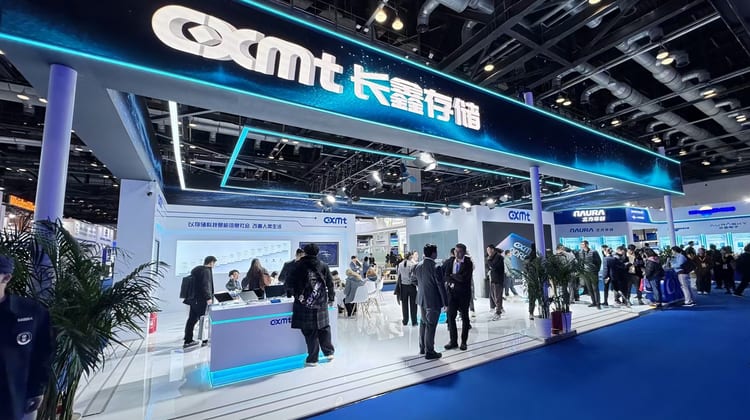
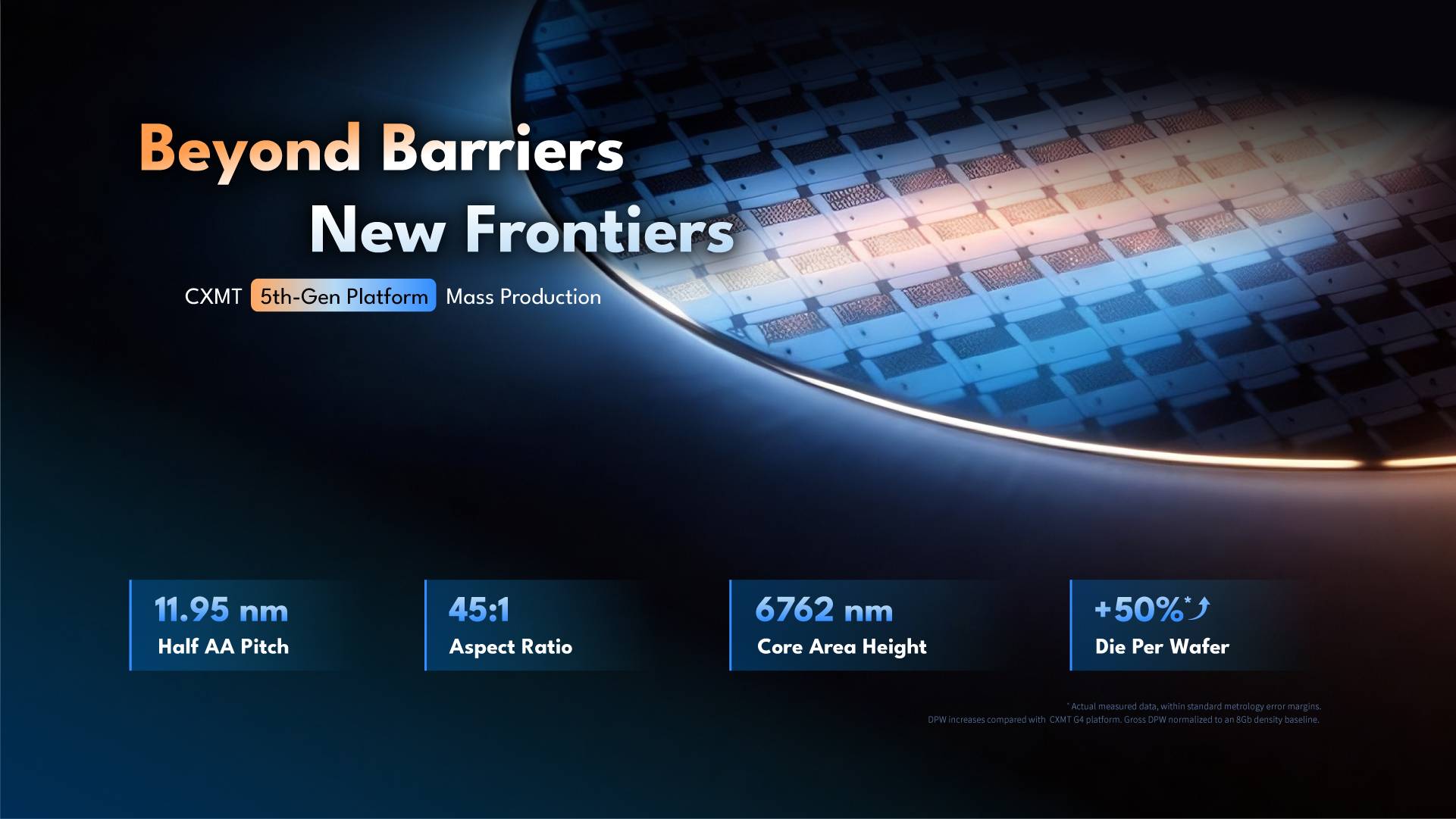
Photo: CXMT exhibition booth (TrendForce, photo credit CXMT); CXMT fifth-generation platform wafer (CXMT).
Source: Reuters, via U.S. News and TrendForce.