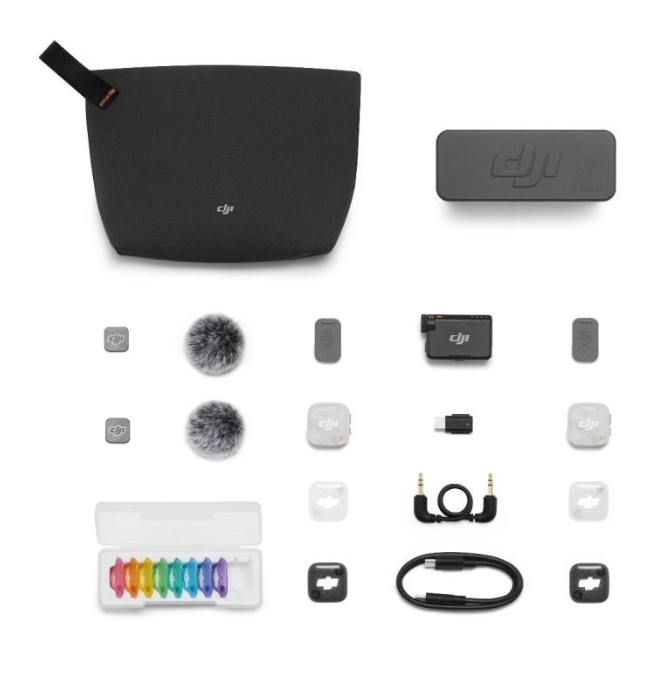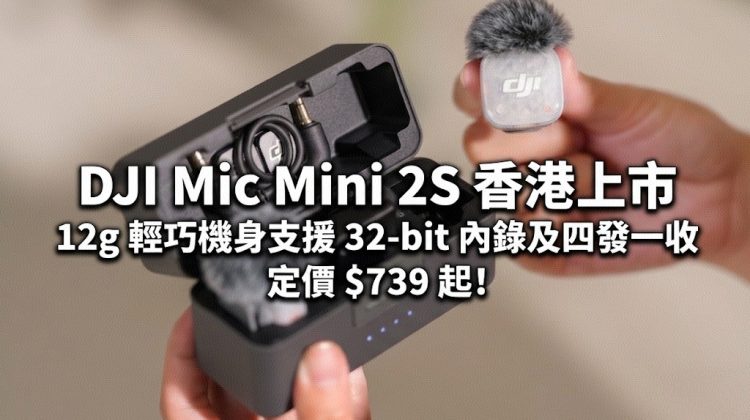
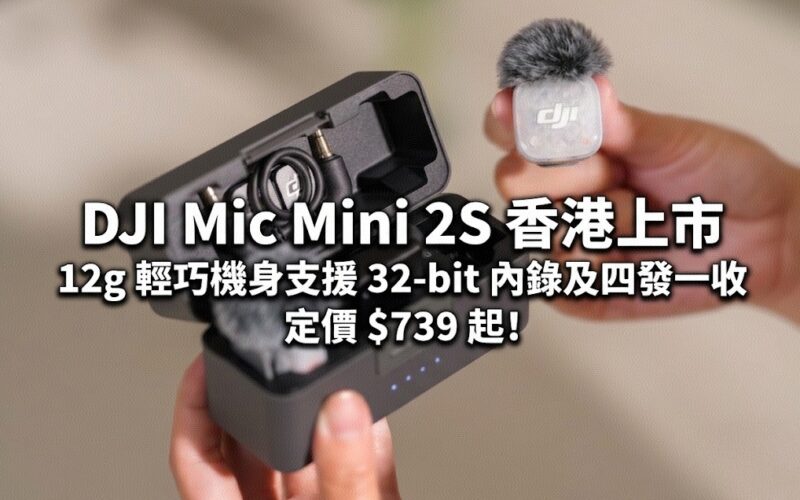
DJI announced the launch of its new mini wireless microphone DJI Mic Mini 2S in Hong Kong. This new product features a lightweight body and professional-grade radio specifications. It is equipped with four-transmit and one-receive hybrid connection technology and a 32-bit floating-point internal recording function. It meets the actual needs of video creators for multi-person radio and post-production sound effects processing with a simple configuration.
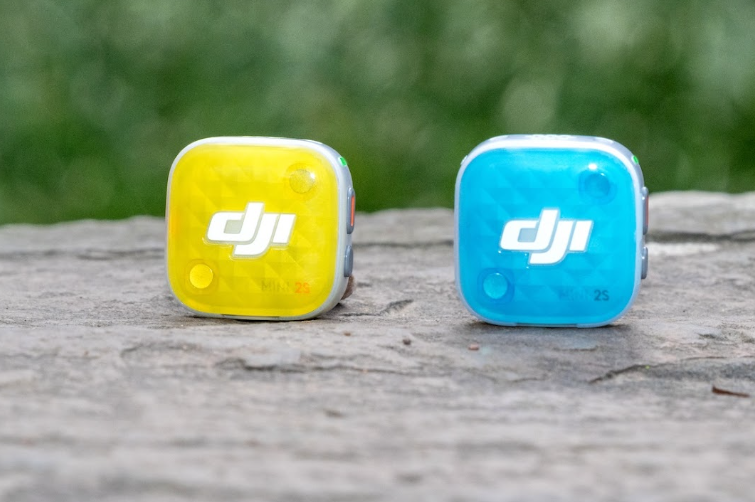
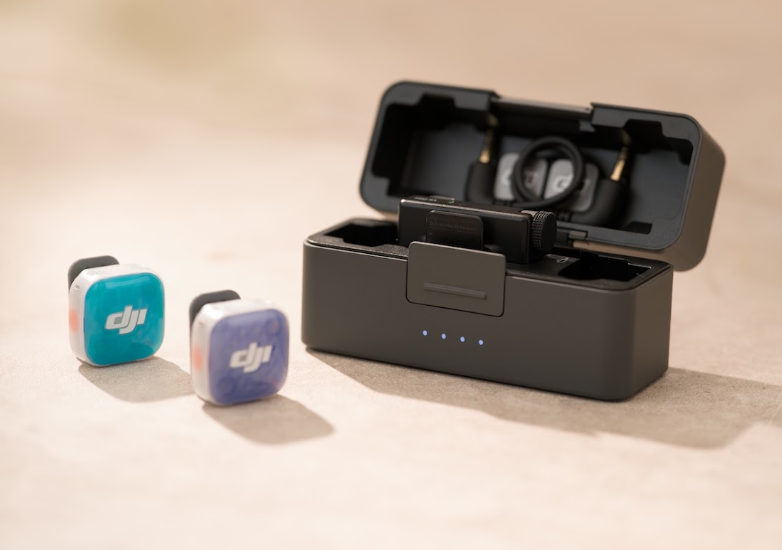
The transmitter of DJI Mic Mini 2S only weighs about 12g, and it will not easily cause clothes to sag and deform when worn on the collar. The body adopts a detachable and rotatable magnetic back clip design, which allows users to flexibly adjust the microphone’s pickup angle to ensure accurate pointing of the sound source. In terms of appearance, the magnetic front cover adopts a replaceable design, and in addition to the standard black and cloud white, a variety of color options are also available. In addition, DJI collaborated with Hong Kong illustrator Victo Ngai to launch the Time Series Artist Magnetic Front Cover to add a more personalized style to the shooting equipment. The newly designed charging box can store the transmitter, receiver and various core accessories at the same time, and has the functions of connecting when the lid is opened and automatic charging when entering the box, making it more convenient to go out and shoot.
For radio stability and post-production, the transmitter has a built-in storage space of about 14.5GB, which can provide up to 28 hours of loop recording under 24-bit specifications. The new machine simultaneously supports 32-bit floating point internal recording function, which provides a wider dynamic range, which can greatly reduce popping or too thin sounds during the recording process, leaving complete adjustment space for post-production. When connected to a computer, the transfer speed of internally recorded material can reach up to 34 MB/s, effectively improving editing efficiency. In terms of radio technology, the microphone uses DJI’s self-developed AI deep noise reduction model, which provides weak noise reduction suitable for indoor environments and strong noise reduction mode for outdoor noisy environments. The system also has two built-in automatic gain adjustment modes, explosion-proof and loudness equalization, to ensure a stable output volume.
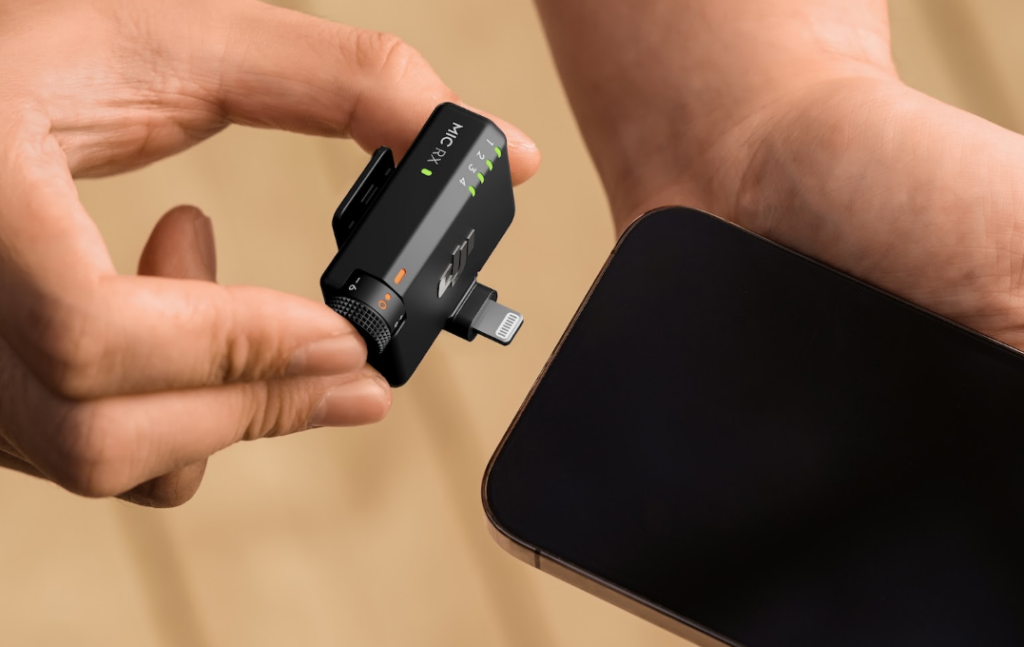
To cope with multi-person shooting scenarios such as interviews or small variety shows, the receiver can be connected to up to four transmitters at the same time and supports mono, two-channel and four-channel modes. In four-channel mode, the system can achieve independent output of four audio tracks, which facilitates fine splitting and mixing during editing. The new generation product also supports cross-generation hybrid connection with the previous generation Mic Mini and Mic Mini 2 transmitters, reducing users’ equipment upgrade costs. In terms of connectivity, the system supports the DJI OsmoAudio ecosystem. The transmitter can be directly connected to imaging devices such as Osmo Pocket 4, Osmo 360 and Osmo Action 6 without the need for a receiver. If used with a dedicated hot shoe adapter to connect to a Sony camera, four independent audio tracks can be recorded digitally. In terms of battery life, the transmitter can be used for up to 11 hours in a single use, and the total battery life with the charging box is about 40 hours, and supports fast charging technology.
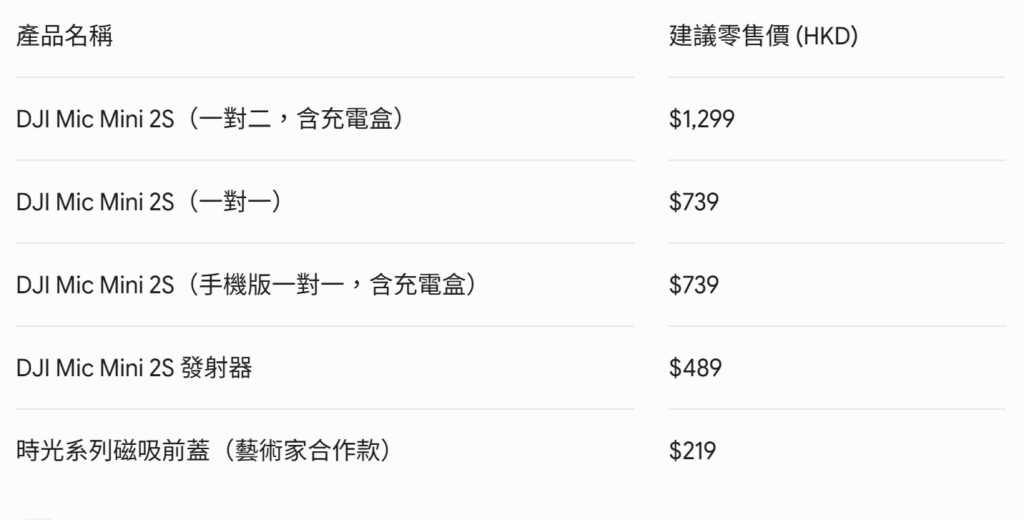
Hong Kong price and release details