 Google Gemini can identify the road environment through the camera in front of the vehicle. (Photo/Volvo)
Google recently demonstrated its latest in-vehicle application of its generative artificial intelligence Gemini. In addition to the voice assistant function, in the future, it will also be able to identify the road environment through the camera in front of the vehicle and answer questions posed by the driver in real time, further improving the in-vehicle AI interaction capabilities. It is expected to be prioritized in the future to be introduced into vehicles equipped with the Android Automotive in-vehicle operating system.
The functional concept demonstrated this time is similar to Gemini Live on smartphones. The mobile version can identify the surrounding scenery through the camera and provide relevant information, while the car version directly uses the camera in front of the vehicle as the “eyes of AI”. When the driver asks about buildings, landmarks or other road scenery ahead, Gemini will activate the camera screen for recognition, search for relevant information, and reply with answers through the car screen or voice.
In response to the privacy issue that is of greatest concern to the outside world, Google Android President Sameer Samat said that Gemini will not continuously monitor the environment outside the car, but will only briefly access the camera image when the user actively requests it, and will stop reading the image after the recognition is completed to reduce personal privacy concerns.
Judging from the demonstration video, this feature is still in the development stage, and the response speed is slightly slower than the mobile version of Gemini Live. The main reason is that the system needs to obtain the vehicle camera footage first, then perform cloud search and AI analysis, and finally transmit the results to the in-car infotainment system. However, as long as the identification target is clear enough, Gemini can still provide correct and complete answers.
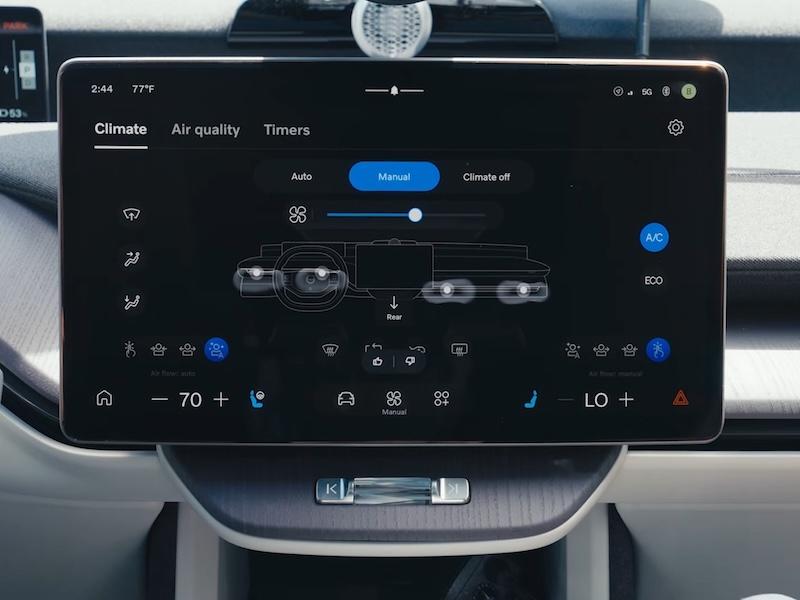
In addition to visual recognition, Gemini is also deeply integrated with Android Automotive, which allows it to directly control many functions such as vehicle air conditioning, navigation, and lane maintenance. Compared with the past, where Google Assistant needed to memorize fixed voice commands, Gemini can complete operations through a more natural conversational method, further enhancing the human-vehicle interaction experience.
Google has not yet announced when this feature will be officially launched, but it is expected that Volvo and Polestar equipped with Android Automotive will be the first to introduce it. As for vehicles using Android Auto, since their functions mainly rely on mobile phone hardware, they can still only perform basic AI assistant functions such as navigation and location search, and cannot use the vehicle’s front camera recognition service.
“You May Also Want to See”
Apple M1 chip failure rate is too low, users: no motivation to replace it
No need to draw, no need to grab. Now use the APP to watch the news and you are guaranteed to win every day. Click me to download the APP. Click me to see the event details.