
A deal that calls for “four-digit” numbers of wheeled humanoid robots is a telling sign: the humanoid category is quickly shifting from prototype theater to industrial scale. In Germany, the next phase isn’t about whether robots can walk and wave—it’s about whether they can reliably move parts, handle contact-rich tasks, and do it across hundreds of production sites without breaking the workflow.
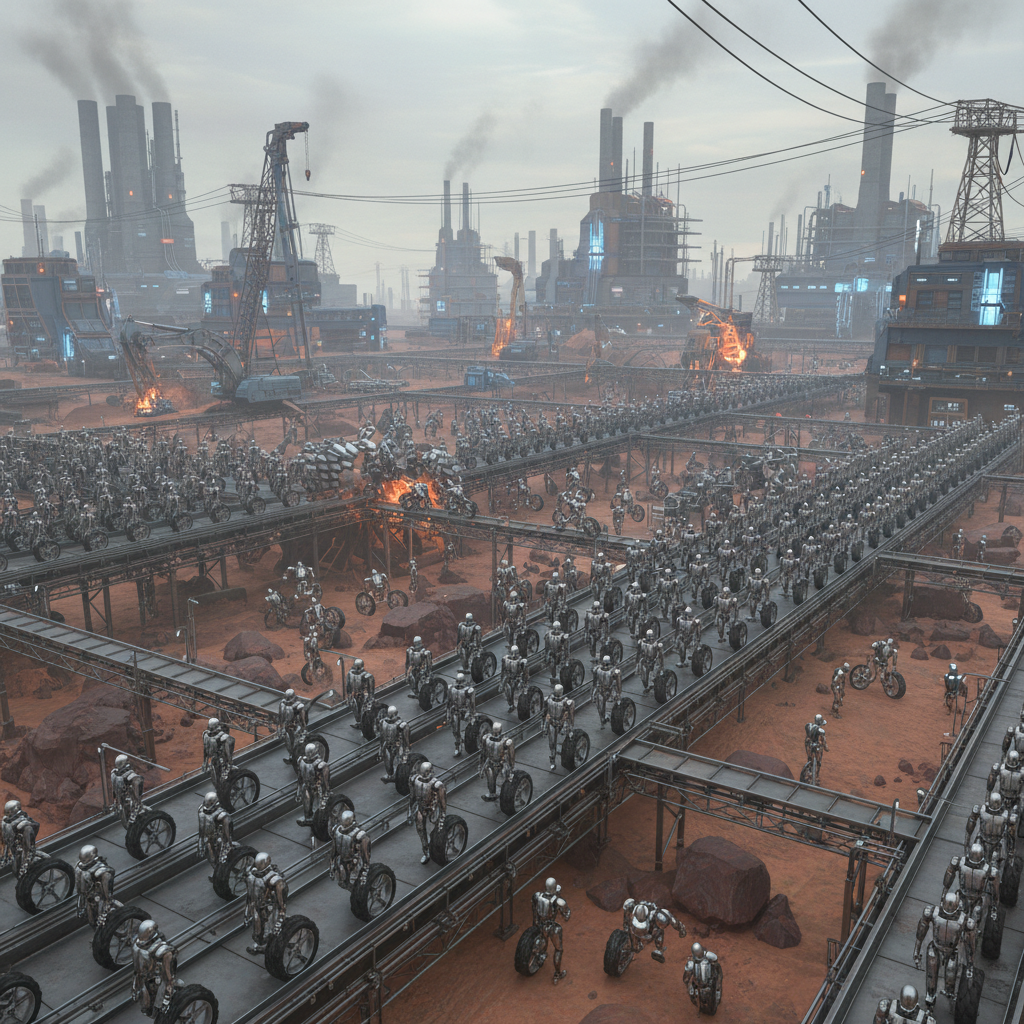
From prototypes to “four-digit” deployment in German factories
UK robotics firm Humanoid has signed a binding agreement with automotive supplier Schaeffler to deploy a four-digit number of wheeled humanoid robots across Schaeffler facilities. That detail matters: wheeled humanoids are often the pragmatic compromise between full bipedal complexity and the industrial need for mobility, repeatability, and predictable maintenance cycles.
The agreement signals how buyers are thinking. A binding contract for a large fleet suggests Schaeffler believes the robots can meet operational requirements—routing, safe navigation around people and carts, and task execution under real scheduling pressure. Instead of treating “humanoid” as a marketing label, deployment at scale reframes it as an engineering platform for handling variability in parts flow and work cells.
For industrial operators, the real question becomes fleet economics. When you scale from a handful of units to the hundreds (or close to it), small error rates stop being theoretical. A robot that’s “mostly right” can still slow down an entire line if it requires frequent human intervention, restarts, or manual recovery from mis-grasps. That’s why the next trends—live logistics trials and contact-aware manipulation—are as critical as raw mobility.
Live logistics at scale: Siemens, Nvidia, and eight hours of reality
In parallel with the factory deployment push, Siemens and the UK startup Humanoid reported a successful Nvidia-powered humanoid robot deployment in live logistics operations at a Siemens electronics factory in Erlangen, Germany. The trial ran for over eight hours, which is a subtle but important threshold: short tests can mask failure modes that only appear after repeated task cycles, lighting changes, congestion patterns, or the slow drift of perception under real-world clutter.
The setup described—a wheeled humanoid executing AI-powered logistics work—reveals what companies mean by “operational.” Logistics isn’t just moving something; it’s coordinating with a schedule of bins, carriers, conveyors, and human traffic, while staying safe and consistent. Using Nvidia hardware underscores that the “humanoid” story now depends heavily on compute: perception, planning, and control loops have to run fast enough to make decisions in the time window of industrial throughput.
There’s also an implicit lesson here about integration. A humanoid robot that performs in a robotics lab can still fail in a factory if it can’t interface with the environment—tracking locations, reading barcodes or station identifiers (where applicable), and fitting into existing process flows. An eight-hour live run suggests Siemens and Humanoid are converging on the integration layer, not just the robot’s motion skills.
Contact-rich manipulation is the real bottleneck—and “Touch Dreaming” targets it
While deployment plans focus on mobility and logistics, manipulation remains the harder problem: tasks involving contact, friction, and uncertainty require more than “grasp and hope.” Researchers at Carnegie Mellon University and the Bosch Center for AI proposed a method called Humanoid Transformer with Touch Dreaming (HTD) to improve how humanoids handle contact-rich tasks.
In reported tests, the approach achieved 90.9% higher success on a set of five tricky tasks. That number is striking because it points to a specific weakness in many robot learning systems: they often struggle to generalize when the robot must interpret subtle touch signals—pressure changes, slip, surface variation—while coordinating multiple body parts.
“Touch Dreaming” adds an imaginative twist to the engineering problem: by generating or learning from touch-related experiences, the robot can better anticipate what contact will feel like and adapt its whole-body motions. The “whole-body” emphasis matters because humanoid robots naturally allow distributed control—hands, arms, torso alignment, and base positioning can cooperate. In industrial terms, this is the difference between a robot that only succeeds in clean, scripted conditions and one that can handle the messy reality of bins, tolerances, and imperfect grasp geometries.
When you connect this to the Siemens and Schaeffler deployments, the trajectory becomes clearer. Logistics and warehouse-like movement may be the first wave, but industrial value increases dramatically when humanoids can reliably do the “last meter” work—picking, placing, aligning, and correcting when objects don’t behave exactly as expected.
What these three threads mean for the next phase of humanoid robotics
Taken together, the industry signal is that humanoids are being industrialized in layers. First comes mobility that works at scale (wheeled form factors and repeatable navigation). Second comes live integration with compute infrastructure (Nvidia-powered AI running for hours in a Siemens facility). Third comes manipulation intelligence that improves contact outcomes, where errors are expensive and human rescue breaks throughput.
There’s also a strategic shift in how “humanoid” is evaluated. Instead of judging robots primarily by their resemblance to humans, deployments increasingly reward measurable outcomes: successful task completion rates, time-to-recover from disturbances, and consistency across long duty cycles. A method that boosts success by 90.9% on contact-heavy tasks directly targets the categories of failure that factories can’t tolerate.
For operators considering pilots, the actionable takeaway is to structure evaluation around operational metrics, not demo videos. Demand run-time schedules (like the over eight hours approach), require proof of safe coexistence with human traffic, and insist on manipulation benchmarks that stress contact and uncertainty—exactly where HTD-like advances are aimed.
For builders and investors, the next roadmap should be equally grounded: scale fleet deployment planning alongside touch-aware manipulation training. A four-digit deployment deal will only hold if robots can handle the last 10% of variability that causes most stoppages. The winning humanoids won’t just look capable—they will be engineered to sustain performance through repetition, friction, and the unpredictable texture of real factory work.
Forward-looking insight: Expect humanoid robots to become common first in logistics and transportation-adjacent roles within plants, then expand into higher-value assembly and handling tasks as contact-rich manipulation improvements translate into lower human intervention rates. The near-term competitive edge will belong to teams that can combine large-scale deployment readiness with measurable gains in touch-informed dexterity.