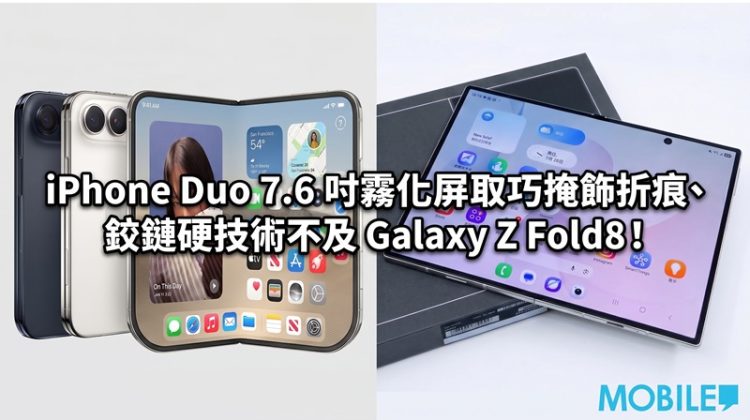
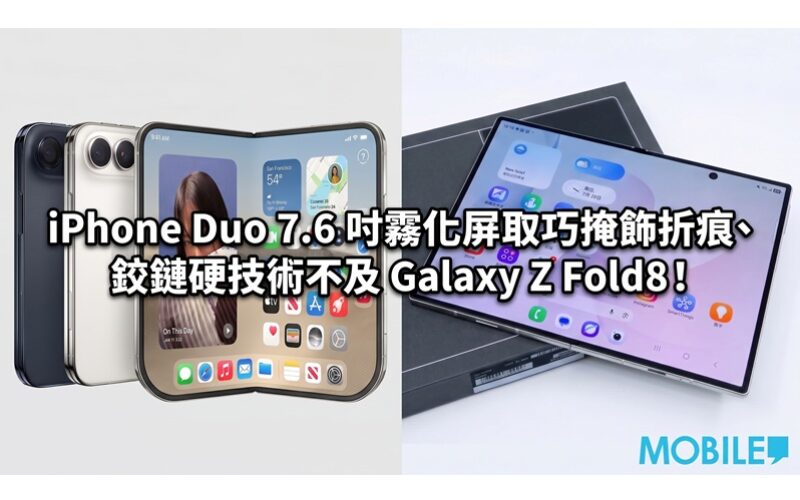
Recently, overseas media obtained a retail prototype of Apple’s first foldable phone, iPhone Duo, and conducted actual measurements and comparisons with Samsung Galaxy Z Fold8. The results show that the crease on the iPhone Duo’s 7.6-inch inner screen is almost invisible, but the truth is that Apple does not solve the problem through the hinge structure, but “blocks” the reflection through a nano-texture matte coating. Although this trick has a great first impression, its long-term durability remains to be tested!
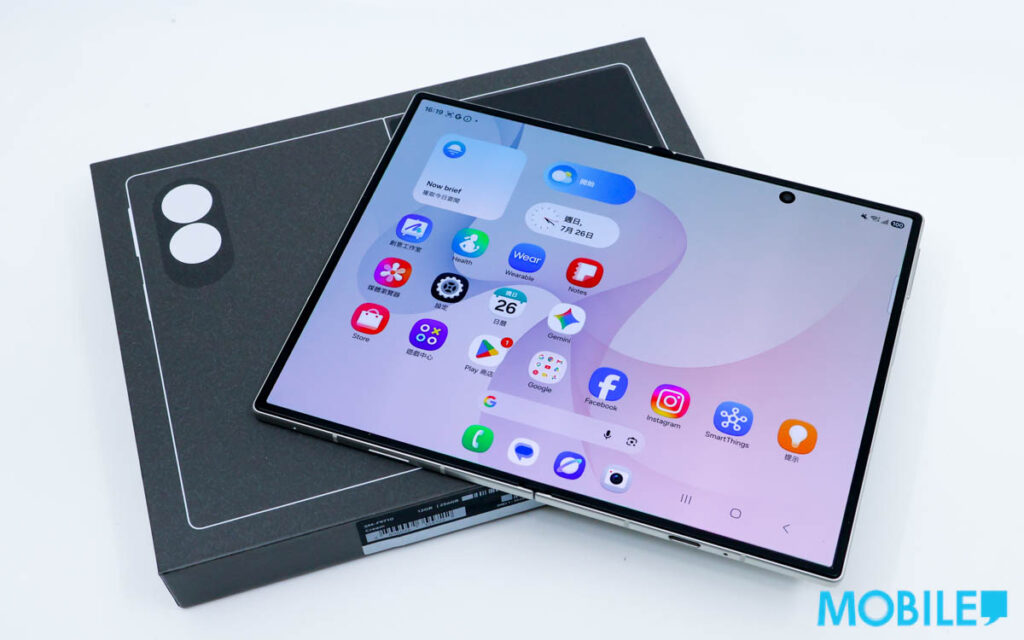
Recently, overseas digital media took the lead in conducting hands-on testing of a prototype, and conducted a horizontal comparison of crease control with Samsung’s latest flagship Galaxy Z Fold8. This much-anticipated new phone is equipped with a 7.6-inch foldable large screen, and its surface adopts a unique nano-texture matte process. Although it successfully makes the creases visually “invisible”, its trick method of only relying on coating masking rather than improving the physical structure has attracted doubts from foreign media.

In terms of screen and appearance, the 7.6-inch internal screen of iPhone Duo shows a quite initial visual experience. When looking directly at the screen, the central crease is almost invisible to the naked eye. The first impression is comparable to the almost seamless performance of Galaxy Z Fold8. Only at a specific angle when tilted towards a strong light source, a narrow reflective outline will be vaguely visible. In order to achieve this effect, Apple specially added a nano-textured frosting treatment to the surface of the inner screen. Officials emphasized that this process can effectively reduce glare and ambient light reflection, and also eliminate the light contrast in the crease area.
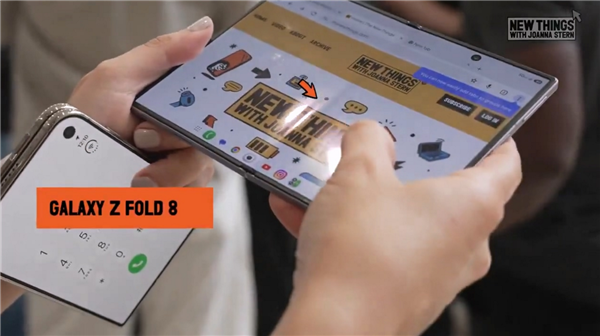
However, after in-depth dismantling of its internal structure and technical route, actual measurements revealed that Apple has not completely solved the crease problem from the mechanical structure level. Compared with domestic folding screen manufacturers who are obsessed with hinge tolerances and repeatedly replacing UTG ultra-thin glass substrates to physically smooth out creases, iPhone Duo only uses atomization physical treatment on the inner screen surface to eliminate directional reflections and create a crease-free illusion. Although this method is cost-controllable and looks great at first glance, as long-term use causes the nano-texture layer to wear and age, the true creases of the bottom layer will still be exposed, and the long-term durability is obviously not as good as the hard structure optimization solution.
Mobile Magazine’s short comment: “Covering” and “leveling” is a philosophical dispute between two routes – Apple has chosen a beautiful unboxing experience, and China has chosen long-term durability; in one to two years, we will know the right way first, and then the second-hand price will tell the truth.