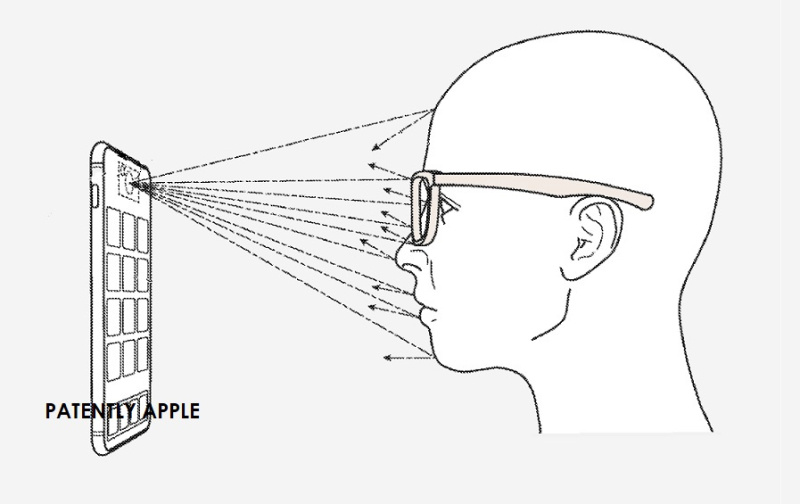
According to a foreign media patentlyapple report, an invention patent of Apple was published on November 11, the patent number is: 20210350769. The patent showcases a series of new functions such as Face ID face recognition technology and mobile phone display correction technology. Face ID was first released on the iPhone X. It is used to replace the fingerprint recognition function Touch ID. It uses a laser dot matrix to obtain the depth information of the user’s face, and combines the camera and other sensors to perform face recognition.
In this new patent, Apple has enhanced the function of Face ID, which can identify whether the user is wearing glasses, thereby optimizing the display. In addition, for the different looks of the same user, Face ID is also expected to support the storage of multiple presets, so that the user can still unlock the phone smoothly after wearing sunglasses and changing hair style.
According to the patent, Apple is aware that a considerable number of users wear myopia or hyperopia glasses when using smart devices. Among them, users who wear hyperopia glasses often need to wear glasses to see clearly when using mobile phones. Tired, sometimes take off glasses. In order to improve this, Apple invented a method that can use Face ID to identify whether the user wears glasses, and the type of glasses worn. Therefore, when the mobile phone detects specific glasses, the mobile phone screen will automatically switch to the exclusive display preset to optimize the interface effect.
In addition, Apple’s next-generation Face ID technology is expected to support the creation of multiple user profiles, covering different hairstyles, beards, different glasses, sunglasses, reading glasses, etc. Specifically, when a user decides to have a beard, as time goes by, Face ID can detect the gradual increase in the length of the beard and dynamically update the user configuration stored in the internal storage. In this way, users do not need to actively enter new data, and Face ID can also maintain the accuracy and security of face recognition.
As shown in the figure below, when a user wears myopia or hyperopia correction glasses, Face ID can also intelligently identify the type of glasses based on the shape of the glasses and the light refracted and returned by the lenses, and maintain the accuracy of face recognition. More importantly, the iPhone’s display screen can be adjusted to optimize the display effect for the user’s nearsightedness/hyperopia. In this way, a screen that looks fuzzy to others will be just right for the user. However, Apple did not point out the technical principle of active optical adjustment of the display.
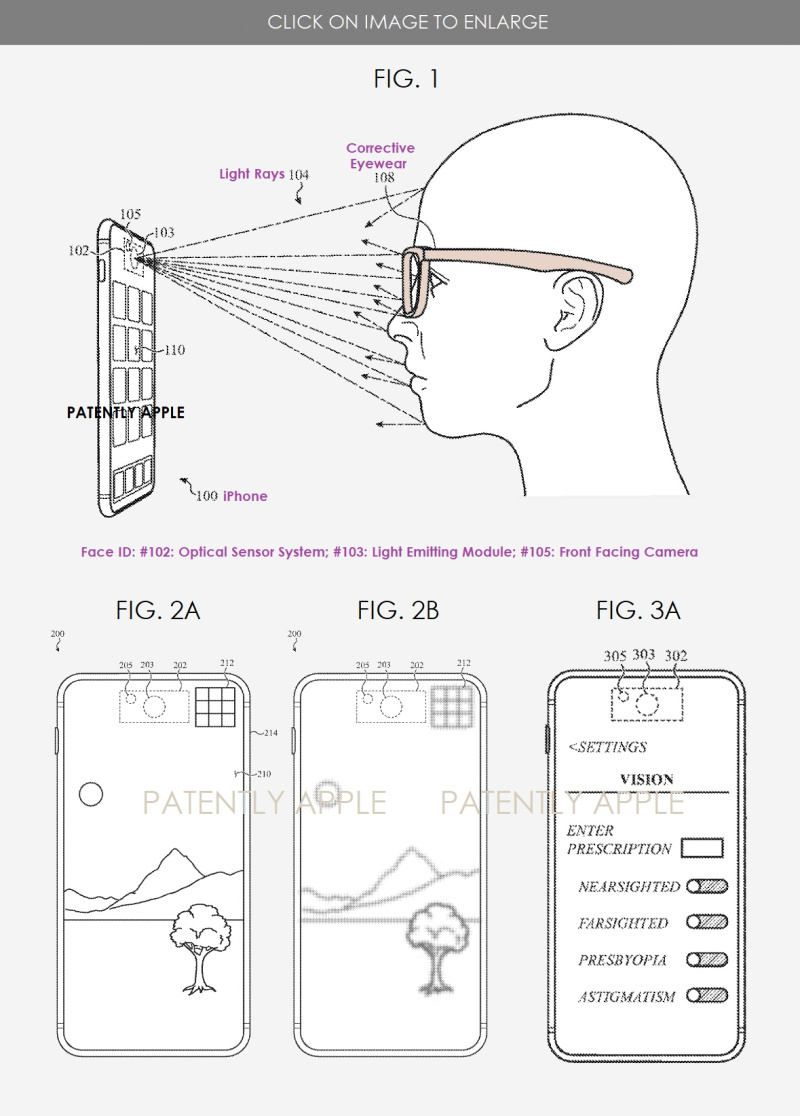
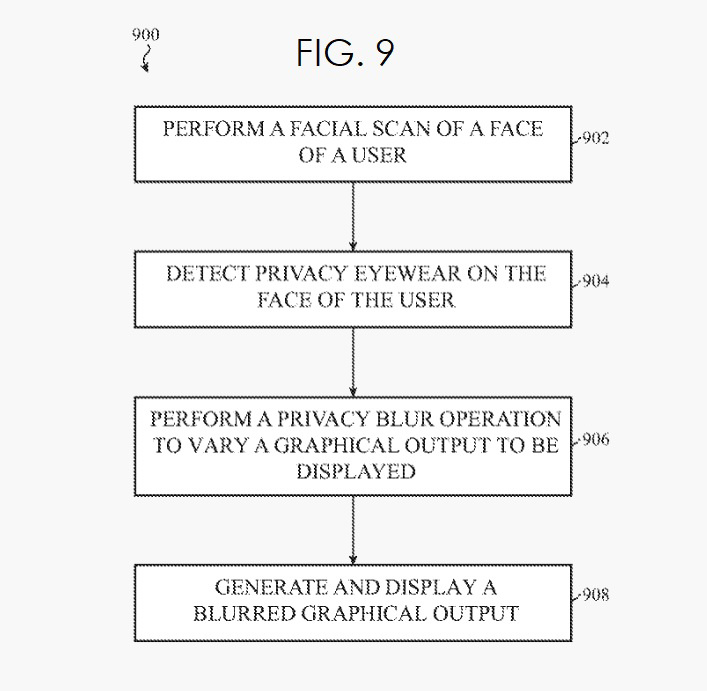
The patent also mentions the “Privacy Eyewear” function. This technology is based on the above Face ID recognition capabilities and the optical adjustment function of the screen. Specifically, when the function is turned on, the user can see the contents of the screen clearly by wearing glasses, while the third party can only see a blurry picture. This feature allows users to watch mobile phones on public transportation, but also to maintain good privacy. To enable the mobile phone to recognize the specific glasses in order to enable the function, the glasses need to have a specific QR code, barcode or graphic to mark them.
Special statement: The copyright of this article belongs to the author of the article. It only represents the author’s views and does not represent the views and positions of Aisi Assistant. This article is uploaded by third-party users, only for learning and communication, not for commercial purposes, such as the content, pictures, audio, video, etc. in the article have third-party intellectual property rights, please contact us in time to delete.