On May 27, 2025, local time, Apple obtained a patent for the Face ID mechanism using Metasurface Optical Elements (MOE) at the US Patent and Trademark Office (USPTO).
It was rumored that if a Face ID mechanism using MOE was installed on the iPhone, the Dynamic Island could be made smaller.
The smaller Face ID mechanism means the width of Dynamic Island is reduced
Apple currently uses a diffractive optical element (DOE) as its Face ID mechanism, and Patently Apple explains that replacing this with a MOE will lead to a smaller Face ID mechanism.
Perhaps it was based on this new technology, MyDrivers reported that the iPhone 17 Pro series will adopt a Face ID mechanism using metalens, making the Dynamic Island a half that of the iPhone 16 Pro Max.
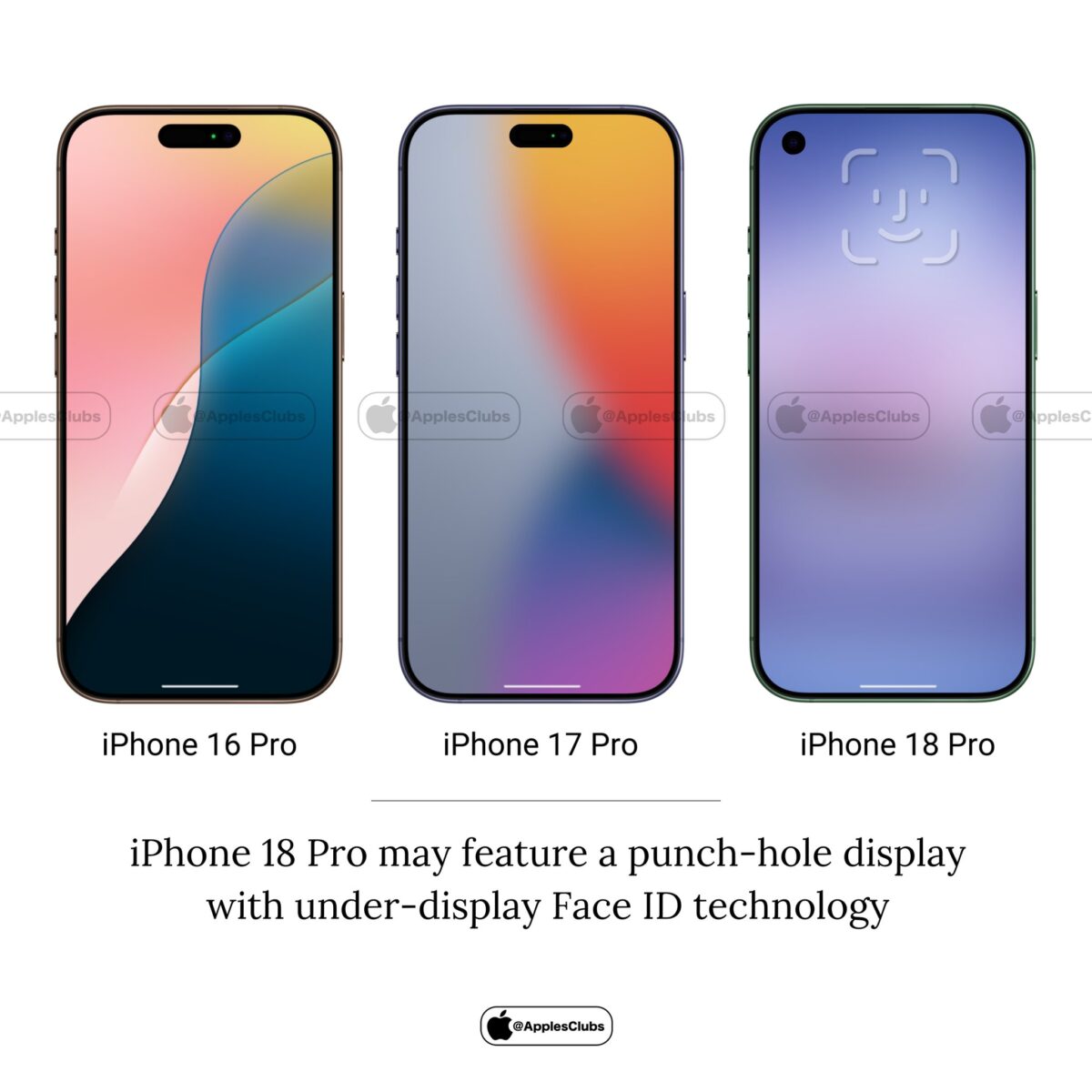
Is it installed on the iPhone18 Pro as a bottom-screen embedded Face ID?
With Apple obtaining a patent for the Face ID mechanism using MOE, it is said that the possibility of it being adopted in the iPhone 17 Pro series has increased.
However, no specific information has been reported at this time, such as a leaked image of glass for OLED displays for the iPhone 17 Pro series, and the Dynamic Island has been confirmed to be narrower.
A recent report of Metalens predictions was that it would be used for embedded Face IDs on folding iPads.
If a Face ID mechanism that uses MOE is used as an embedded Face ID, there is a possibility that it will be installed in the iPhone 18 Pro series.
Illumination projector with MOE as the core
The patent name given to Apple this time is “illumination projector with MOE as the core.”
The current Face ID mechanism consists of a DOE that divides the optical beam and a collimator lens that projects the beam to form a spot pattern on the object, but Patently Apple explains the outline of this, as it allows for the integration of both functions, which means it will lead to miniaturization.
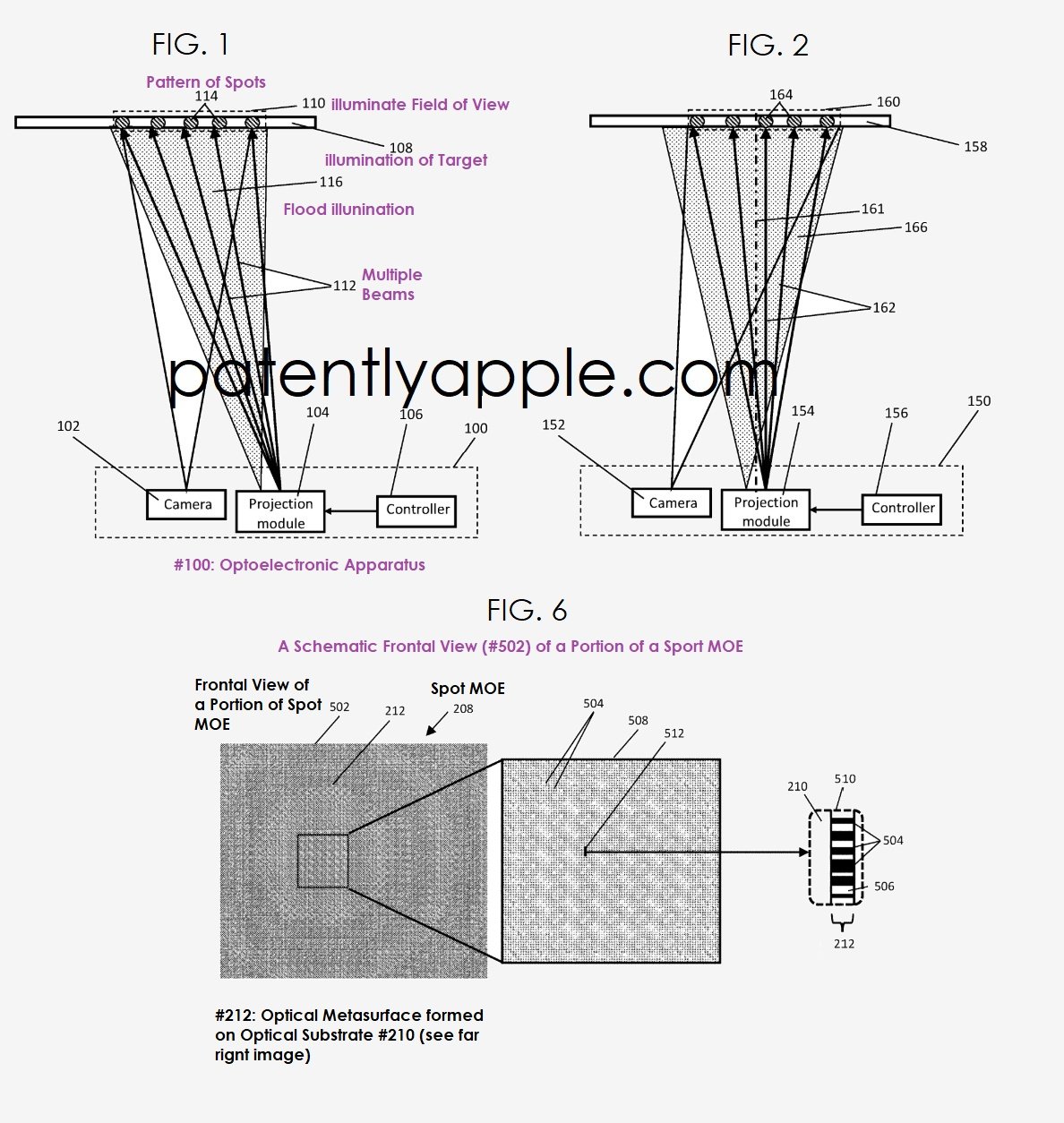
Source:USPTO via Patently Apple
Photo:Apple Club (@appleclubs)/X
Source: iPhone Mania