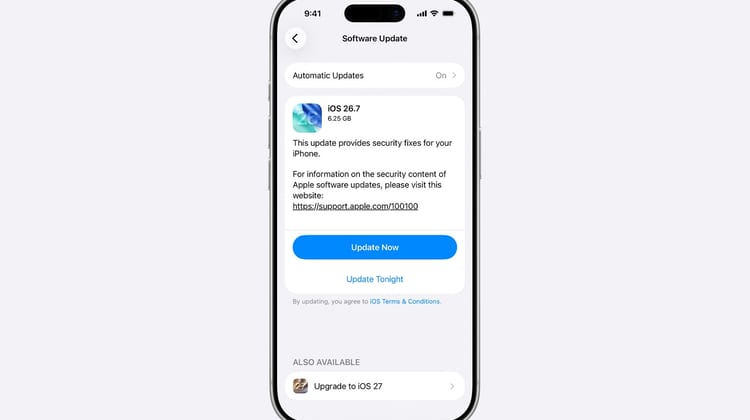
iPhone owners still on iOS 26 now get iOS 27.0.1 as the main offer in Software Update. The switch happened on Thursday, October 8, MacRumors reported. On the same day, security firm iVerify published a report on a new variant of the DarkSword spyware that it found on an iPhone in the wild.
The two are separate stories. Both land on the same screen, Settings > General > Software Update.
iOS 27.0.1 moves to the top of Software Update
Until this week, iOS 26 users saw iOS 26.7 and then iOS 26.7.1 as the big update in the middle of the page. iOS 27 sat lower down, under "Also Available." Apple has now reversed the order. iOS 27.0.1 is the prominent update, and iOS 26.7.1 is in the smaller "Also Available" section at the bottom.
Nothing is forced. Users can still pick iOS 26.7.1 and stay on the older train. Apple released iOS 27 on September 14 and iOS 27.0.1 with the iPhone 18 Pro Face ID restart fix on September 28. Apple has not published iOS 27 adoption numbers.
For people who stay on iOS 26, MacRumors says installing iOS 26.7.1 is the minimum for current security fixes. That build carries one CVE, a CoreGraphics bug Apple says may have been exploited against specific targeted people. iOS 27.0.1 is still the newest public iPhone build, and today's firmware check shows no newer package on Apple's release list.
P7 DarkSword found in August
iVerify calls the new variant P7 DarkSword. The name comes from a "p7_" prefix the attacker used in code added on top of the original DarkSword. iVerify found it in August, while investigating an infection on the iPhone of an employee at a financial institution. It did not say which iOS version that iPhone was running.
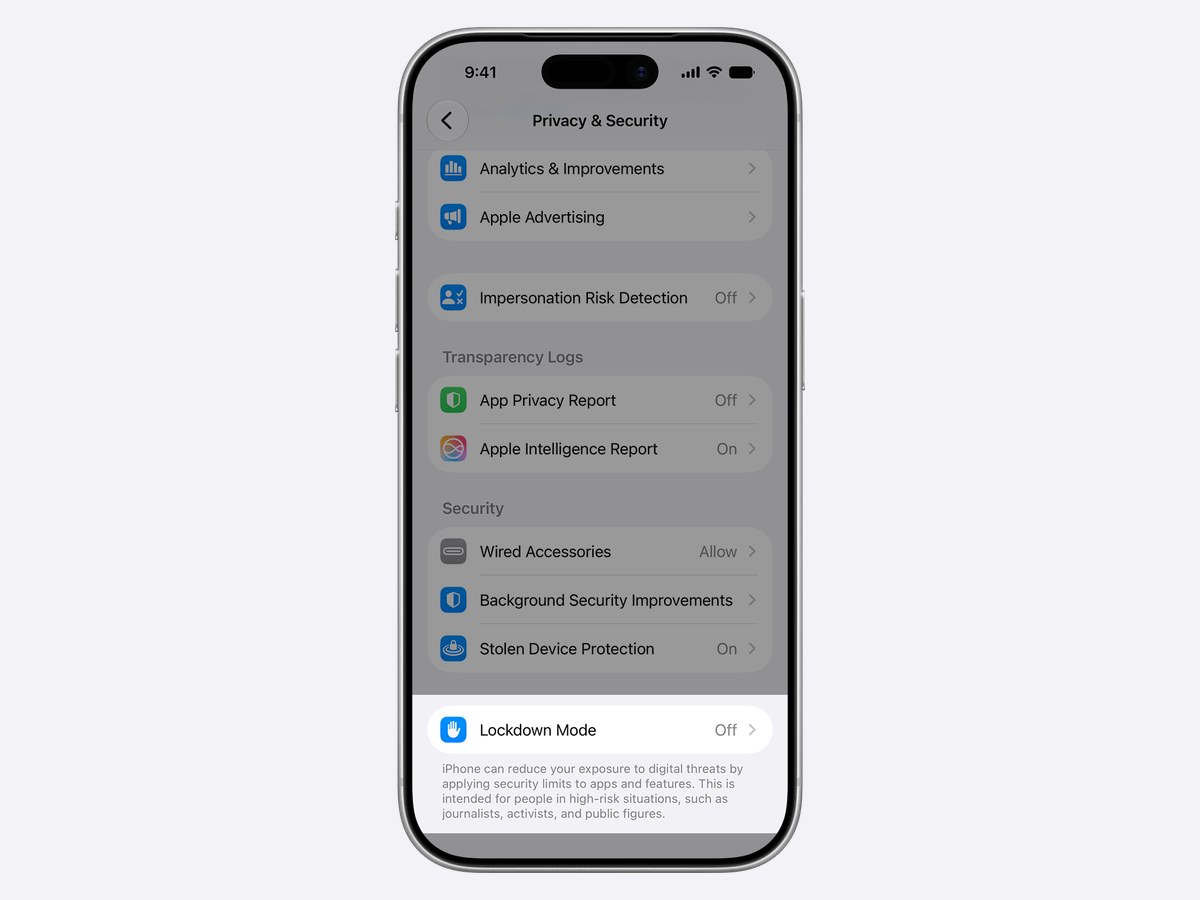
Photo: Apple
DarkSword itself is not new. Google and iVerify disclosed it earlier this year, together with a second kit called Coruna. DarkSword hit iPhones on iOS 18.4 through iOS 18.7. Coruna covered iOS 13 through iOS 17.2.1. Apple answered with iOS 15.8.7, iOS 16.7.15 and iOS 18.7.7, and also offered iOS 18.7.7 to iPhones that could already run iOS 26. Google said at the time that DarkSword was used by several commercial surveillance vendors and suspected state-backed groups.
Keychain, wallets and a 15-second check-in
P7 is not a new iOS vulnerability. It is the malware that gets installed after a DarkSword compromise succeeds. iVerify told 9to5Mac that P7 extends support to iOS 18.7, up from iOS 18.6 in the older variant it tracked.
Per the report, P7 does less logging and fewer process injections than earlier builds. It uses browser storage so it does not exploit the same device twice. It pulls Keychain data on the iPhone before sending it out, instead of copying the whole Keychain database. It also goes after crypto-wallet data.
The attacker can send commands both ways. iVerify lists fetching any file, uploading photos, listing installed apps, reading Apple Notes databases, collecting data from app containers and scanning the file system. By default P7 checks in with its server every 15 seconds. That interval can be changed remotely. iVerify says old indicators of compromise no longer catch it.
Spread through malicious ads
Delivery is not one-by-one targeting. iVerify says the operator uses malicious ads in watering-hole attacks, so a user can be hit by visiting compromised web content. Apple already patched DarkSword, including in iOS 18.7.7. The version range in the report ends at iOS 18.7. It does not mention iOS 26 or iOS 27.
Apple also has Lockdown Mode under Settings > Privacy & Security. Apple describes it as an optional, extreme protection for people who may be personally targeted by sophisticated attacks. It blocks some web features and attachments while on.
Photo: Apple
Source: MacRumors, 9to5Mac, iVerify, Apple Support