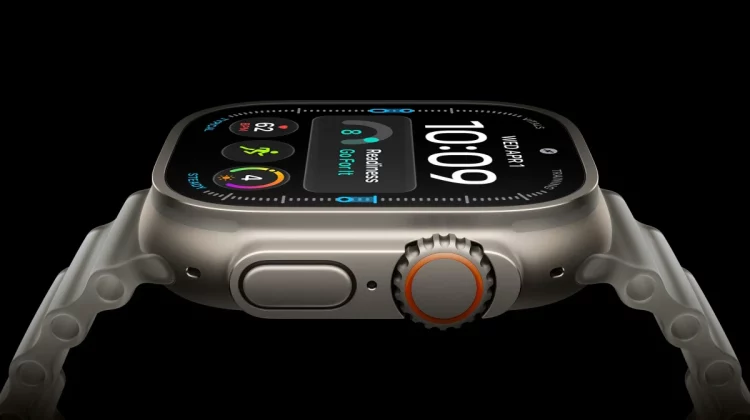
The technical specification data for the new Apple Watch Ultra 4 announced by Apple has revealed that support for the Russian location information system GLONASS, which was included in the previous model, has been removed.
The removal of certain positioning systems from the latest model may give the impression that the specifications have been downgraded. However, if you look into the signal structure and satellite positioning mechanism, you will find that the specification changes actually lead to improved accuracy and processing efficiency.
We will explain the differences in the mechanisms of major satellite positioning systems and the usage scenarios in Japan.
Facts and technical background revealed from specification data
First, we will summarize the announced product specifications and the facts and technical background known from overseas reports.
Changes in satellite system support
- Apple Watch Ultra 4: Compatible with 4 systems: GPS, Galileo, QZSS (Michibiki), BeiDou (GLONASS not supported).
- Apple Watch Ultra 3 (previous generation): Compatible with 5 systems: GPS, GLONASS, Galileo, QZSS, BeiDou.
- Apple Watch Series 12 (simultaneous announcement): Continues to support GLONASS.
Technical background and reason for non-compatibility
Differences in signaling methods
The four systems, GPS, Galileo, BeiDou, and QZSS, use “CDMA-based” signaling and support high-precision positioning on multiple frequencies. On the other hand, GLONASS uses a different signal architecture called “FDMA method”.
Timing correction issues
GLONASS requires the receiver side to individually correct the hardware delay timing for each satellite, which can lead to errors in position information.
Compatibility with 2 frequencies (dual band)
In consumer devices such as smartwatches, GLONASS can only utilize a single L1 signal. As a result, the usefulness of using GLONASS was decreasing for the Ultra series, which has two-frequency (dual-band) positioning of L1 + L5.
Whether there is an official announcement
Apple officially did not specify the specific reason for not supporting GLONASS. However, by making it incompatible, you can expect to improve positional accuracy, reduce internal processing, and improve battery life.
Why it is being continued in Series 12
Single-wavelength (L1-centered) devices like Series 12 are less affected by the L1 signal-only restriction, so it is likely that they will continue to support GLONASS.
Characteristics of major satellite navigation systems (GNSS)
We have summarized the communication standards and characteristics of each satellite positioning system that Apple Watch Ultra 4 supports or does not support.
You can scroll
| satellite system | Country/region of operation | Signal system | Frequency configuration | Features |
|---|---|---|---|---|
| GPS | America | CDMA | 2 frequencies (L1+L5) | World standard positioning standard. Reduces interference from buildings and trees when used in conjunction with L5 signals. |
| Galileo | EU (Europe) | CDMA | 2 frequencies (E1/L1+E5a/L5) | A high-precision standard led by the private sector. It has been modernized and has an extremely high level of reliability in urban areas. |
| QZSS (Michibiki) | Japan | CDMA | 2 frequencies (L1+L5) | Hovering over Japan. Enhances positioning by supplementing the “elevation angle” in valleys between buildings and mountainous areas. |
| BeiDou | China | CDMA | 2 frequencies (B1C/L1+B2a/L5) | It has a large number of satellites and a high global coverage rate. Standard support for high-precision multi-band positioning. |
| GLONASS | Russia | FDMA | Single wavelength (L1 center) | Each satellite uses a different frequency. Correction processing on the receiver side is a major cause of error. |
Structural benefits brought about by unifying signaling systems
The key to achieving highly accurate tracking in modern smartwatches is dual-frequency (L1 + L5) positioning that picks up multiple wavelengths simultaneously.
Power saving by unifying to CDMA system
The four systems – GPS, Galileo, QZSS and BeiDou – are based on a common CDMA (Code Division Multiple Access) technology, allowing the positioning chipsets to efficiently decode signals with the same architecture.
By cutting out the computationally expensive FDMA (Frequency Division Multiple Access) GLONASS, the processing load on the chip is reduced, contributing to stabilizing battery life during workouts.
Signal decoding noise reduction
By not importing GLONASS signals that can only use a single wavelength (L1) and require timing correction, it is possible to eliminate noise (an error factor) in position calculations and suppress “disturbance” of GPS logs in urban areas and mountain roads.
Impact on usage within Japan
Accuracy in Japan is more than sufficient
The most important thing for Japanese users is support for the Quasi-Zenith Satellite “Michibiki (QZSS),” which remains over Japan.
To reduce positional information discrepancies in urban areas lined with skyscrapers or on steep mountain roads, “Michibiki”, which passes near the zenith, and “Galileo” and “BeiDou”, which have recently expanded their number of satellites, are more suitable than GLONASS, which has a low orbital angle and only supports a single wavelength (L1).
Therefore, the actual drop in positioning performance in Japan due to the failure of GLONASS is considered to be almost zero.
Estimation of chipset calculation cost and battery consumption
The location information (GPS) function is the second biggest battery drainer on smartwatches after the display.
By unifying the CDMA system (GPS, Galileo, BeiDou, QZSS), positioning chips will be able to process the same signal format all at once.
Since it is no longer necessary to individually decode and correct the clock for each satellite’s different frequencies (FDMA method), it is expected to improve battery life by reducing the CPU load during long treks and ultramarathons.
If you check what Apple actually announced, the battery life of the Apple Watch Ultra 4 is up to 50 hours. Compared to the previous model Ultra 3, the battery life is +8 hours, and compared to the simultaneously announced Series 12, it is +26 hours.
In terms of outdoor workout time, the Series 12 has up to 10 hours of battery life, while the Ultra 4 has up to 18 hours, which is almost double the battery life.
Should I buy a new Apple Watch?
This is advice for users who are considering purchasing or replacing the product based on this specification change.
- Replacing an Apple Watch Ultra 3 or an older model: There is no need to worry that GLONASS is not compatible = deterioration. Rather, it is an evolution that reduces signal processing that causes noise and brings out the accuracy of dual-frequency GPS.
- For those who do mountain climbing, trail running, and marine sports in Japan: In Japan, the two-frequency signal (L1/L5) of “Michibiki (QZSS)” will be of great benefit. Ultra 4’s positioning reliability remains among the best in the industry.
- For those who have the opportunity to travel to polar and special regions overseas: GLONASS used to be useful in high latitude regions such as the Arctic Circle, but now there is no practical problem because Galileo and BeiDou have high global coverage.
Non-compatibility with GLONASS means “selection and concentration on high accuracy”
The non-compatibility of GLONASS in Apple Watch Ultra 4 is not just a feature cut, but an “optimization to concentrate resources on high-precision, dual-frequency positioning using the CDMA method.”
By eliminating unnecessary processing, we have achieved both stable accuracy and improved processing efficiency, and have evolved into a model that provides more reliable GPS logs for serious outdoor and sports applications. Furthermore, it has been revealed that the RAM capacity has doubled from the previous model’s 2GB to 4GB.
The combination of “structural optimization of communication processing” and “increased memory capacity” has significantly improved operational stability and battery life. Especially for users who are considering switching from an older model, this Ultra 4 is a machine that is well worth replacing.
Source: iPhone Mania