IT House reported on September 8 that according to Bloomberg reporter Mark Gurman, Apple’s first foldable screen iPhone priced at more than $2,000 (IT House note: the current exchange rate is approximately 13,457 yuan) has actually been in the works for more than ten years.
The attached report from IT House is as follows:
Around 2020, after returning from a trip to Asia, then-Apple CEO Tim Cook showed unusual enthusiasm for a new product category: foldable screen phones.
During his visit to China and other parts of Asia, Cook saw more and more consumers using folding screen devices launched by smartphone manufacturers such as Samsung and Huawei. After returning to Apple, he gradually became convinced that the company must also launch its own folding screen mobile phone and pushed Apple to speed up related research and development. At that time, the foldable screen mobile phone market was still in its early stages of development.
In fact, before Cook pushed to accelerate the project, the team responsible for core technology development within Apple’s hardware engineering department had been studying folding screen mobile phones, flexible displays and related components for many years.
According to people familiar with the matter, this research was even before Samsung truly entered the public eye with its first Galaxy Fold in 2019. Most people interviewed requested anonymity due to the confidentiality of their work.
The project will reach a critical moment this week, when Apple is expected to officially release its first foldable screen phone. The device is the biggest single design change for the nearly 20-year-old iPhone, which accounts for about half of Apple’s total sales.
This conference will also be the first important appearance of Apple’s new CEO John Ternus, who took over as CEO on September 1. Apple chose to complete the leadership transition at this point in time. One of the purposes is to usher in a new era for the company’s products and allow Ternus to personally launch the first folding screen iPhone. Cook currently serves as executive chairman and will sit in the audience to watch the press conference.
To get to where it is today, Apple has conducted years of research and development and repeated attempts. Before Cook pushed the project into focus, Apple’s engineers, designers and executives had been debating a fundamental question: What exactly an Apple foldable device should look like.
One of the earliest ideas was actually similar to an iPad mini that could be expanded into a larger tablet.
Cook’s enthusiasm subsequently changed the project’s direction, moving Apple toward a more mass-market product. Instead of launching a foldable iPad first, Apple ultimately decided to prioritize the development of a foldable iPhone.
A person familiar with the matter said: “Tim was one of the earliest and strongest supporters of this project. He saw folding screen phones everywhere in Asia and believed that Apple must enter this field.”
Cook’s level of involvement in the project is particularly noteworthy. During his tenure as Apple CEO, Cook’s most well-known responsibilities focused on financial and supply chain management. He will be involved in product demonstrations and major decisions, but is usually not deeply involved in the initial conception of new products.
As a result, Cook’s insistence on pushing Apple to develop a foldable phone was more influential than ever, helping to propel the project into what would eventually become one of the most complex hardware projects in Apple’s history.
Foldable-screen phones still account for only a small part of the global smartphone market, but they are growing faster than the entire industry. According to data from market research firm IDC, the foldable screen mobile phone market is expected to grow by 13% this year, with shipments reaching 22.9 million units, while total global smartphone shipments exceed 1 billion units.
Apple internally uses the development codename “V68” for this foldable device. Because it will be positioned higher than the existing iPhone product line, some employees called it “iPhone Ultra” during the development process.
Price has long been a point of discussion within Apple, as the phone has been positioned as a high-end product from the start.
In the early stages of development, Apple was targeting a selling price of $1,999 (about 13,450 yuan at current exchange rates), hoping to keep the price below the potentially controversial $2,000 threshold (about 13,457 yuan at current exchange rates).
Apple has used similar strategies before. When the iPhone
However, according to a person familiar with the matter, Apple has recently discussed increasing the price of the folding screen iPhone to US$2,199 (approximately 14,796 yuan at the current exchange rate). Different pricing options have been discussed within the company in recent weeks, and memory supply shortages have caused Apple’s costs to exceed previously set targets. The price of some large-capacity storage versions may even be close to US$3,000 (about 20,185 yuan at current exchange rate).
In comparison, the current standard version of the iPhone starts at US$799 (about 5,376 yuan at the current exchange rate), and the iPhone 17 Pro starts at US$1,099 (about 7,395 yuan at the current exchange rate).
Such a high price may shock many consumers, but Apple believes that some users have proven that they are willing to pay more for high-end products. In recent years, the iPhone Pro with the highest storage capacity has sold for close to US$2,000 (about 13,457 yuan at the current exchange rate), and its market performance has also helped Apple believe that launching a high-priced folding screen device is commercially viable.
Apple’s recently launched Apple Upgrade subscription plan may also lower the psychological threshold for consumers to purchase this device. The program’s model is similar to that of a rental service. In addition, the strong trade-in discounts and installment payment plans provided by operators are also expected to boost the sales of foldable screen iPhones.
At the same time, the prices of competitors’ Android folding screen phones are also not low. The latest foldable screen phones launched by Samsung and Alphabet’s Google start at about US$1,899 (about 12,777 yuan at the current exchange rate).
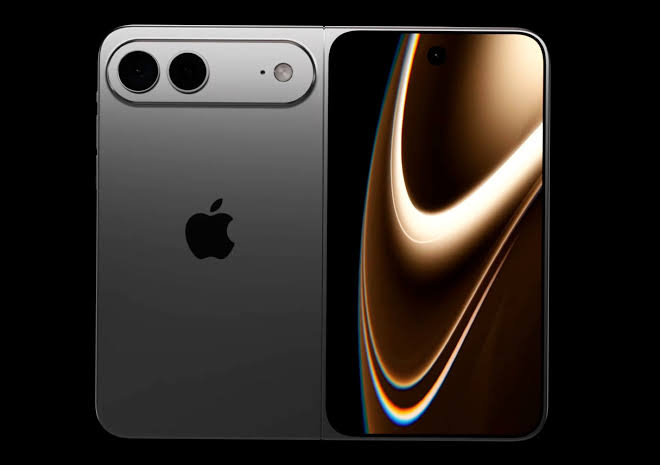
In terms of product design, this folding screen iPhone is expected to be equipped with an internal screen of about 7.8 inches, which is significantly wider than many Android folding screen phones, but similar designs have not appeared before.
Google used a similar design on the first-generation Pixel Fold launched in 2023, but then quickly changed its direction. Samsung has also begun to adopt similar product ideas in recent years. Its latest Galaxy Z Fold8 switched to a new design ratio after years of using a more square inner screen and achieved strong sales.
Apple hopes to provide a better experience for watching videos and multitasking through a wider folding screen.
The outside of the device is equipped with an external screen of about 5.5 inches, which is relatively small in size. The purpose is to make the phone easier to hold in the folded state and more convenient to put in your pocket.
During the development process, Apple designers hoped that the folded size of the device would be about the same as a passport, while the overall proportions when unfolded would be close to Apple’s Magic Trackpad wireless trackpad.
Next, Ternus needs to convince not just the most loyal Apple users, but also a broader group of consumers, that they are willing to pay a higher price for a device with a more complex structure and some compromises.
Users must unfold the phone to truly take advantage of its foldable screen design, and the device may be less durable than a traditional iPhone. Additionally, its camera system may be weaker and its battery life shorter.
Despite these shortcomings, Apple employees still believe that the company can sell as many foldable iPhones as it produces. Wall Street currently predicts sales of this product could reach 7 million to 10 million units this year.
“Believe me, this foldable iPhone will be a huge success despite its high price,” said Nabila Popal, IDC’s long-term smartphone market research leader.
She also said: “I wouldn’t be surprised at all if it ends up becoming the ‘Birkin bag’ of the Chinese smartphone market.” This refers to Hermès’s iconic Birkin high-end handbag.
At the same time, the product’s engineering complexity also makes it an ideal product to showcase Ternus’ capabilities.
Apple positions the former hardware chief as an executive who can drive a new generation of innovative products, and his engineering background and long-term experience in charge of Apple’s hardware products are also considered important reasons.
The first foldable iPhone will also kick off years of more bold hardware from Apple, including touchscreen MacBooks, desktop robots, smart glasses, camera-equipped AirPods and a new home security system that doesn’t rely on video recording.
People close to the foldable iPhone development project said the plan was first proposed while Dan Riccio was leading the hardware engineering department. As Ternus’ predecessor, Riccio worked with Apple’s industrial design team to oversee a large number of core technology research and development efforts in the early stages of the project.
Subsequently, Cook and Ternus became the product’s strongest supporters. Ternus later “used his influence to push the project to completion,” people familiar with the matter said.
However, it is not a matter of course that the folding screen iPhone will finally reach this point.
In the early stages, Apple’s hardware team focused on solving four major problems.
The first is to reduce the visibility of creases. Many early folding screen phones had very obvious screen creases, which has always been an important shortcoming of the product form.
The second is to improve the reliability of the hinge.
The third is to develop a new type of flexible cover glass for display screens.
The fourth is to develop new camera technology to place more components under the screen to maximize the available display area.
Ultimately, Apple used an advanced titanium and aluminum hinge system paired with custom cover glass developed in partnership with Corning.
This combination can make the screen creases significantly less visible than folding screen phones currently on the market. Apple plans to promote this as an important competitive advantage of its products.
While the device may not be as durable as the iPhone 18 Pro series and other traditional iPhones Apple has launched in recent years, Apple believes its overall construction and build quality are industry-leading in the foldable phone market.
Apple also believes that it also has advantages in software compared to the more fragmented Android system.
The company has recently asked software engineers to upgrade a large number of Apple apps so that they can better adapt to the wide-ratio and large-size internal screens. At the same time, Apple is also adjusting the iOS system to allow applications to better adapt to more diverse screen sizes.
The biggest challenge for Apple has always been making the product attractive enough to offset the inevitable compromises of a foldable device itself.
Around 2023, Apple’s design team finally decided to adopt a “short and wide” overall design plan. They believe that this kind of design can form a clear differentiation and bring enough freshness to make consumers willing to accept the shortcomings of the product in other aspects.
At the same time, Apple also needs to wait for some core technologies to develop to a level that can truly meet actual use needs.
When product design, core technology and manufacturing capabilities finally mature, Apple truly believes that this folding screen device has the conditions to enter the market.
After years of waiting for foldable screen technology to catch up with its product ambitions, Apple is finally betting that this form factor is ready to hit the mass market.
What Apple needs to verify next is whether, in addition to its most loyal fans, there are enough consumers willing to pay a record high price for this product.
2026 Apple Autumn New Product Launch Feature