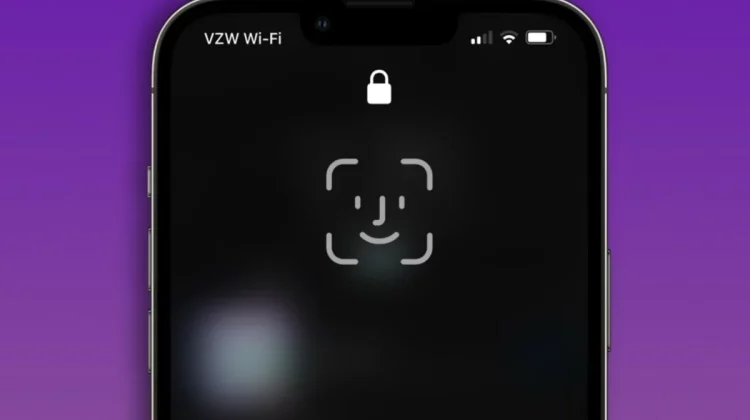
Face ID (facial recognition), which has been included in almost every iPhone since the iPhone X, has become an issue in court. German chemical giant BASF has sued Apple over its spoofing technology. What I’m curious about is whether the unlocking method for my iPhone will continue to work.
The impact on iPhone users in Japan appears to be limited.
It seems unlikely that Face ID on iPhones in Japan will become unusable as a result of this lawsuit, and there is no immediate action that users should take.
There are three reasons why we think the impact will be limited:
- Even if there is an unfavorable judgment in a U.S. court, the effect generally remains in the U.S.
- Suspension of Face ID is close to effectively suspending sales, and the hurdles for an injunction to be granted are high
- It is not uncommon for patent disputes to not proceed to a verdict, but to reach a compromise on terms along the way.
The second point especially resonates a lot. This is because Face ID is not only used for unlocking, but also serves as a gateway for a wide range of daily operations, including Apple Pay and automatic password entry. You can replace it with a passcode, but it will be much less usable.
Technology at issue in Face ID patent litigation
What is at issue is not the mechanism itself for measuring the shape of a face, but the process of determining whether or not the person in front of you is real.
Overview of plaintiff and subject patent
According to reports from overseas media, German chemical giant BASF has filed a lawsuit in the United States accusing Apple of infringing its patents on facial recognition technology. The patent is held by trinamiX, a BASF subsidiary that handles facial recognition technology, and is said to have hundreds of patents and applications in the facial recognition field. At the time of the complaint, the plaintiffs claimed infringement of seven patents regarding technology to identify impersonation using photographs, masks, and silicone replicas.
BASF filed its lawsuit in the U.S. District Court in Midland, Texas, where the burden of criminal cases is relatively light and patent litigation progresses quickly. The company is seeking a “stop to further infringement,” and is considering a sales injunction as well as payment of patent royalties and damages. Apple has not issued a statement on this matter.
The heart of Face ID is being targeted
The complaint targets technology that detects materials and skin to determine if a person is a real person. Measuring the shape of the face alone is not enough to cover printed photos or elaborate masks, and this determination is the pillar that supports reliability.
If the material and skin detection no longer works, the security reliability of facial recognition will be greatly undermined.
Why did it take 9 years to file the lawsuit?
The reason for the delay in filing the lawsuit has not been disclosed, but the timing seems to indicate that it was used as a bargaining chip.
iPhone X with Face ID was introduced in 2017, and from the beginning it had the ability to ward off impersonation by stationary objects. It cannot be denied that BASF chose the moment just before the announcement of the iPhone 18 Pro to create a negotiating table.
trinamiX also works on under-screen facial recognition for OLED panels, and has a track record of installing it on Android smartphones. This lawsuit excluded that patent from its scope. The points that were left out can be read as leaving implications for the future.
It cannot be overlooked that the plaintiff is not a company whose only source of revenue is the enforcement of patent rights, but is actually commercializing facial recognition technology under its umbrella.
Will Face ID stop working? Apple Watch precedent
There are precedents where the functionality of Apple products has stopped due to patent disputes, but the conditions for Face ID are different in terms of ease of separation.
Separable and inseparable functions
The Apple Watch’s blood oxygen wellness feature was hit with a patent dispute that halted sales of the Series 9 and Ultra 2 in the US for several days in December 2023. Apple has since resumed sales with the feature disabled. However, the Apple Watch case involves an import injunction procedure, which is different from the current lawsuit in federal district court.
| item | Blood Oxygen Wellness on Apple Watch | Face ID on iPhone |
|---|---|---|
| Positioning of functions | Additional functions for health measurement | Entrance for unlocking and payment |
| Ease of stopping | Can be separated by software update | Preparation of alternative means is a prerequisite |
| Impact of outage | I was able to remove the function and resume sales. | Close to a virtual suspension of sales |
Due to the different levels of difficulty in disconnecting, even if Apple were to respond by changing the specifications, they may be forced to rework it on the premise of operation using a passcode. If Apple decides that it is cheaper to modify the implementation to be common throughout the world, there is still room for this to spread to Japanese users.
However, this does not mean that facial recognition will no longer be useful in the near future. At this time, with the announcement of the iPhone 18 Pro pending, we don’t think it will be enough to change the purchase decision. All you need to do is make sure you can remember your passcode, just in case.
Photo:AppleInsider
Source: iPhone Mania