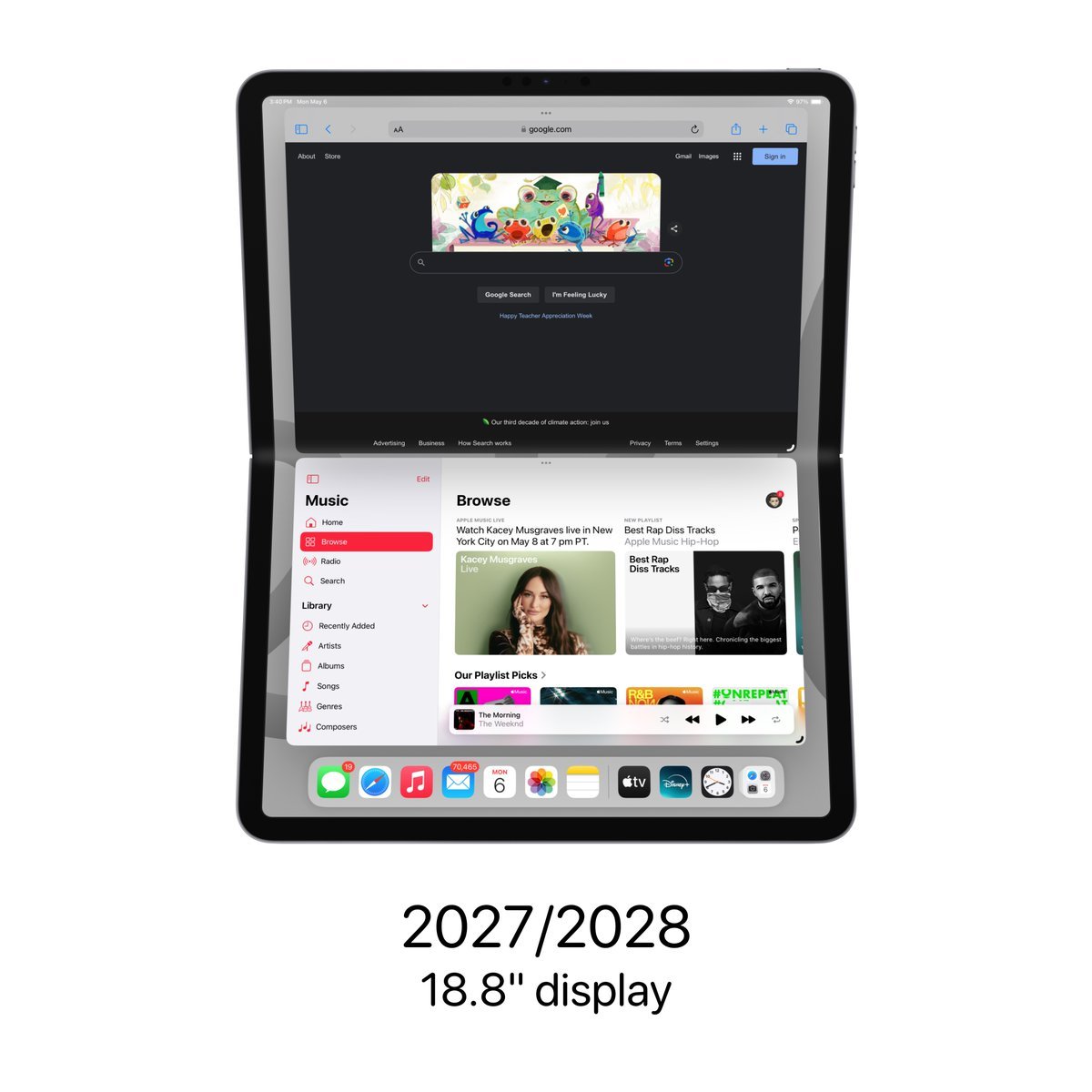
IT House reported on September 4 that Nikkei Asia quoted sources today (4th) as saying that due to Apple’s extremely strict quality control requirements, the initial daily production of the much-anticipated folding screen iPhone (tentatively called iPhone Ultra) was only “a few hundred units” by the end of August.
Currently, Apple is stepping up efforts to increase production. A supply chain manager with knowledge of the situation said: “Apple has very high quality requirements and added a round of trial production in August before official production. However, the production increase rate is very slow. As of the end of August, the daily output is still only a few hundred units. Such initial output may be difficult to meet market demand.”
Previous news said that Apple plans to produce 8 million to 10 million folding screen iPhones this year, hoping that this new model can boost the market and increase revenue.

If the production ramp-up cannot be accelerated, Apple may not be able to meet its established production targets, and it may take longer than expected to meet consumer demand. Several industry executives said that to meet the annual production plan for the foldable iPhone, tens of thousands of phones would usually need to be produced every day.
Apple encountered some problems during the engineering development and pre-production stages of the foldable iPhone earlier this year. Compared with other smartphone manufacturers, Apple has stricter standards for quality and durability, not only testing products under more extreme conditions, but also requiring devices to withstand more foldings and placing higher requirements on screen flatness.
Another person familiar with the matter said: “Surface flatness and hinge performance are both aspects that Apple requires to further improve production yield.”
Two people familiar with the matter revealed that Apple added a verification process for the folding screen iPhone in August to confirm that the product can be mass-produced according to the established design, which delayed commercial production by several weeks.
IT House learned from reports that Apple and its suppliers are making every effort to increase daily production, but ramping up production capacity still takes time, and the previously increased testing and verification processes have also disrupted the original schedule. If the situation does not improve, the foldable screen iPhone may face insufficient channel inventory in the early stages of its launch.