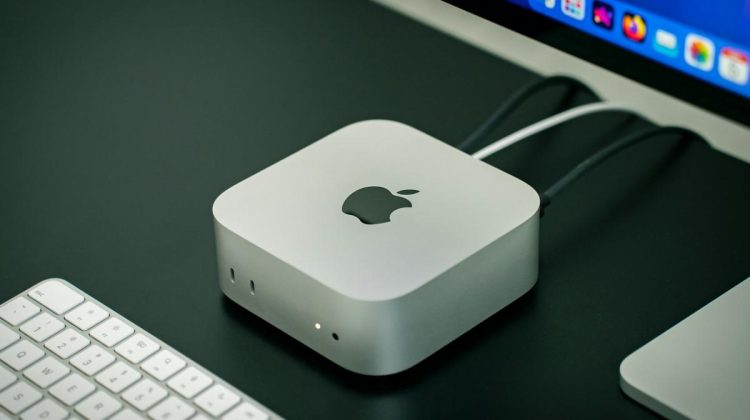

The field of artificial intelligence is undergoing an unexpected transformation. According to The Information, OpenAI has purchased tens of thousands of Mac mini and Mac Studio units in recent months. The goal is to train artificial intelligence agents to operate computers like humans: click, navigate menus, fill out forms, and perform complex tasks. The strategy surprised many and showed that Apple hardware is no longer just for consumers and creatives, but has become a key component of the infrastructure of large artificial intelligence labs.
According to media outlets including Cult of Mac, Moneycontrol, and 24/7 Wall St., these computers are being used for a very specific type of training: reinforcement learning. In this process, the artificial intelligence model interacts with a real graphical interface, tests various operations, and receives rewards or penalties based on the results. This approach requires a lot of memory and the ability to run thousands of simulations in parallel, and Macs with Apple Silicon chips seem particularly well-suited to the task.
Why Apple chips are key to reinforcement learning
Training an artificial intelligence agent, which must use a computer, is very different from training a traditional language model. Instead of absorbing large amounts of text, the agent must…interpret what’s displayed on the screen, decide what action to take, and check if it’s valid. Each attempt is scored, and the model adjusts its strategy based on this feedback. To achieve this, thousands of independent sessions are required, each running simultaneously and with their own state and context.
This is where Apple’s Unified Memory Architecture (UMA) comes into play. Unlike traditional GPU-based systems, in which video memory and RAM are separated and data needs to be transferred back and forth between the two, in Mac computers, the CPU, GPU and neural network engine share the same memory. This reduces bottlenecks and allows the model to quickly access the information it needs whenever it needs it. As several analyzes have pointed out, this feature is crucial for the agent to maintain consistency between screens, instructions, and the results of its operations.
Another big advantage of the Mac mini and Mac Studio is their cooling system. Unlike slimmer MacBooks, these desktop computers feature dedicated fans to maintain stable performance even during hours or even days of intensive training. This is crucial for reinforcement learning, which can take long runs and the computer must remain stable to avoid overheating and slowing down.
OpenAI acquisition, Anthropic leasing: two strategies with the same goal but different paths
The news also revealed that OpenAI is not the only company interested in this approach. Anthropico, a company backed by Google and Amazon, has reportedly chosen a different strategy: Instead of buying the equipment, they are leasing the Mac mini’s capacity through Amazon Web Services (AWS). This difference is crucial because it shows that you don’t need to invest heavily in hardware to test whether this architecture works. You can rent that capacity, measure the performance, and decide if it’s worth buying or continuing to rent.
The labs’ interest in Macs doesn’t mean they will replace Nvidia’s large GPU clusters. Large-scale language model training still relies on these specialized accelerators. However, for intensive inference tasks and training agents that interact with interfaces, Macs offer a more cost-effective alternative. As analyst Shay Boloor explains, Apple computers are used for the reinforcement learning stage, while GPUs remain critical for pre-training.
Demand puts pressure on supply chain, Apple reacts
This Mac craze has not escaped the eyes of the supply chain. According to multiple reports, the Mac mini and Mac Studio configurations with more memory have been sold out for months. Delivery times for customized versions have been extended by several weeks. The situation is exacerbated by a global shortage of DRAM and NAND flash memory caused by data center demand. Suppliers are prioritizing demand for large hyperscale data centers, and Apple orders have to be queued.
In response to this situation, Apple has accelerated the pace of product updates. On August 25, 2016, the company released a new Mac mini equipped with M6 and M5 Pro chips, and a Mac Studio equipped with M5 Max and M5 Ultra chips. This unusually early move is aimed at meeting market demand for more powerful, more efficient chips. The new models have significantly improved performance and memory, with the Mac Studio M5 Ultra available with up to 512GB of unified storage.
Apple’s early release of new products is also interpreted as a response to market demand. The company has not officially confirmed the OpenAI acquisition, but lead times and inventory shortages suggest institutional market demand is indeed there. In fact, the Mac division’s revenue in the last quarter increased 29% year-on-year to $1.040 billion, making it Apple’s fastest-growing business line.
Nvidia is paying close attention to Apple’s layout in the enterprise market.
Nvidia takes note of Mac’s rise in native artificial intelligence According to a source close to the company, Nvidia has considered Apple as its biggest competitor in the field of local artificial intelligence processing. In response to this threat, Nvidia launched the DGX Spark late last year, a desktop computer with a design similar to the Mac mini, equipped with Grace Blackwell chips, and can be equipped with up to 128GB of unified memory. This product directly targets the desktop artificial intelligence inference market.
Apple is trying to seize this opportunity and consolidate its position in the enterprise market. In June, the company held an internal event called “Business at the Park” at Apple Park, which was attended by executives from Disney, Ford, and Anthropic co-founder Jared Kaplan. At the event, Apple focused on demonstrating the advantages of its hardware in locally processing artificial intelligence tasks, with the Mac mini becoming the focus. However, Apple currently lacks a dedicated sales team dedicated to enterprise artificial intelligence, which some former executives point to as a missed opportunity.
Supply shortages are also giving rise to new business models. Former OpenAI employee Peter Voell founded Mount Thor, a cloud computing company based on Apple hardware that is still operating in secret. Other companies, such as Namespace Labs, are using MacBook Pros heavily to meet customer demand. This emerging ecosystem demonstrates that interest in Macs as AI infrastructure extends far beyond large labs.
In short, the news that OpenAI has purchased tens of thousands of Mac minis and Mac Studio to train its AI agents marks a turning point for the industry. Apple’s silicon’s unified memory, energy efficiency, and ability to run thousands of sessions in parallel have made these devices important tools for reinforcement learning. While neither Apple nor OpenAI has officially confirmed the deal, sales data, inventory shortages, and early product launches suggest the trend is real. It remains to be seen how Nvidia will respond, and whether Apple will seize this opportunity to solidify its position in the enterprise AI market.