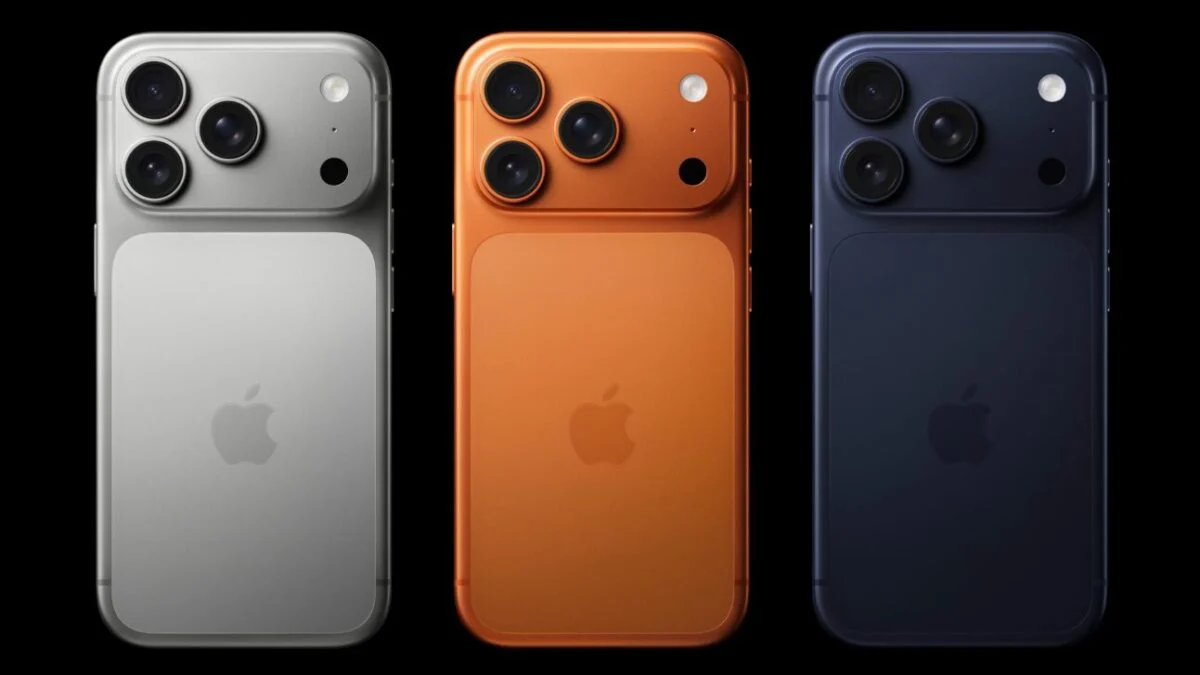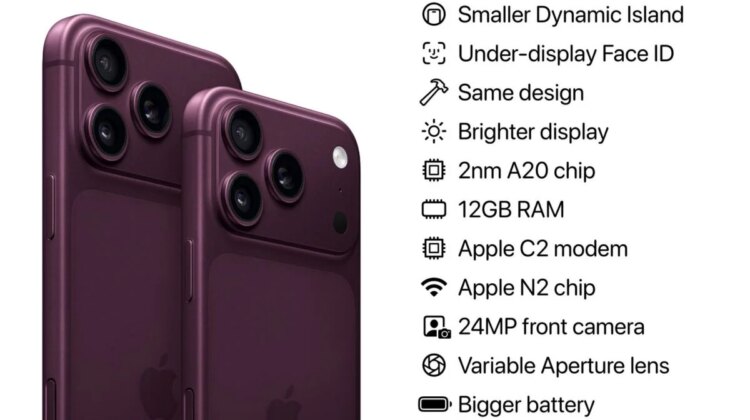
A prediction was posted on X (formerly Twitter) that “M16” will be used as a new material for OLED display panels manufactured by Samsung Display for the iPhone 18 Pro series. We calculated how much the maximum brightness (HDR) would improve if this were realized, and found that it could increase to approximately 1,780 nits.
Will the iPhone17 Pro series change from “M14” to “M16”?
Currently, it is believed that the OLED display panels manufactured by Samsung Display for the iPhone 17 Pro series and Google Pixel 10 Pro series use the “M14” material.
The OLED material of the iPhone 18 Pro series and Google Pixel 11 Pro series, which are their respective successor models, is expected to be changed from “M14” to “M16”.
Display specifications of Google Pixel 11 Pro series rumored to use “M16”
Regarding the specifications of the OLED display panel of the iPhone 18 Pro series, there is currently no leaked information that seems to be highly reliable.
On the other hand, there is the following leaked information regarding the display specifications of the Google Pixel 11 Pro series.
| model name | Display specifications (expected) |
|---|---|
| Google Pixel 11 Pro | 6.3 inches, 1,280 x 2,856 refresh rate: 1Hz ~ 120Hz, Maximum brightness: 2,450 nits |
| Google Pixel 11 Pro XL | 6.8 inches, 1,344 x 2,992 Refresh rate: 1Hz ~ 120Hz Maximum brightness: 2,450 nits |
The maximum brightness of the current model, Google Pixel 10 Pro series, is 2,200 nits (HDR). Therefore, if the leaked 2,450 nits refers to maximum brightness (HDR), then the brightness will increase by about 11.4%.
Is the improvement in maximum brightness (HDR) due to the change in OLED material?
It has been reported that the benefits of using new materials in Samsung Display’s OLED display panels include improved luminous efficiency and extended product life.
Therefore, if the maximum brightness (HDR) of the Google Pixel 11 Pro series, which is changed to “M16”, is improved compared to the Google Pixel 10 Pro series, which uses “M14” as the OLED material, it can be inferred that the effect of changing the OLED material is large.
Estimated maximum brightness (HDR) of iPhone18 Pro series
If the same level of maximum brightness (HDR) improvement is achieved for the iPhone 18 Pro series, we can expect the following specifications.
| item | iPhone17 Pro series | iPhone18 Pro series | Brightness improvement rate |
|---|---|---|---|
| Maximum brightness (HDR) | 1,600 nits | Approximately 1,780 nits | Approximately 11.4% |
Applying the expected improvement rate of approximately 11.4% for the Google Pixel 11 Pro series to the maximum brightness (HDR) of the iPhone 17 Pro series of 1,600 nits, the maximum brightness (HDR) of the iPhone 18 Pro series will be approximately 1,780 nits.
Increased brightness with the same power consumption or extended drive time with the same brightness
If the maximum brightness improvement of the iPhone 18 Pro series is achieved by changing the OLED material, it may be due to improved luminous efficiency.
In that case, it may be possible to increase the maximum brightness without significantly increasing power consumption.
The battery capacity increase rate of the iPhone 18 Pro series is expected to be limited to a maximum of 1.7%, but there is room for maximum brightness to increase further.
Possibility to improve daily usability
On the other hand, if the maximum brightness is kept to 1,600 nits, the same as the current model, battery life can be extended due to the reduced power consumption of the OLED display panel.
Although the change in the material of the OLED display panel is not noticeable, it can be said to be an element that will greatly contribute to improving everyday usability, such as improving outdoor visibility and extending battery life.
The Pixel 11 series is the only flagship lineup where every model uses M16 OLED panels.
The iPhone 18 Pro and Pro Max are also said to use M16 panels this year, similar to the Pixel 11 Pro, with the main difference being bezel design and true ambience. There is no Apple-specific… pic.twitter.com/BgRGWJadRa
— Schrödinger (@phonefuturist) June 1, 2026
Photo:Apple Hub/Facebook
Source: iPhone Mania