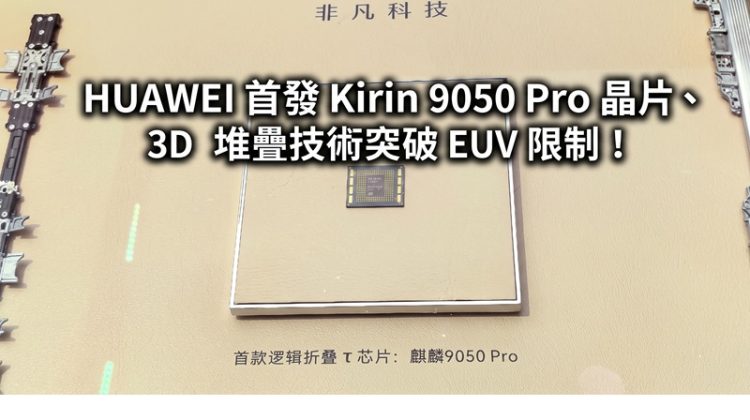
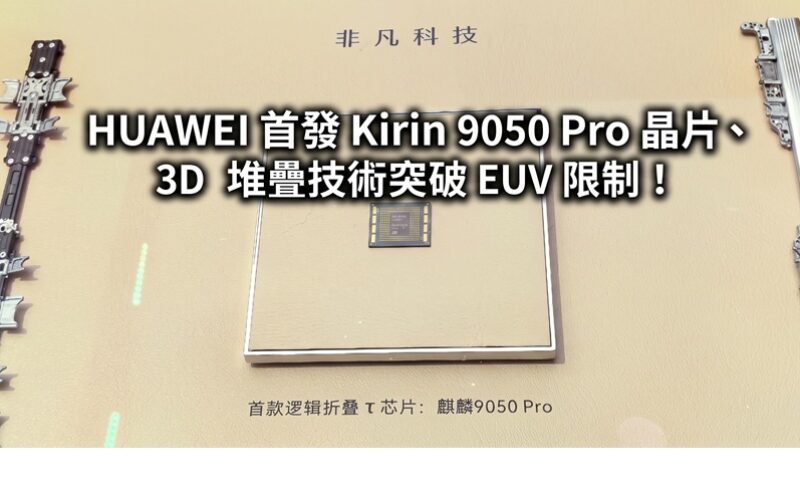
It is no exaggeration to use “technological breakthrough” to describe the new products released by HUAWEI this time! The new tri-folding mobile phone Mate XT 2 makes a shocking debut, equipped with Kirin 9050 Pro chip for the first time. The new SoC successfully bypasses the limitations of EUV lithography machines and relies on its exclusive “logic folding” 3D stacking technology to achieve equivalent advanced processes on existing DUV equipment. Its transistor density has increased by 55%, multi-core performance has increased by 52%, and power consumption has been significantly reduced. It can be called a historic technological breakthrough for domestic chips!
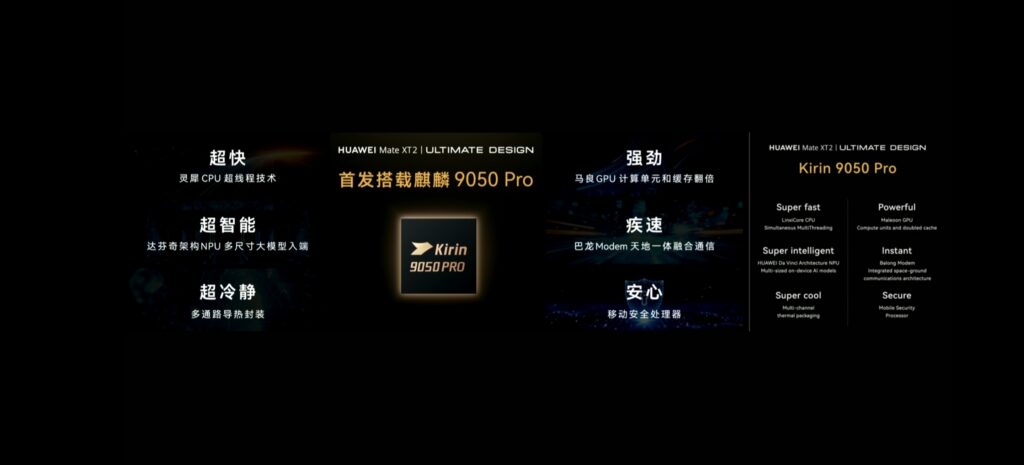
HUAWEI officially releases the much-anticipated new tri-folding phone Mate XT 2. The most eye-catching thing about this new machine is not only the highly topical folding body, but also its built-in new processor Kirin 9050 Pro. This SoC successfully bypasses the limitations of EUV lithography machines and uses exclusive “logic folding” 3D stacking technology to achieve top-level performance equivalent to advanced processes on existing DUV equipment. It is a blockbuster chip launched by HUAWEI at a flagship conference after six years after the Mate 40 series in 2020.
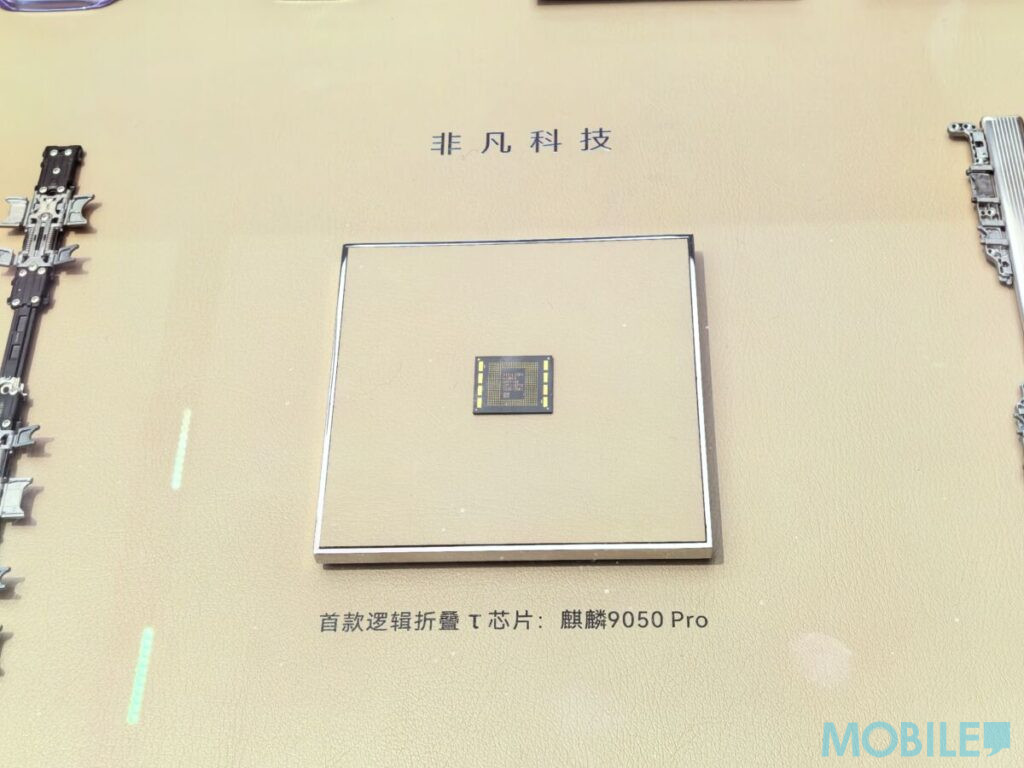
Kirin 9050 Pro, its underlying architecture design also ushered in revolutionary changes. The new processor uses micron-level hybrid bonding technology to upgrade logic units from the previous planar distribution to vertical 3D stacking, just like upgrading a single-layer unit to a duplex design. This technology replaces “geometric shrinkage” with “time shrinkage” and adds vertical interconnection channels inside the chip, significantly shortening the signal transmission path and reducing latency, breaking the physical limitations of traditional chip space.
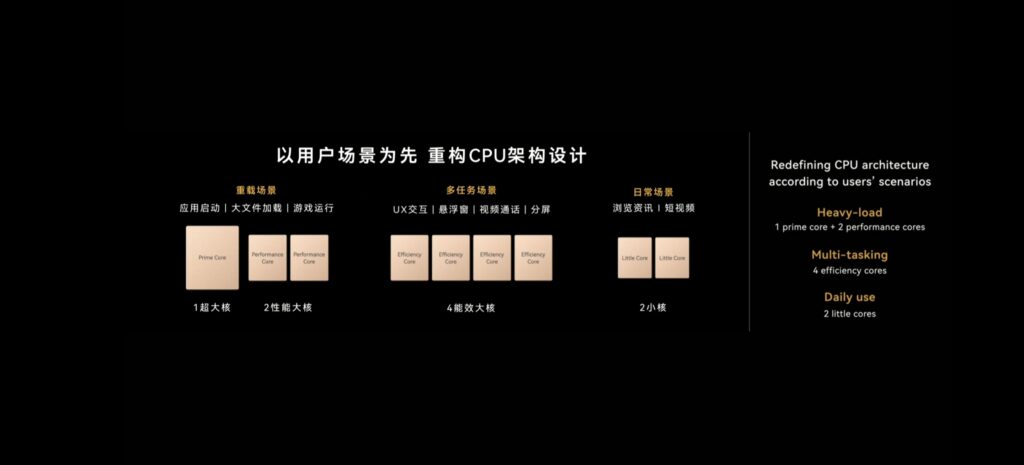
The core hardware specifications have attracted much attention. Kirin 9050 Pro uses the same process node as the previous generation, but the transistor density has jumped from 155 million per square millimeter to approximately 238 million, an increase of up to 55%. In terms of performance, the SoC is equipped with Lingxi CPU hyper-threading technology, which improves single-core and multi-core concurrent performance by 24% and 52% respectively. In addition, the built-in Ma Liang GPU supports hardware-level ray tracing, and the rendering performance soars by 142%. With the deep collaboration of software, hardware and core cloud, the overall performance is improved by 42% compared with the previous generation. The battery life performance also benefits from the three-dimensional stacking process. Under the same performance, the NPU, GPU and CPU core power consumption are reduced by 66%, 58% and 41% respectively, greatly improving the heating pain points of flagship machines.
HUAWEI has fully disclosed the technical details of Mate XT 2 and Kirin 9050 Pro at the press conference. This three-fold flagship is expected to be the first to go on sale in the mainland market in the short term. As for the specific pricing, body color selection and launch time of each storage version in Hong Kong, further official announcements are still pending.