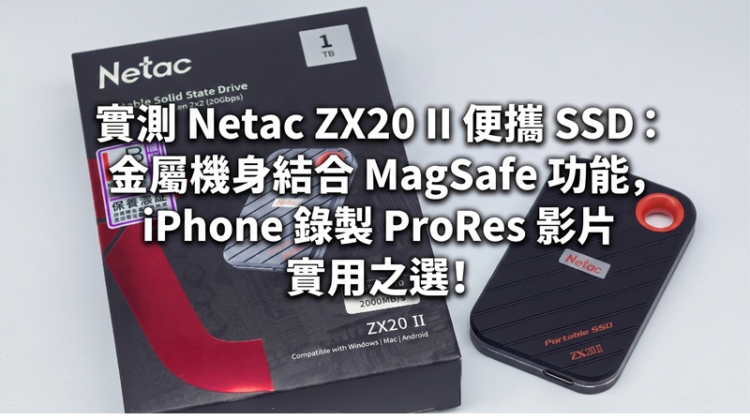
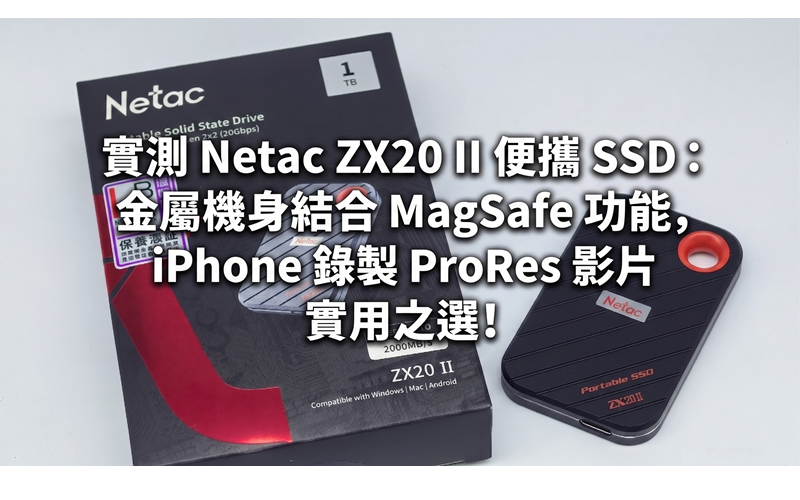
In recent years, as the shooting capabilities of smartphones continue to improve, many users will directly use their mobile phones to record high-resolution videos. In order to meet the huge storage needs, an external SSD with fast transfer speed and easy portability has become a common accessory for many people. Netac’s latest ZX20 II portable SSD has improved on this aspect, using a stronger metal casing and adding a magnetic design. It is especially suitable for iPhone users to use the MagSafe function for ProRes video recording and post-editing. This time we will test the actual performance of this external SSD in detail.
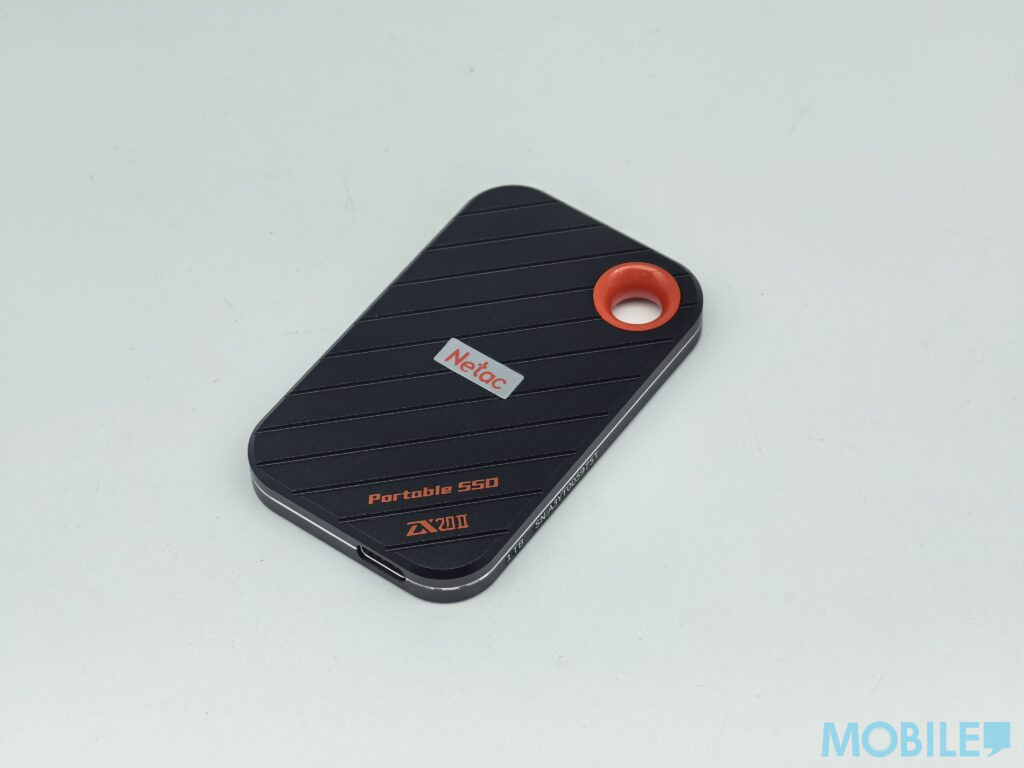
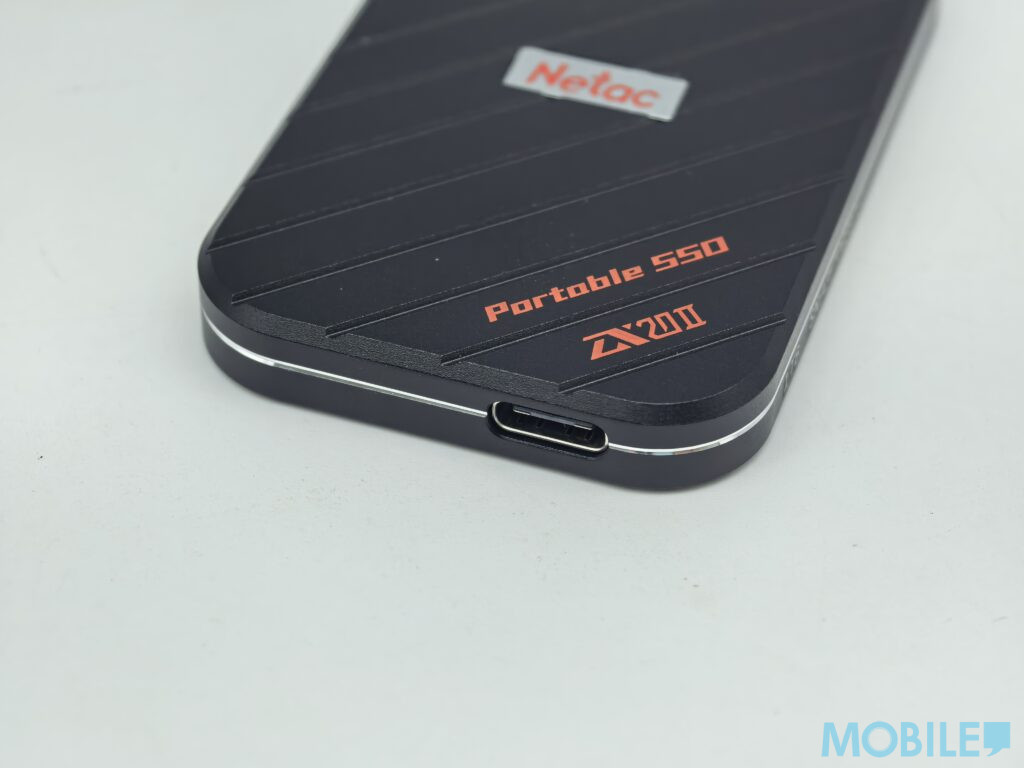
In terms of design, although the appearance of Netac ZX20 II is similar to that of the previous generation, the overall texture has been significantly improved. The manufacturer listened to the opinions of users and changed the original plastic casing to aluminum alloy and silicone material. This design makes the fuselage more sturdy and durable, and at the same time helps the fuselage effectively dissipate heat when transmitting large amounts of data. The body size remains lightweight, with the 1TB GB version weighing only 47g. With the iconic orange lanyard hole design on the upper right, it is very convenient to carry. There is a USB-C interface at the bottom of the fuselage, and the overall layout is simple. However, it is a pity that the manufacturer still does not include a status indicator light. Users cannot directly observe the reading and writing status, and the product does not have official waterproof and dustproof certification. You still need to pay attention when using it outdoors.
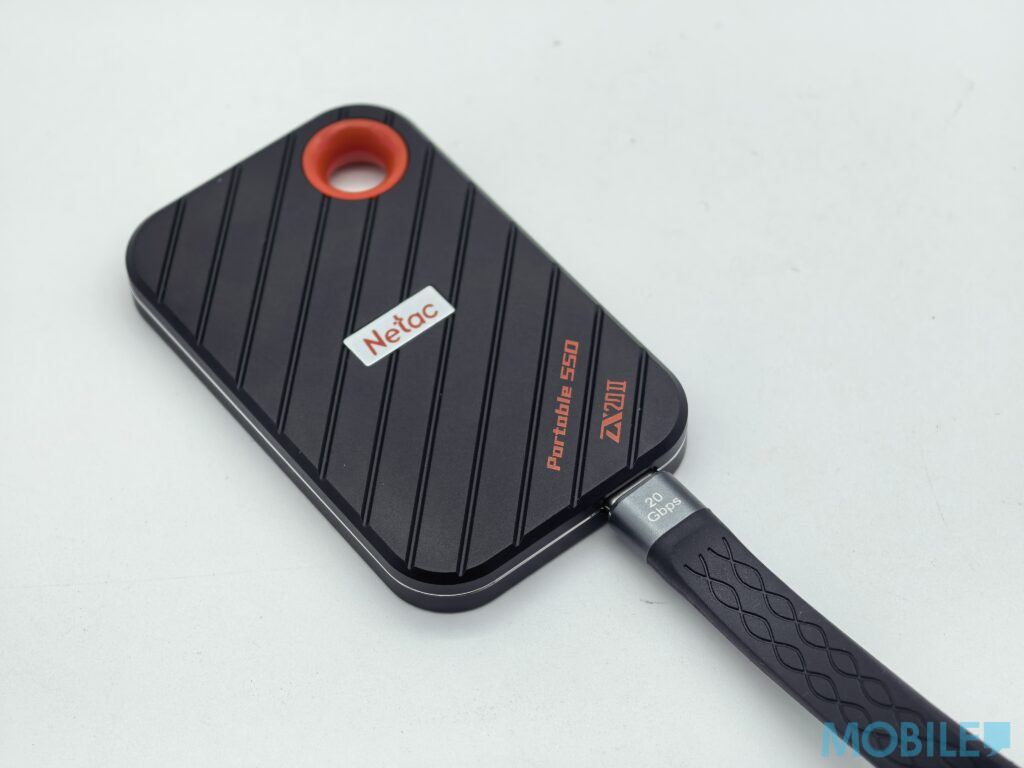
One of the practical features of this SSD is its built-in magnetic design. For iPhone users, you can directly attach the Netac ZX20 II firmly to the back of your MagSafe-enabled iPhone and connect it to your phone via the included flat USB-C cable. This combination allows users to record high-definition ProRes videos directly to SSD without occupying the internal space of the phone during the recording process. After completing the shooting, users can directly connect the SSD to the laptop for post-production editing, effectively simplifying the workflow of video creators.
In terms of performance and compatibility, Netac ZX20 II uses USB 3.2 Gen 2 x 2 transmission interface. If used with a computer host that supports this specification, the read and write speed can reach up to 2000 MB per second, which is enough to meet the needs of transferring large files or directly editing high-definition videos. However, users must pay attention to their own hardware configuration before purchasing, because most laptops and Macs currently on the market are equipped with USB4 or Thunderbolt interfaces that are not fully compatible with the USB 3.2 Gen 2 x 2 specification. In this case, the SSD’s maximum transfer speed drops to around 1000 MB per second. Although this speed is still sufficient for regular editing work in software such as DaVinci Resolve or CapCut, it does not fully realize its maximum transfer potential.
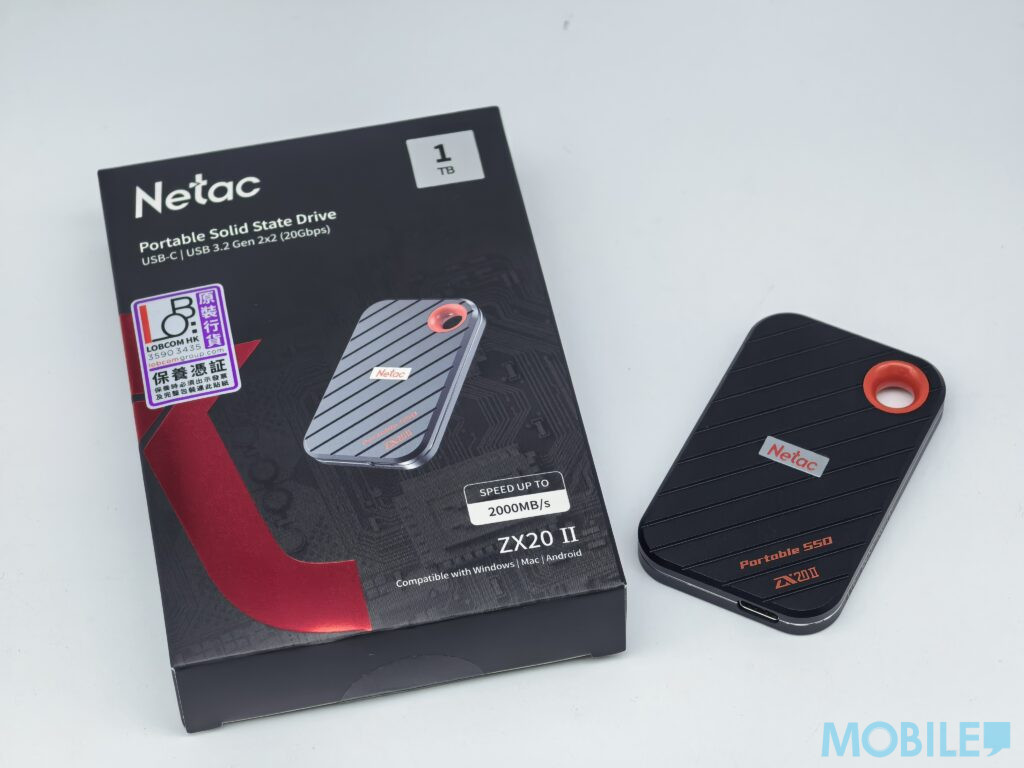
In summary, the Netac ZX20 II is a solidly built portable external storage device aimed at mobile creators. The heat dissipation performance brought by the metal body and the convenient magnetic design make it a practical tool for iPhone photography enthusiasts. If the computer host you mainly use supports the USB 3.2 Gen 2×2 interface, it can provide you with an efficient access experience.