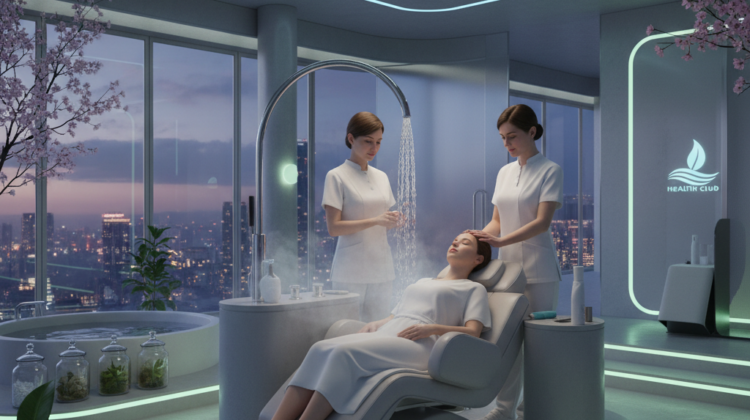
At some Japanese head spas, you can feel “reset” without washing your hair in the traditional sense—because the goal isn’t style, it’s nervous-system relief. That shift is why a 90-minute ritual now being marketed as a “full sensory journey” is landing with such force at mainstream health clubs like Bannatyne in Orpington, where guests are promised tension relief and a scalp-focused reboot.
From ancient scalp rites to a modern appointment format
The UK version of Japanese head spa is getting packaged with the same logic many premium wellness services use: reduce complexity, increase consistency. Bannatyne describes its Japanese head spa as a holistic ritual that can run either 90 minutes or 60 minutes, signaling two different “commitment levels” for the same core outcome—detoxifying, rejuvenating, and restoring the scalp.
That matters because scalp health has a way of being both invisible and highly personal. You may not notice you’re clenching your jaw or carrying stress in your neck until your shoulders feel heavy and your scalp seems perpetually tight. By structuring the experience around neck and shoulder massage followed by scalp cleansing and exfoliation, modern providers effectively turn everyday tension into a measurable session with a clear endpoint: a reset feeling when you leave.
Even the language being used—“full sensory journey”—is an admission that the experience is designed to be more than mechanical. It’s meant to guide attention. In wellness markets, attention is the missing ingredient: the more fully you can settle into touch, warmth, and scent or product textures (even without full immersion), the more likely you are to perceive the treatment as a restoration rather than a chore.
What’s inside the ritual: scalp work that starts at the neck
One reason head spas are spreading is that they borrow a proven map of where discomfort travels. Bannatyne’s service highlights neck/shoulder massage paired with scalp cleansing and exfoliation—an order that’s more strategic than it looks. Neck work can lower the intensity of sympathetic “fight or flight” signals, while scalp cleansing and exfoliation then deliver a second confirmation: relief you can feel immediately through improved circulation and a cleaner sensation.
Exfoliation is a key detail, because it positions the session as “scalp care,” not just relaxation. If your scalp is prone to buildup, itch, or dullness, exfoliation gives visible and tactile feedback—an immediate return on time spent. That’s a major psychological advantage over purely relaxing bodywork: people remember exfoliation because it changes the state you started with.
And there’s a broader trend hiding in plain sight: many consumers now want targeted body maintenance, the way they used to treat skincare. Head spas slot into that mindset while still offering the comfort of massage. The result is a product that can appeal to both wellness-first clients and beauty-first clients—without forcing them to choose.
Why demand is outstripping supply in “hard to book” spaces
Outside the UK mainstream, the demand story is even sharper. A Japanese head spa experience known as Goku no Kimochi is described as Japan’s hardest head spa to book, and the bottleneck isn’t just popularity—it’s format. The experience is waterless (dry), and guests remain clothed, shifting the session away from “spa at the end of a day” and toward a deeper, more focused appointment that’s easier to schedule in theory—but hard in practice because the sessions are limited and demand is high.
That dry, clothed format is strategically important. Water-based hair washing and full hair product routines create longer changeover times and higher staffing demands. A waterless setup reduces operational friction and makes the experience feel controlled and ritualized, but it also encourages a particular kind of intensity: guests are still, present, and receptive. In other words, the format trains expectations—less about hygiene theater, more about embodied release.
When a niche experience becomes “hard to book,” it also becomes a credibility signal. People don’t only want a massage; they want access to a specific kind of cultural authenticity and depth. Mainstream providers may not compete on the same scarcity, but they can borrow the same promise: an established ritual with a defined sequence, a specific duration, and a clear feeling of transformation.
What to look for before you book (and how to get the best result)
If you’re choosing a Japanese head spa—whether at a facility like Bannatyne or in a more boutique setting—the best sessions usually share three traits: a defined flow, scalp-specific work, and neck/shoulder integration. The clearest indicator in the UK offering is that it explicitly includes neck/shoulder massage plus scalp cleansing and exfoliation. That combo suggests the appointment isn’t just “head rubs”—it’s designed to shift tension from the body into the scalp.
Next, choose the duration strategically. A 60-minute option can be ideal if you want immediate relief—especially if your main issue is shoulder tightness and a stressed scalp sensation. A 90-minute treatment makes more sense if you’re aiming for a fuller “sensory journey” effect, because longer sessions can better transition you from activation (tightness) to settling (reset).
Finally, treat the session as a mini recovery protocol, not a standalone treat. Plan to avoid heavy caffeine or intense work right after, because the session’s value is partly about giving your nervous system continuity. If a provider is promising “detoxifying” and “rejuvenating,” the client behavior matters: hydration and sleep the same night strengthen the sense that you actually left feeling changed.
Where the Japanese head spa trend is headed
Expect Japanese head spa offerings to keep migrating into mainstream UK health clubs, but with increasing sophistication in how they sell outcomes. The Orpington service’s “full sensory journey” framing shows that providers know customers aren’t just buying touch—they’re buying narrative and state change: tension out, reset in.
At the same time, the hard-to-book reputations of experiences like Goku no Kimochi suggest an enduring appetite for authenticity and depth. The future likely belongs to hybrid models: mainstream accessibility on duration and pricing, paired with more clearly defined ritual elements—especially dry, clothed, waterless options where scheduling efficiency doesn’t dilute the intensity.
Key takeaways: Look for services that combine neck/shoulder work with scalp cleansing and exfoliation; choose 60 minutes for targeted relief and 90 minutes for a fuller reset; and treat the appointment as part of your recovery routine so the “reset button” effect lasts beyond the door.