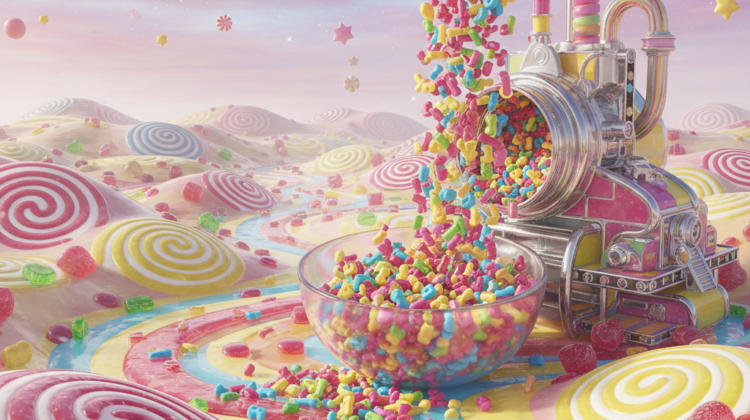
The most revealing gummy trend in 2026 isn’t a new flavor—it’s a new behavior. Brands are engineering gummies to do more than melt; they’re designed to pop, change texture in bite after bite, and mimic the “experience” of soda counters and cocktail menus. One fresh example: Sweet Venture Group’s Gummi Popz™, billed as the “world’s first gummy candy that pops,” adds popping candy and layered flavors to build a full-sensory payoff.
That shift matters because gummies have saturated many shelves. When a category looks similar on the outside, the only sustainable differentiation is what happens in the mouth: sound, temperature, snap, liquid release, and a flavor arc that doesn’t flatten after 10 seconds. The brands pushing hardest in 2026—whether through popping elements, multi-textural builds, or globally inspired taste profiles—are essentially turning gummies into bite-sized “events.”
Gummies Evolve From Flavor Products to “Experiences”
Gummi Popz™ provides a clear template. Launched by Sweet Venture Group and positioned as a “full-sensory” concept, it pairs popping candy with layered flavors—a combination that can deliver both a sensory surprise (the pop) and a structured taste journey (layers that change as you chew). The rollout plan also signals a confidence in consumer curiosity: it’s scheduled to begin in the U.S. mid-March 2026, with international expansion following later.
This strategy mirrors a broader pattern: when brands can’t rely on novelty alone, they create novelty through mechanics. In practical terms, popping candy adds a high-contrast moment right at the start of the bite, which can help gummies compete with candy like fizzy drops or sour candies that already “perform.” Layered flavors then extend that moment, giving the shopper a reason to re-buy (“What was that second wave?”) rather than simply finish a bag.
Even where gummies don’t include popping elements, the same logic shows up in form factors designed to create contrast—crisp outsides, softer centers, and liquid-filled surprises. The point isn’t luxury; it’s retention. A gummy that changes textures or releases something unexpected is easier to remember than one that just tastes like berry.
2026’s Multi-Textural Push: Crisp, Liquid, and Layered Bites
LeChao Candy’s 2026 trend framing centers on “multi-textural gummies driving growth,” and the examples it highlights—crisp outside/soft inside, liquid-filled centers, and multi-layer designs—map directly to why this matters. Texture affects perception of flavor intensity; a crunchy first bite can make sweetness feel sharper, while a soft or gel-like center can make it feel rounder. When you control the texture sequence, you control the flavor story.
There’s also a manufacturing reality behind these concepts. Multi-layer and liquid-filled gummies require tight process control to avoid leaks, deformation, or inconsistent gel set. That’s exactly why the trend is meaningful: only brands with real production maturity can scale it. In other words, multi-textural gummies aren’t just a marketing idea—they’re an operational capability becoming visible at retail.
For retailers and category builders, this shift has consequences. If consumers begin expecting a “moment” in every gummy, plain single-ingredient gel candies risk becoming perceived as flat or old-fashioned. The winning move isn’t abandoning gummy formats—it’s upgrading them so each bite delivers at least one sensory discontinuity: a snap, a melt, a liquid release, or a layered flavor transfer.
Flavor Forecast: Berry Blends, Sour Profiles, Tropical Notes, and Soda-Shop Nostalgia
Flavor remains central, but 2026 flavors are being positioned as moods rather than static tastes. Amoretti’s 2026 gummy flavor outlook expects strong performance from berry blends, sour/tart options, tropical fruits, and nostalgic soda-shop flavors. Each of these categories plays differently with consumer memory—berries are familiar and versatile, sour/tart adds edge and urgency, tropical profiles feel like escapism, and soda flavors connect to childhood “fizz” rituals even when the gummy itself is not fizzy.
That last point matters because it aligns with the category’s movement toward experience. Soda-shop nostalgia isn’t just about taste—it’s about recreating a sensory association: sweet carbonation memory, fizzy aroma, and a playful mouthfeel. In practice, pairing “soda” flavor profiles with texture shifts (or even popping elements like Gummi Popz™) can make the candy feel like a portable version of a candy-counter visit.
Amoretti also notes growing interest in cocktail-inspired and globally influenced flavor directions. Cocktail inspiration tends to favor complex, layered flavor mechanics—think how citrus, fruit, and herbal notes behave across one drink. For gummies, that suggests products designed for a flavor arc, not a one-note finish. A gummy that begins sweet and ends with tart or a botanical hint is effectively mimicking the top-to-bottom progression of a cocktail.
What Gummy Brands Should Do Next: Product Design, Launch Timing, and Retail Strategy
The clearest playbook emerging from these 2026 trends is to build gummies that earn their place in the mouth. That means choosing one “hero mechanic” (popping candy, crisp/soft contrast, multi-layer construction, liquid center) and then supporting it with a flavor system that changes across the bite. Gummi Popz™ shows how a single mechanic plus layered flavor can create a reason to talk about the product—especially when launch timing is deliberately staged, like mid-March 2026 in the U.S.
For brands planning assortments, a practical approach is to balance familiarity with novelty. Berry blends and sour/tart give you mainstream traction; tropical and soda-shop profiles give you emotional differentiation; cocktail-inspired and global notes give you premium storytelling. The risk with all-novelty assortments is that consumers hesitate—so the best strategy is usually to anchor with known taste directions while using texture and layering to make even familiar flavors feel new.
Finally, think beyond the bag. In a crowded gummy category, packaging and merchandising should highlight the “moment” you’re buying. If the product pops, make that legible in the first glance. If it’s crisp outside and soft inside, the copy should imply that sensory sequence. If it’s liquid-filled, the retailer should be able to explain the payoff in one sentence—because consumers will buy a story they can repeat after the first bite.
Key takeaway: Gummy trends for 2026 are converging on multi-sensory design—popping elements, multi-textural construction, and flavor profiles engineered for a sequence of taste sensations. Brands that treat gummies as interactive experiences, not just flavored gelatin, will be best positioned to win attention now and repeat purchases later.