The Xserve has been dead since 2011. Its spiritual successor sits on a desk, not in a rack. That is the argument in 9to5Mac's Apple @ Work column of November 14, 2026: a Mac Studio running local open-weight models can now do work that once needed a rack of servers. Bradley Chambers wrote it. One disclosure before anything else. Apple @ Work is a column sponsored by Mosyle, and the notice sits at the top and bottom of the piece. This is an argument from an IT columnist, not an Apple announcement.
The Xserve role moved from the rack to the desk
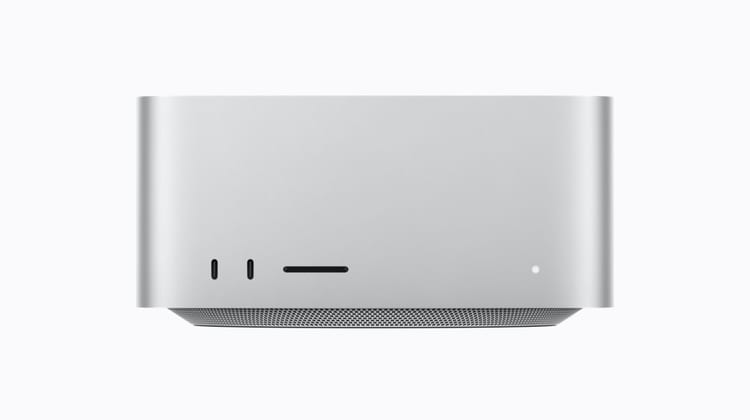
Chambers writes that the Mac mini filled part of the gap after Apple killed the Xserve in 2011. The bigger change is the Mac Studio. In his telling, a couple of Mac Studios can host a model that would otherwise need a rack of Nvidia hardware and a power budget to match. The machines stay quiet enough to sit under a desk. He also notes companies like MacStadium have to like this future.
512 GB of unified memory, and MLX built for it
The hardware argument is unified memory. On a single Mac Studio the GPU can use up to 512 GB of memory, instead of being limited to whatever fits on a graphics card. Apple's own Mac Studio press release lists the same ceiling for the M5 Ultra model, plus 1.2 TB/s of memory bandwidth. That figure matches the number Meta quotes in the column.
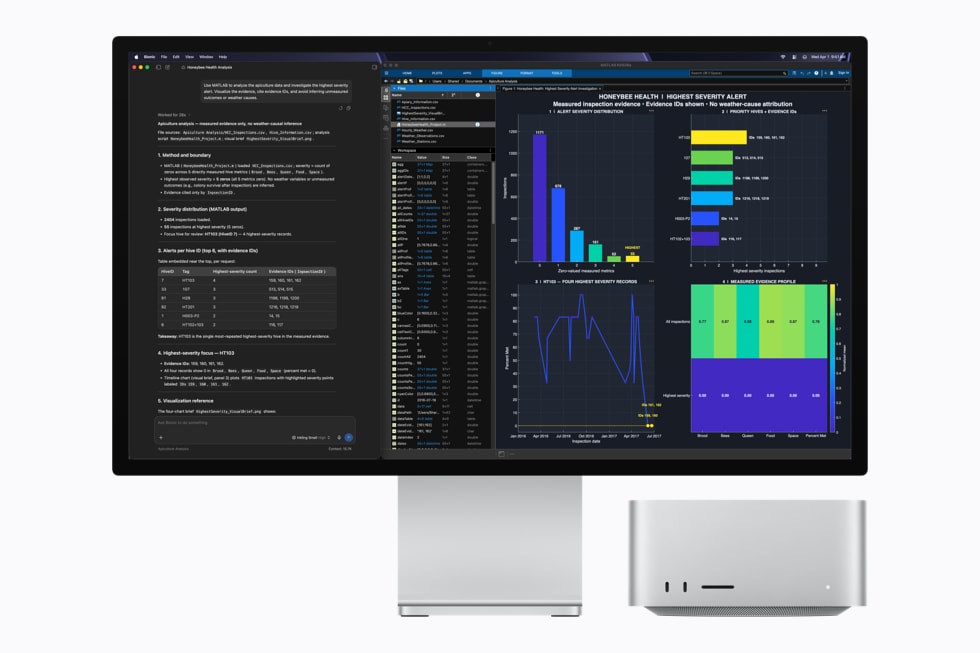
MLX is Apple's machine learning framework, built for the unified memory architecture of Apple silicon. The API feels like NumPy if you have used it, and bindings exist for Swift, C++, and C. We covered the basics before in a Mac tip on running a local LLM with mlx-lm on Apple silicon. Meta's own words in the column: the M5 Ultra GPU can use up to 512 GB per Mac Studio, so two machines hold an entire model, and 1.2 TB/s of bandwidth is enough that "two Mac Studios behave like one supercomputer with a terabyte of unified memory."
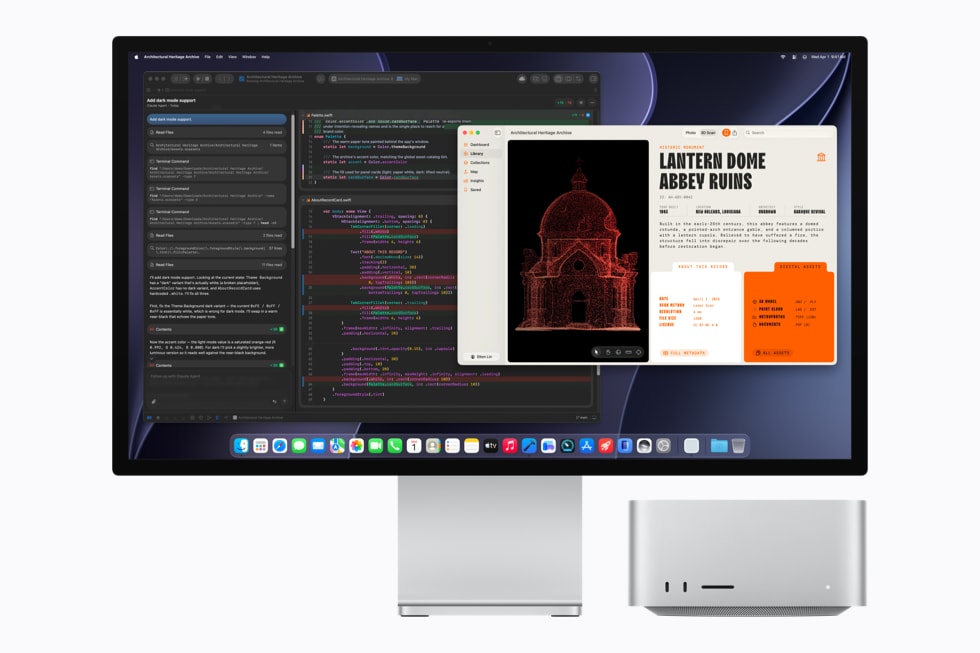
Meta also tested agentic workflows entirely on device. Shipping real iOS changes to Ice Cubes, an open-source Mastodon client. Bug fixes, new features, a full build. Driving DaVinci Resolve end to end, with the model scanning footage frame by frame and cropping the strongest moments vertically.
The Muse Spark Open number is four machines, not one
One figure worth reading slowly. Apple's Machine Learning Research post, as quoted in the column, shows four M5 Ultra Mac Studios running Muse Spark Open at over 36 tokens per second, faster than you can read, while peaking around 300 watts per machine. That is a four-machine number. It is not the speed of one Mac Studio. Muse Spark Open is Meta's most capable open-weight model: 816 billion parameters, 42 billion active, a million-token context window, free to take. Meta optimized it to run on the Mac Studio.
Osaurus runs local AI on a 16 GB MacBook
The other half of the argument is cheap hardware. Chambers spent time with Osaurus, a free open-source Mac tool for local models, and talked with its co-founder and CEO Terence Pae on his podcast. Osaurus runs a usable local AI model on a 16 GB Apple silicon laptop with no network connection. Two of its models run on 8 GB. When the app does call a frontier model like Claude or OpenAI, a small local model first swaps names, phone numbers, and account numbers for placeholders. No servers, no customer database. Individuals use it free. Workspaces is the paid tier for teams sharing agents, and a Windows beta exists.
For bigger setups there is Claris Harbor, which clusters Macs over Thunderbolt 5, and one machine can serve a local MLX model as an OpenAI-compatible API. Chambers closes with one line: "Now the most capable open-weight model in the US is optimized for the Mac." He writes in the same column that Siri is still far behind. Both statements sit in the same piece.
Photo: Apple (Mac Studio, Newsroom) / Source: 9to5Mac Apple @ Work (sponsored by Mosyle), Apple Newsroom