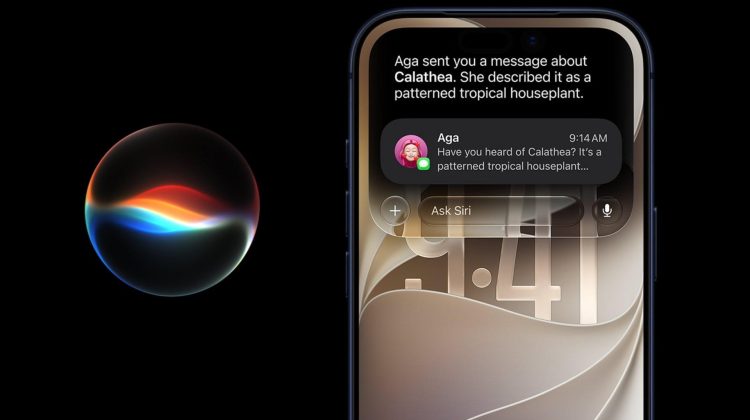
After an Apple Intelligence launch filled with broken promises and confusion, the Cupertino-based company decided to change tack. Siri AI, a completely redesigned assistant that promises to rival ChatGPT, Gemini and Claude. The new version, announced at WWDC 2026, aims to reinvigorate its legacy and deliver a more natural, contextual conversation experience.
Apple understands that simply integrating artificial intelligence into a system is not enough; the voice assistant needs to be an active partner. Therefore, Siri AI can not only respond to the user’s commands, but also learn the user’s usage habits, analyze screen content, and perform various operations within the app. All of this is guided by the protection of user privacy, which is one of the core features of the Apple brand.
What’s new in Siri AI
Powered by the latest generation of Apple AI, the new Siri is capable of two-way conversations and detailed responses. One of the most significant improvements is… Personal contextual understanding voice assistants are able to search messages, emails, photos and other user data and provide relevant information instantly. For example, if you receive an email with hotel reservation information, Siri AI can remind you of your check-in time without you having to ask.

Another new feature is improved voice recognition. Siri AI captures your speech more accurately, automatically adding capitalization, punctuation, and formatting as you speak. You can also… Adjust the expressiveness and tempo of your voice to choose a more professional or personal tone.
Fully integrated into the Apple ecosystem
Siri AI will launch a dedicated app that syncs with iCloud, allowing you to continue conversations on any device. It will work with iPhone, iPad, Mac, Apple Watch, Apple Watch Pro, and other devices… CarPlay and AirPods Additionally, Siri’s visual intelligence extends to iPad and Mac, allowing for visual searches and questions about content on the screen.
Regarding compatibility, not all devices can run Siri AI. The list includes iPhone 16 or later, iPhone 15 Pro and Pro Max, iPad with M1 chip or later, Mac with M1 chip or later, Apple Watch Series 9 or later, Apple Vision Pro, and more.

Availability and European issues
The official plan is to release in the fall of 2026, when iOS 27, iPadOS 27, macOS 27, watchOS 27 and visionOS 27 will be launched. However, EU users will still have to wait for a while. Siri AI will not initially be available on iOS and iPadOS in the EU. Due to the restrictions of the Digital Markets Act, Apple said it is working hard to find a solution that can protect user privacy, but did not give a specific date.
Interestingly, in Europe, this feature will be supported on Mac, Apple Watch, and Apple Vision Pro as long as the device language is set to a supported language. For similar regulatory reasons, this feature will not be available in mainland China.

Alliance with Google
In order to speed up development, Apple has confirmed that it is working with Google to integrate the Gemini model into the Siri artificial intelligence system. This means that for certain complex tasks, Apple’s voice assistant will use the Gemini model. While maintaining the company’s consistent privacy protections, the agreement is historic because it marks Google’s formal entry into the ecosystem of its main rival in mobile.
The alliance also explained why it is retiring Google Assistant, which has been replaced by Gemini and is making way for a new era of smart assistants. Thanks to the partnership, Siri AI will be able to provide more accurate and helpful answers, although some experts are skeptical it will win over the most discerning users.
Simply put, Siri AI represents Apple’s biggest leap forward in artificial intelligence. With deep system integration, support for personal context and a partnership with Google, Apple aims to position itself as a key player in the artificial intelligence race. European users may have to wait a while, but it may be worth the wait.