Apple recently announced a new Mac mini equipped with the M6 and M5 Pro. M6 is Apple’s first chip manufactured using TSMC’s 2nm process.
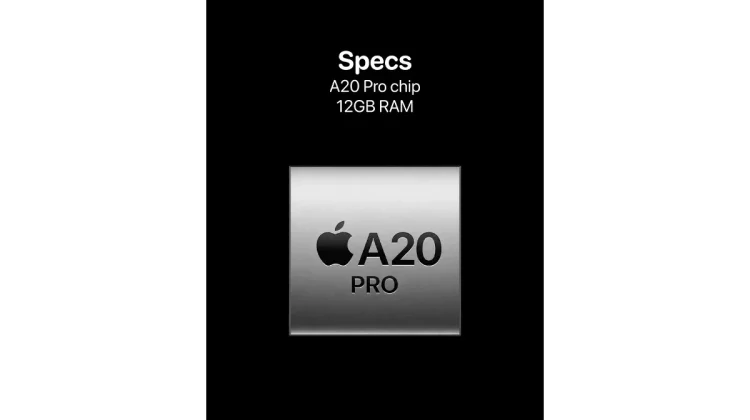
Until now, it was rumored that the A20 Pro, which will be installed in the iPhone 18 Pro series and foldable iPhone, will be Apple’s first 2nm chip.
Supply chain-related information suggests that the reason why the M6 was introduced before the A20 Pro is due to the difference in the production quantities of both chips.
Apple’s first 2nm is rumored to be A20 Pro
In the past, Apple had adopted TSMC’s latest process first for the A series of iPhones. In the 3nm generation, the A17 Pro for the iPhone 15 Pro series is the first Apple product to use TSMC’s 3nm process.
Therefore, there was a strong expectation that the transition from 3nm to 2nm would follow a similar trend, and that the A20 Pro would be Apple’s first 2nm chip. However, the M6 was actually announced ahead of that.
Differences in production quantities between M6 and A20 Pro
The reason why M6 was introduced first rather than A20 Pro is due to the difference in production volume required for both chips. Compared to the new Mac mini equipped with the M6, the iPhone 18 Pro series equipped with the A20 Pro and the foldable iPhone are expected to ship in far greater numbers.
If the yield rate (good product rate) of the new 2nm process is lower than expected in the early stages of mass production, it will not be possible to secure the required number of chips, which will affect the production plan of the products equipped with it. The larger the required quantity of A20 Pro, the more likely it will be affected by the yield rate.
Verification of the mass production process is possible in advance with M6
Considering these risks, TSMC may have verified the manufacturing process in the 2nm process by mass producing M6, which is required in relatively small quantities, first.
It is our view that after confirming the yield rate through mass production of M6 and adjusting the process as necessary, we moved on to full-scale mass production of A20 Pro, which requires a larger quantity. For TSMC, 2nm is a new mass production process, so optimizing manufacturing conditions and improving yield rates are important in the early stages of startup.
By launching the M6 in advance, we have the advantage of gaining mass production experience before starting mass production of the A20 Pro.
Launching mass production is important even for the 3nm generation
For the A17 Pro, Apple’s first 3nm process, the yield rate of TSMC’s first-generation 3nm process, N3, was much lower than expected, and an improved version of N3B was used.
With the latest miniaturization processes, it is difficult to ensure a high yield rate immediately after mass production begins, which has a significant impact on manufacturing costs and supply quantities.
Based on that experience, it is possible that in the 2nm generation, mass production began with M6, which has a relatively low production volume, in preparation for mass production of A20 Pro.
Effective to avoid A20 Pro supply shortage
If this information is correct, the company will have sufficiently increased the yield rate of the 2nm process through mass production of the M6 before moving on to full-scale production of the A20 Pro.
In that case, the risk that the supply of the iPhone 18 Pro series and foldable iPhones will be significantly restricted due to a lack of production of the A20 Pro itself will be reduced.
However, it is rumored that the A20 Pro will use WMCM (Wafer-level Multi-Chip Module), which arranges DRAM horizontally, and the DRAM shortage and packaging process will also be factors that will affect the supply amount.
Is the folding iPhone’s delay due to the hinge?
Regarding the foldable iPhone, there is information that the start of mass production has been delayed compared to the iPhone 18 Pro series.
If mass production of the A20 Pro and folding organic EL (OLED) display had progressed smoothly, it is possible that other parts such as the hinge were responsible for the delay in launching mass production.
Photo: Apple Hub/Facebook
Source: iPhone Mania