
Meta announced the development of a new security feature called Scam Alert for WhatsApp as early as June, and announced the specific technical details two weeks ago. Although the official timetable for full launch has not yet been implemented, it is obviously not far away from the official launch. According to the latest news, some Android users participating in the WhatsApp beta program can now experience this useful feature first.
WABetaInfo, a website that specializes in tracking WhatsApp updates, found that in the latest 2.26.34.1 beta version of WhatsApp for Android, the Scam Alert feature has been officially opened to some beta users. This feature works by analyzing messages from unknown senders. When the system believes that the message is at risk of fraud, it will issue a warning to the recipient. During the entire process, the sender will not know that the recipient is using this anti-fraud mechanism.
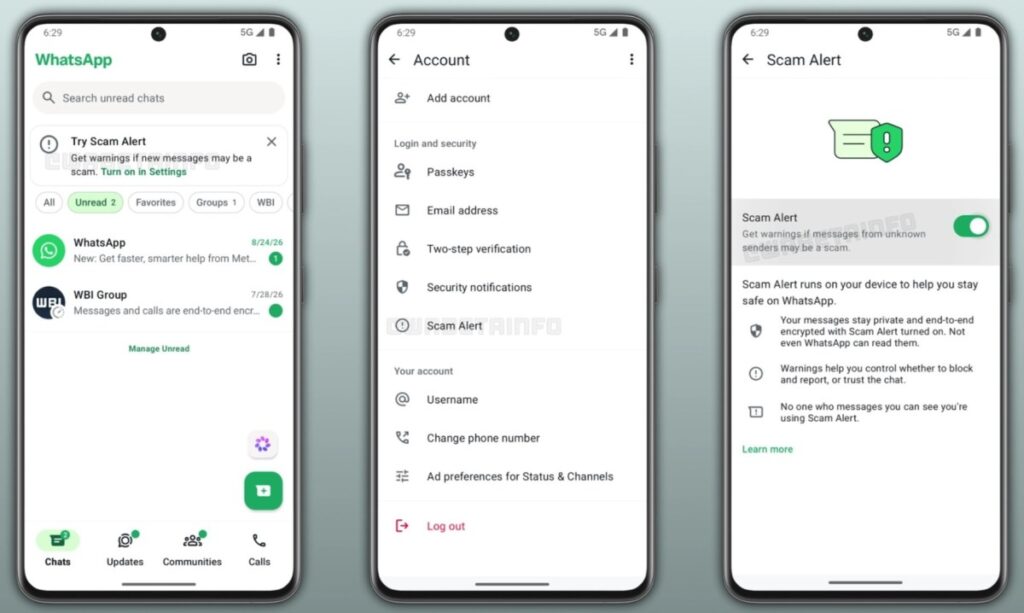
When WhatsApp users receive a scam warning, they can decide to mark the sender as trusted, or directly block and report the sender. If you choose to mark a conversation as trust, users can also choose to share the five most recent messages in the conversation with WhatsApp to help the official further improve the accuracy of the anti-fraud model. It should be noted that since this is an optional feature, users must manually go to the “Settings” of WhatsApp for Android and then enter the “Account” menu to activate it.
Meta further explained in its official blog that WhatsApp’s Scam Alert is a new feature that operates using the device’s built-in machine learning model and is specifically designed to alert users to guard against potential scam messages. Officials emphasized that all message content will not leave the user’s mobile device for classification, and reports will not be automatically sent to WhatsApp, Meta or anyone else. This design, while maintaining the original end-to-end encryption mechanism, gives users independent control, ensuring that an alert can be issued immediately when the system model identifies a suspected scam, while fully protecting communication privacy.