

Recently, a new Samsung Galaxy M series phone that has not yet been released appeared in the Geekbench benchmark database. The model number of this device is SM-M676K, which is widely speculated to be the upcoming Samsung Galaxy M67. The biggest highlight of this device is that it is equipped with a processor originally used in flagship models, breaking the hardware convention of previous mid-range mobile phones!

According to leaked information, the Galaxy M67 uses Samsung’s own Exynos 2200 chip. This flagship SoC, which was used on the Galaxy S22 series and subsequent Galaxy S23 FE in 2022, is now ready to be released to the mid-range market. Exynos 2200 uses a 4nm process technology and has a 1+3+4 eight-core CPU architecture design with a maximum main frequency of 2.8GHz. At the same time, the chip integrates the Xclipse GPU based on AMD’s RDNA2 architecture and is the first image processor to support hardware-accelerated ray tracing technology on a mobile platform.
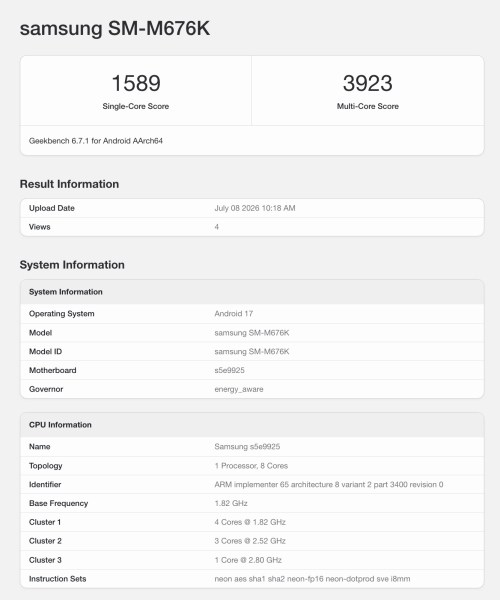
In terms of performance, the Galaxy M67 performed in line with expectations in tests on the Geekbench website, scoring 1,589 points in the single-core test and 3,923 points in the multi-core test. The test document also revealed that this new machine will have built-in 8GB RAM memory and be preloaded with the latest Android 17 operating system. It is expected to run with Samsung’s own One UI 8.5 interface when it is officially launched.
Currently, M series mobile phones are mainly targeted at India and selected Asian markets. As for whether this new phone equipped with an old-generation flagship chip can be launched in Hong Kong or other regions, further official product releases and announcements are still pending.